
Last updated November 15, 2026
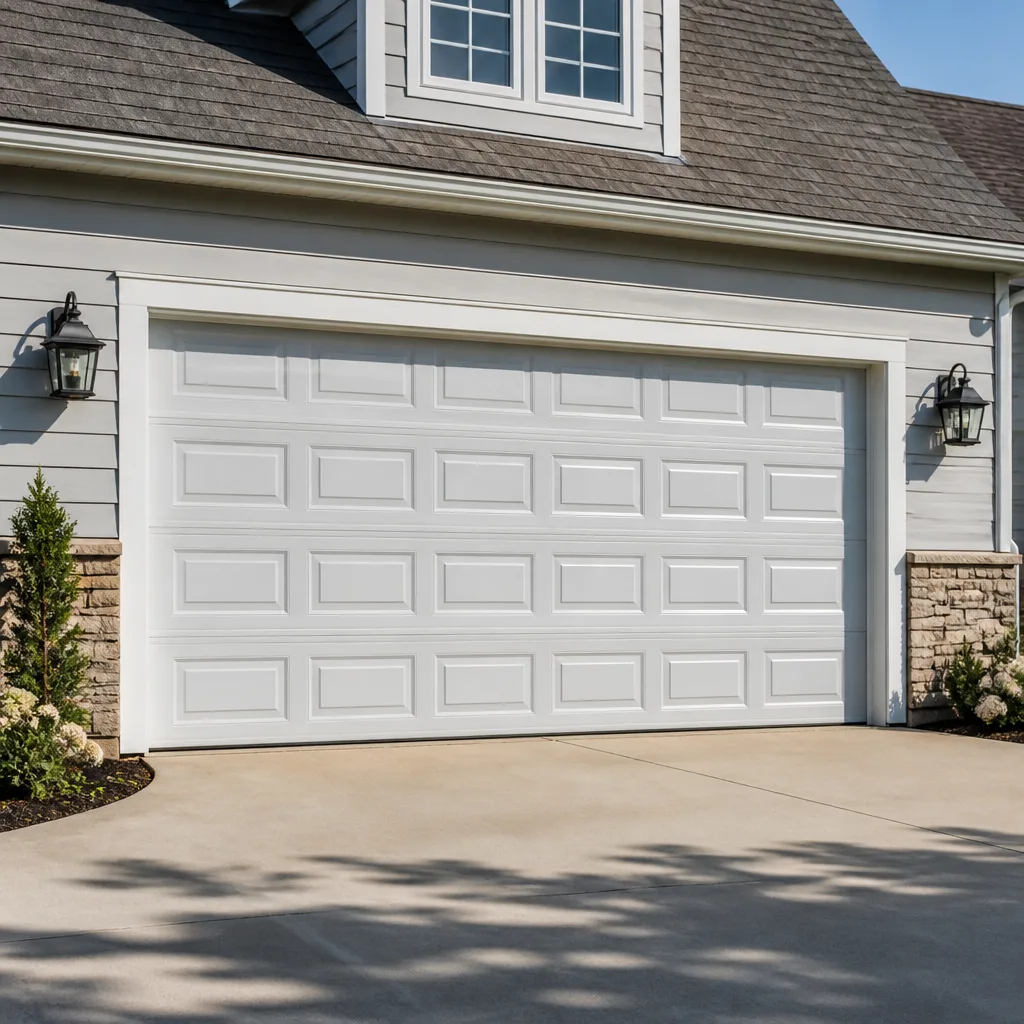 Raised-panel steel
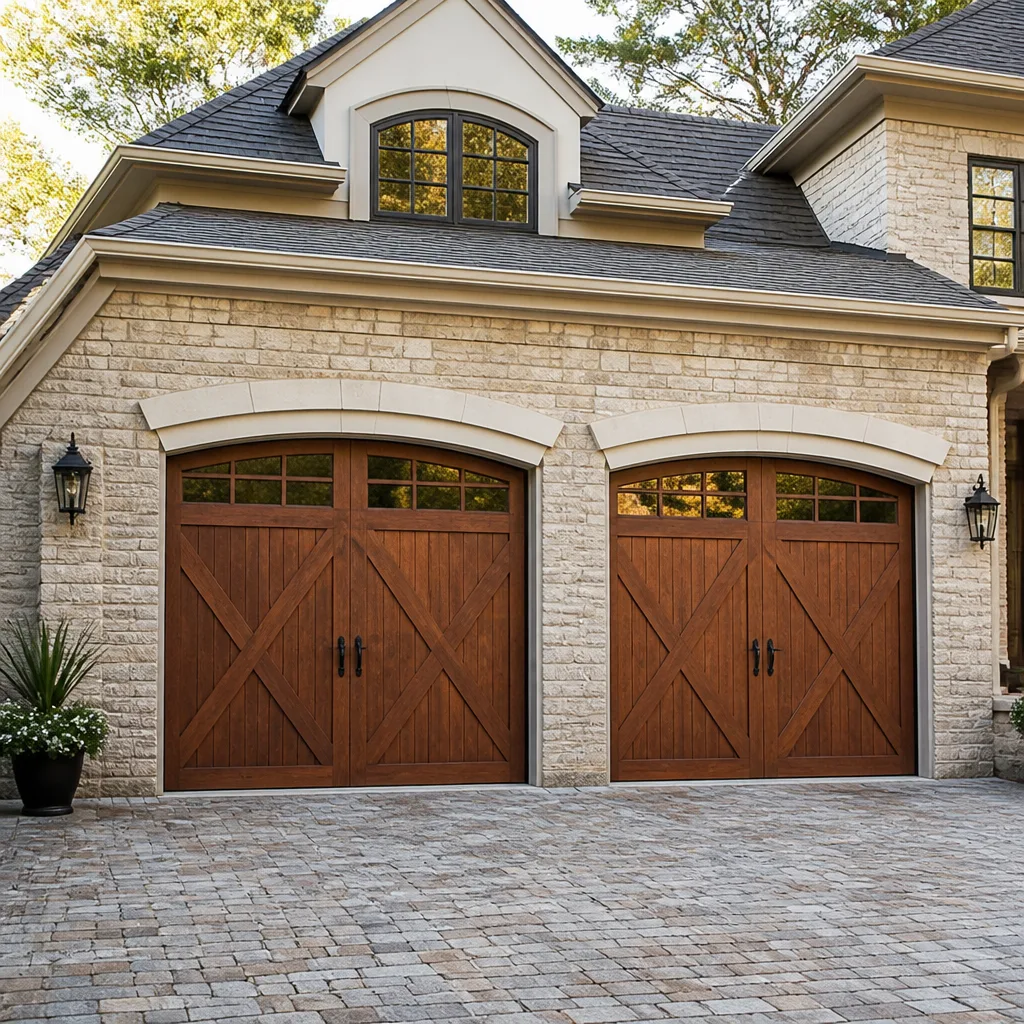 Carriage house
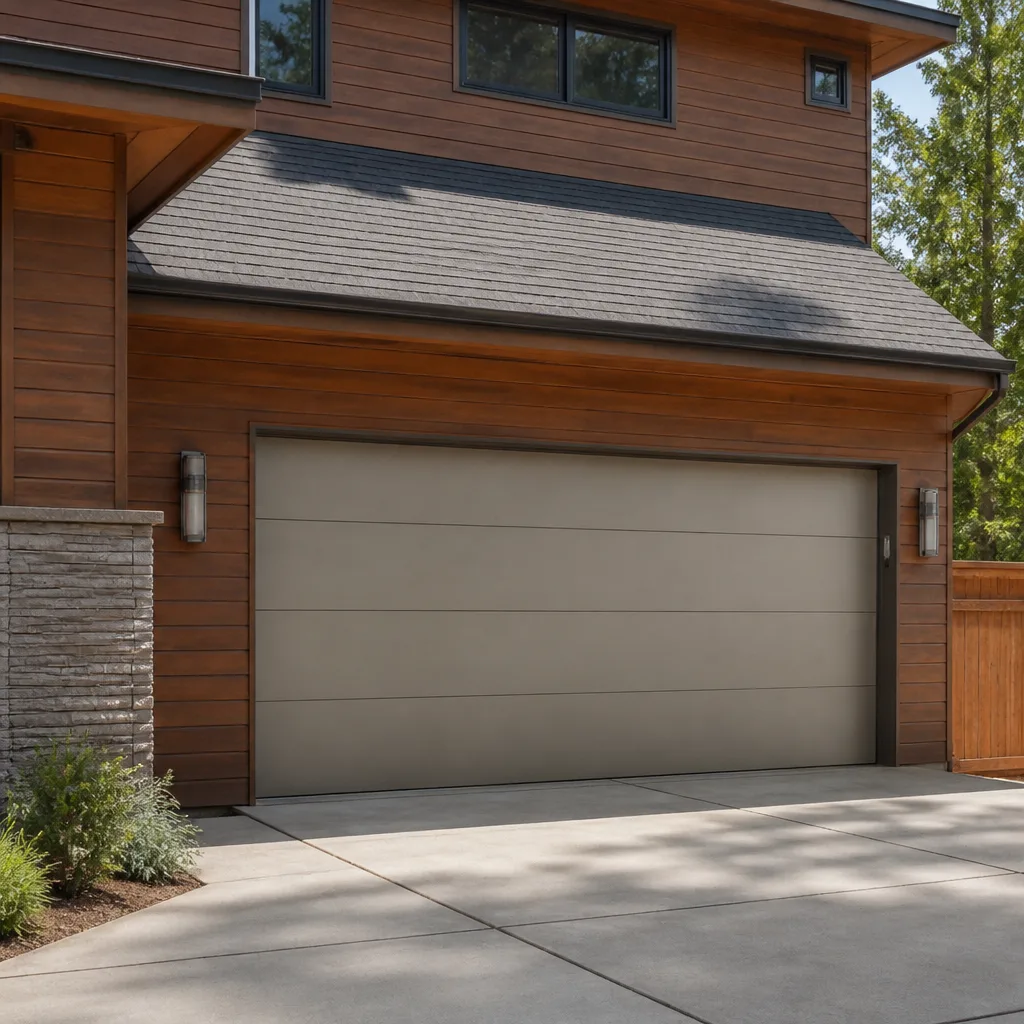 Modern flush
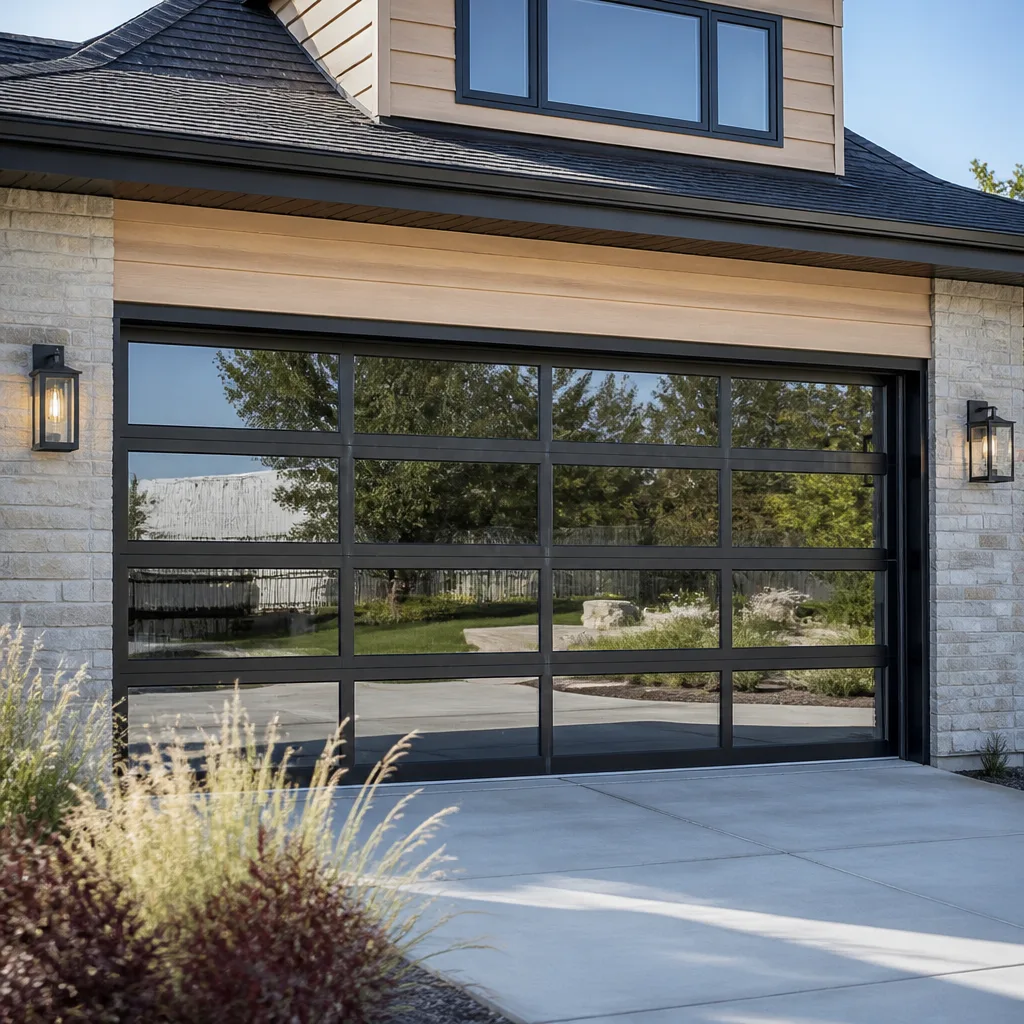 Full-view glass
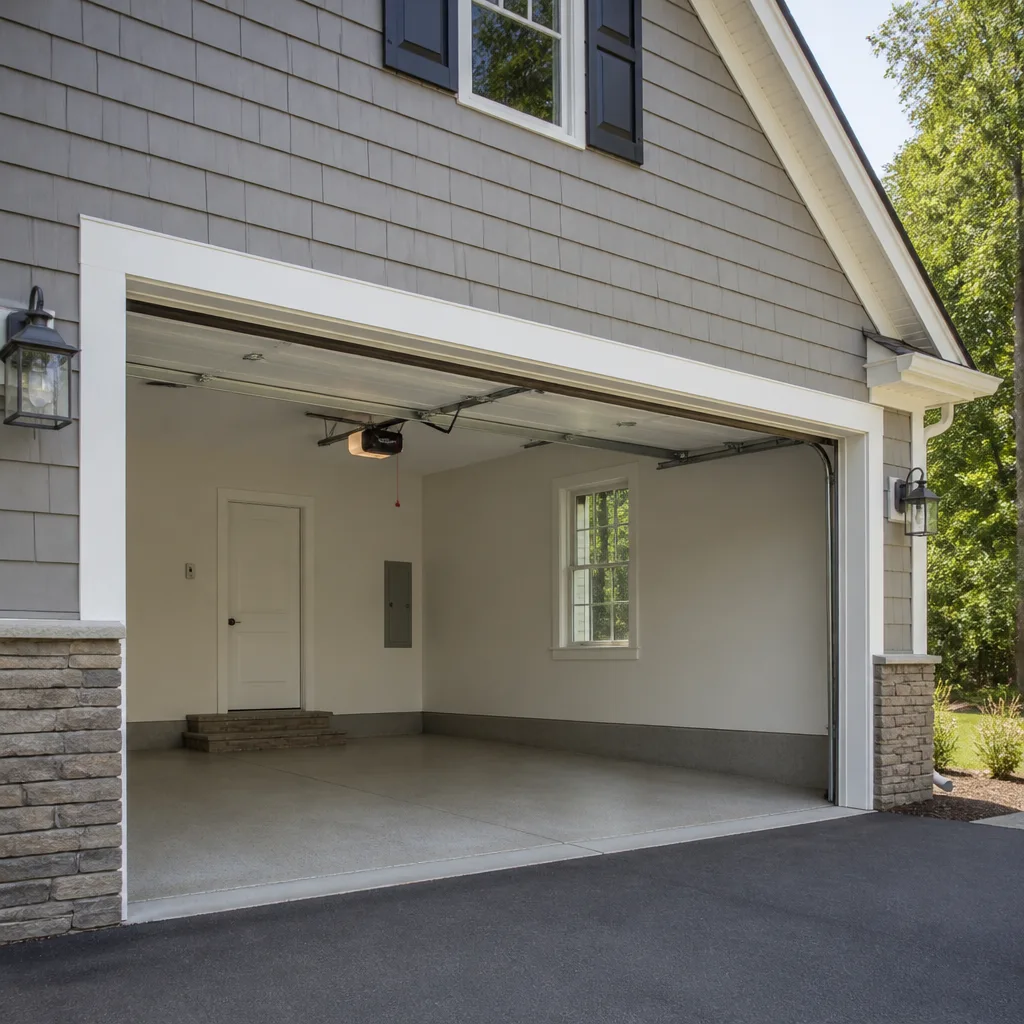 LiftMaster openers
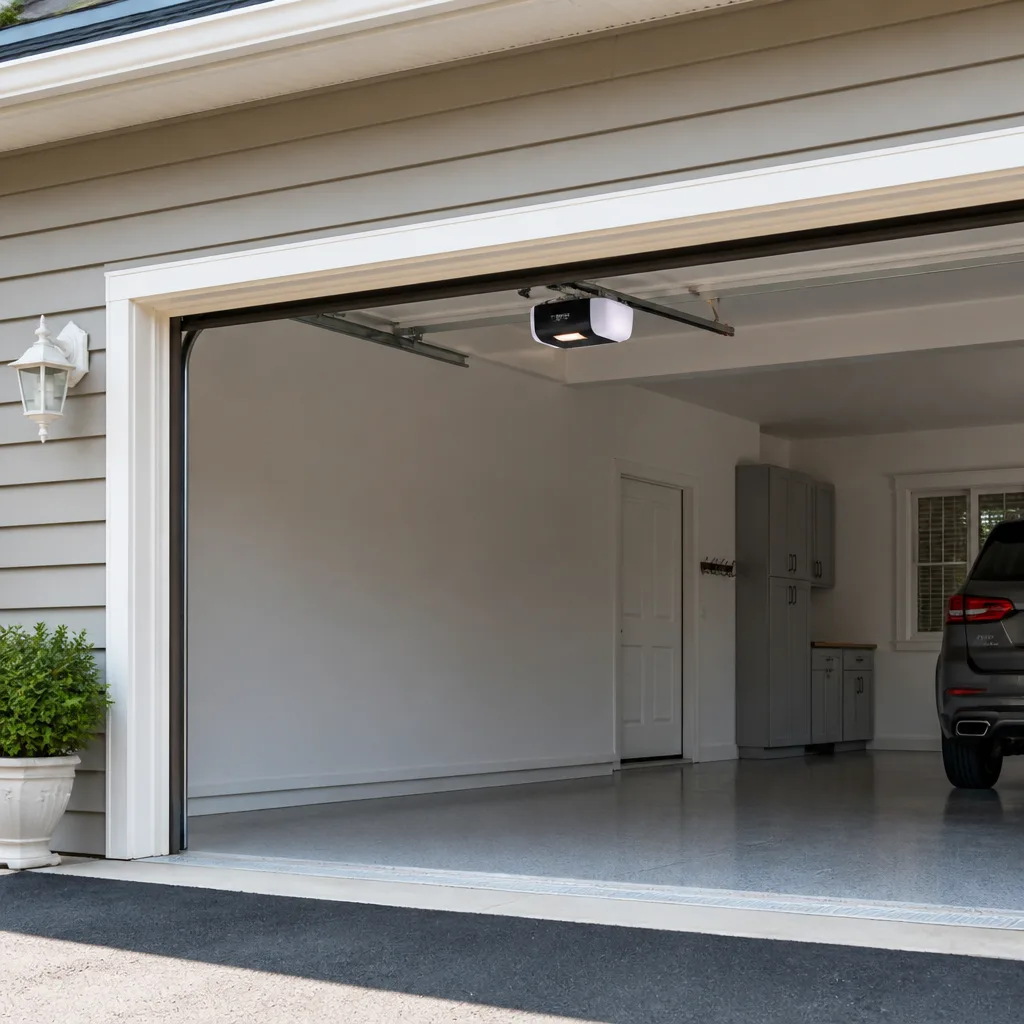 Chamberlain openers
Full 25-point door and opener safety check with every visit - springs, cables, rollers, tracks, and your LiftMaster or Chamberlain opener included
You get a price before we start. It does not change when the pro arrives.
Get your free estimateGarage Door Repair Troubleshooting in Fayetteville: Common Problems and How to Fix Them
A door that won’t close all the way isn’t necessarily a sensor problem. That’s the most common misdiagnosis we see, and homeowners spend money on sensor realignment when the real culprit is a bent track section two feet above the floor. The door is telling you something specific every time it stumbles, reverses, grinds, or goes silent – and the skill in troubleshooting is reading that behavior from the right end of the chain. In this guide, we’ll walk through how to sort a Fayetteville garage door problem into the right category first: mechanical, electrical, or operator error. You’ll learn what each symptom actually points to, where a safe inspection ends and a technician’s job begins, and how to document the fault so the first call gets you an accurate answer.
Quick Answer
Most Fayetteville garage door problems fall into three buckets: mechanical failures (springs, cables, rollers, tracks), electrical faults (photo-eye sensors, wiring, safety reverse), and operator error or opener logic problems. Match the symptom to the system before you touch anything, and stop at springs and cables – those are the two components a homeowner should never adjust. If the door won’t move at all, treat it as electrical or opener first; if it moves but moves wrong, treat it as mechanical first.
Styles & brands we work with
- Raised-panel steel
- Carriage house
- Modern flush
- Full-view glass
- LiftMaster openers
- Chamberlain openers
Table of Contents
- Symptom-to-System Mapping: What Your Door Is Telling You
- Won’t Move vs. Moves Wrong: Two Completely Different Starting Points
- Why Fayetteville Humidity Causes Jambing That Looks Like Track Damage
- Springs, Cables, and the Hard Stop: What’s Safe to Check
- Grinding, Squealing, and Banging: Decoding the Noise
- Photo-Eye Sensors and Remote Failures: Electrical Troubleshooting Basics
- How to Document the Problem Before You Call
- Brand Matters Less Than You Think (But Some Specifics Help)
Symptom-to-System Mapping: What Your Door Is Telling You
Before you call anyone, watch the door through two full cycles. Note exactly when it behaves differently: at the start, mid-travel, or at the close. That single observation narrows the problem faster than any tool in the box.
Here’s how we map behavior to system in our experience:
- Door starts to close, reverses partway: usually a photo-eye sensor or an obstruction, occasionally a limit switch in the opener. Electrical, not mechanical.
- Door closes slowly or struggles: worn rollers, dry hinges, or a spring that’s lost tension. Mechanical.
- Door stops partway and won’t finish: track obstruction, bent roller, or opener limit setting. Check both ends.
- Grinding or squealing during travel: roller bearings, hinge pins, or a dry torsion bar. Mechanical.
- Opener motor hums but door doesn’t move: broken spring or snapped cable. Mechanical – and a hard stop.
- Door goes up but not down, or vice versa: opener logic, limit switch, or safety reverse system. Electrical or operator.
- Opener completely dead, no light, no sound: power, wall control wiring, or the opener board itself. Electrical.
- Door visibly crooked or off one track: cable or track failure. Mechanical, and dangerous.
If two or more symptoms show up together, write them all down. A Fayetteville door that reverses mid-travel and grinds usually has two separate problems: a sensor and a dry hinge. Chasing one and ignoring the other is why some repairs seem to “come back.”
Won’t Move vs. Moves Wrong: Two Completely Different Starting Points
The first question our technicians ask on the phone isn’t “what brand is it?” It’s “will the door move at all?” That answer splits the diagnosis into two tracks.
If the door won’t move: start with power and control. Check the wall button, the breaker, and whether the opener has power at all. If the motor hums but the door is stuck, stop. On most doors, a hum-without-movement means the spring or cable has failed, and forcing the door is how injuries happen. We’ll cover that in the safety section below.
If the door moves but moves wrong: start with the tracks, rollers, and hinges. Watch a full open-and-close cycle. Listen for where the noise spikes. Look at the door from the side while it travels to spot a wobble or a skew. Do not adjust spring tension, and do not loosen a track bracket to “straighten” anything until you’ve confirmed the door is fully closed and the opener is disengaged.
Why the split matters: on a “won’t move” door, the first call is almost always about the opener or the power. On a “moves wrong” door, the first call is about the hardware. Getting the category right on your own saves a diagnostic step and often a return visit. It’s the difference between diagnosing the fault correctly the first time and guessing.
Why Fayetteville Humidity Causes Jambing That Looks Like Track Damage
A wood-framed door opening in Fayetteville sees real swings between humid summer air and dry indoor air from heating and cooling. Those swings cause wood framing to expand and contract. When it swells, the door binds against the jamb. When it dries, small gaps open. Homeowners often read that binding as a bent track or a bent door, and they go after the wrong part.
Here’s what to check before you assume track damage:
- Look at the jamb sides of the door opening, not the door itself. Is the gap even on both sides? If the door is tight on one side and free on the other, you likely have a jamb issue, not a track issue.
- Check the door in the morning and again in the afternoon. Wood-jam binding changes with humidity through the day. A bent track does not.
- Inspect the rollers at the jamb where the door binds. If the rollers still sit centered in the track and the door pushes into them, the door or frame is moving, not the track.
- Look at weatherstripping and bottom seal. A swollen bottom seal can grab on the floor and read as a track problem.
Fayetteville homes with older wood jamb construction see this more than newer steel-framed openings. Wayne Dalton and Amarr steel doors tend to shrug off humidity swings on the door panel itself, but they can’t fix a jamb that’s swelling around them. If the fix turns out to be on the jamb side, that’s usually a carpentry question, not a door-mechanism question, and it’s worth clarifying that with whoever you call. Track realignment without addressing the swelling jamb is why some “track fixes” don’t last a season.
Springs, Cables, and the Hard Stop: What’s Safe to Check
This is the line. Springs and cables are under extreme tension, and adjusting or releasing them without training can cause serious injury or death. A torsion spring is wound to hundreds of turns of tension. A torsion spring that releases unexpectedly can strike with lethal force. That’s why we don’t give step-by-step directions for spring or cable work and why no honest garage door technician will either.
Here’s the safe inspection:
- Look, don’t touch. Visually check whether either torsion spring above the door shows a visible gap or separation. A broken torsion spring usually shows a clean break.
- Note the door’s weight in your hands. If you can lift the door by hand with the opener disengaged and it feels very heavy, the spring tension is gone.
- Check the cables for fraying or slack. Cables should be taut and clean. A loose cable draped across the door is a warning, not a task.
- Never reach up and attempt to wind, unwind, or clip a spring. Never cut a cable. Never remove a track bracket to relieve a stuck door with the spring under tension.
One more hard stop: if a spring has broken, do not run the opener again. Continuing to run a door with no spring tension puts all the door’s weight on the opener gearing, and that damages parts that were fine before. A five-minute call to a trained technician now saves the opener later.
If you’re past the inspection stage and know you need someone, our guide to garage door repair covers how the repair process works from that point.
Grinding, Squealing, and Banging: Decoding the Noise
Sound is the cheapest diagnostic tool you have. Each type of noise points to a different system.
- Grinding, low and steady: usually roller bearings or hinge pins that have lost lubrication. Mechanical, and a maintenance issue rather than an emergency.
- Sharp squeal or screech: dry torsion bar, dry rollers, or a dry opener rail. Lubrication often quiets this.
- Banging or slamming at the floor: door closes faster than it should. Limit switch on the opener or spring tension. Slow it down before it cracks a panel or a bottom seal.
- Rattling on open and close: loose hardware – bolts, hinges, or opener rail brackets. Usually a 10-minute tightening job for a trained hand.
- Clicking from the opener head: relay or control board. Electrical, in the opener itself.
One more noise to take seriously: a loud bang from above the door followed by the opener losing its ability to lift. That’s almost always a broken spring. See the section above.
If the opener itself is the source of the problem – dead board, worn gear, or a wall control that doesn’t respond – that’s a specialized repair. Our garage door opener repair page walks through the common opener failures and how they get diagnosed.
Photo-Eye Sensors and Remote Failures: Electrical Troubleshooting Basics
Electrical troubleshooting on a garage door is narrower than it sounds. You’re really checking four things: power to the opener, the sensor alignment, the wall control, and the battery in whatever remote you’re holding.
- Power. Confirm the opener outlet has power. If the light won’t come on, the problem is upstream of the door itself.
- Photo-eye sensors. Each sensor has an LED indicator. Steady light on both sides is normal. Flashing or dark on one side points to misalignment, a dirty lens, sun glare hitting the receiving eye, or a broken wire.
- Wall control. If the wall button works but the remotes don’t, the problem is on the remote side. If remotes work but the wall button doesn’t, the problem is on the wall control or its wiring.
- Safety reverse. Place a roll of paper towels under the door and close it. The door should reverse on contact. If it doesn’t, stop and get the door serviced before anyone is under it.
Here’s where Fayetteville gets specific. Low sun angle through a south- or west-facing garage opening in the afternoon can blind a receiving eye without any mechanical problem at all. Homeowners sometimes replace perfectly good sensors because the door only reverses in the afternoon. Before you buy anything, step into the door opening and cup your hand over the receiving sensor. If the LED steadies, you’re dealing with glare, not a failed part. That’s a ten-second test that saves a service call. Our Eaton Garage Door technicians run this check first for exactly that reason – it’s the most common wasted part swap we see.
How to Document the Problem Before You Call
The single biggest reason a diagnostic call goes long is that the caller can’t describe the symptom specifically. “It’s broken” tells us nothing. “It opens about a foot, then reverses, and the light on the left sensor flashes” tells us a lot. Write down the following before you call, and you’ll get an accurate answer on the first try.
- The exact behavior. What does the door do, and at what point in the cycle?
- What you’ve already tried. Power, wall button, remote, sensor LEDs. Say what you tested and what resulted.
- The noise. Grinding, squealing, banging, clicking, silent. Where the noise comes from.
- Door and opener brand if you can find it. A sticker inside the opener head usually has the model. A sticker on the door panel often has the manufacturer.
- Recent changes. New weatherstripping, a power outage, a storm, a car backed into the door, a child with a remote, a recent paint job. Small clues become big answers.
- Your door’s position right now. Fully open, fully closed, halfway, or stuck? Leave it exactly where it is.
One last thing to mention when you call: whether the door is on a smart opener system. LiftMaster and Chamberlain openers – the two brands most tied to myQ-connected control – log events that can tell a technician exactly where the door reversed. That’s a fast diagnosis. Craftsman and Genie systems are typically a manual read, which takes a little longer but works the same way. Mentioning the system up front keeps the conversation on the right track.
Brand Matters Less Than You Think (But Some Specifics Help)
Here’s a point most garage door pages won’t tell you: the failure mode, not the brand, is what actually drives troubleshooting. A broken torsion spring behaves the same way on an Amarr door as it does on a Raynor door. A failed limit switch behaves the same way on a LiftMaster opener as on a Chamberlain. That’s why we work on whatever door and opener is already installed rather than steering the repair toward a preferred brand.
Where brand matters is in the parts and the electronics. A Wayne Dalton panel takes specific rollers. A Raynor door’s track hardware isn’t a universal fit. Craftsman openers built on Genie or LiftMaster platforms need their own model-specific parts. Being factory-familiar with a range of brands is about grabbing the right part the first time, not about ranking one brand above another.
What’s useful for you to have ready when a technician arrives: the opener model number, the door brand if you can read it, and whether the door is a sectional steel unit or something older. That’s it. Any honest technician can figure out the rest from the failure itself.
Common Mistakes to Avoid
- Assuming the sensors are the problem before you look at the track. A bent track section two feet above the floor can cause the door to jam and reverse exactly like a sensor fault. Check both before you buy parts.
- Spraying lubricant on everything in sight. Lubricant belongs on hinges, rollers, and torsion bars. It does not belong on the track groove itself, on the belt or chain, or on the bottom seal. Grease on a track attracts grit and makes the noise worse.
- Forcing the door by hand when it’s stuck. If the spring or cable is under load, forcing the door can cause a sudden release. Fayetteville homes from Pinwood to the neighborhoods around Fort Bragg see this risk equally – it has nothing to do with the house and everything to do with the spring.
- Disengaging the opener and forgetting to re-engage it. If you pull the manual release to test door weight, re-engage it before you run the opener again, and re-check that the door is flat and level first.
- Replacing a whole opener when a $20 part failed. Dead remotes, silent wall buttons, and doors that reverse only in the afternoon are frequently a remote battery, a wire, or a sun-glare issue. Rule those out before you go shopping.
- Ignoring a slow close. A door that’s gradually taking longer to close isn’t just annoying – it usually means friction is building somewhere, and friction wears down rollers and hinge pins faster.
- Ignoring small cracks in a wood jamb. In Fayetteville’s humidity swings, a small crack becomes a jamb bind becomes a worn roller becomes a bent track. Small problems on a door don’t age quietly.
See the difference
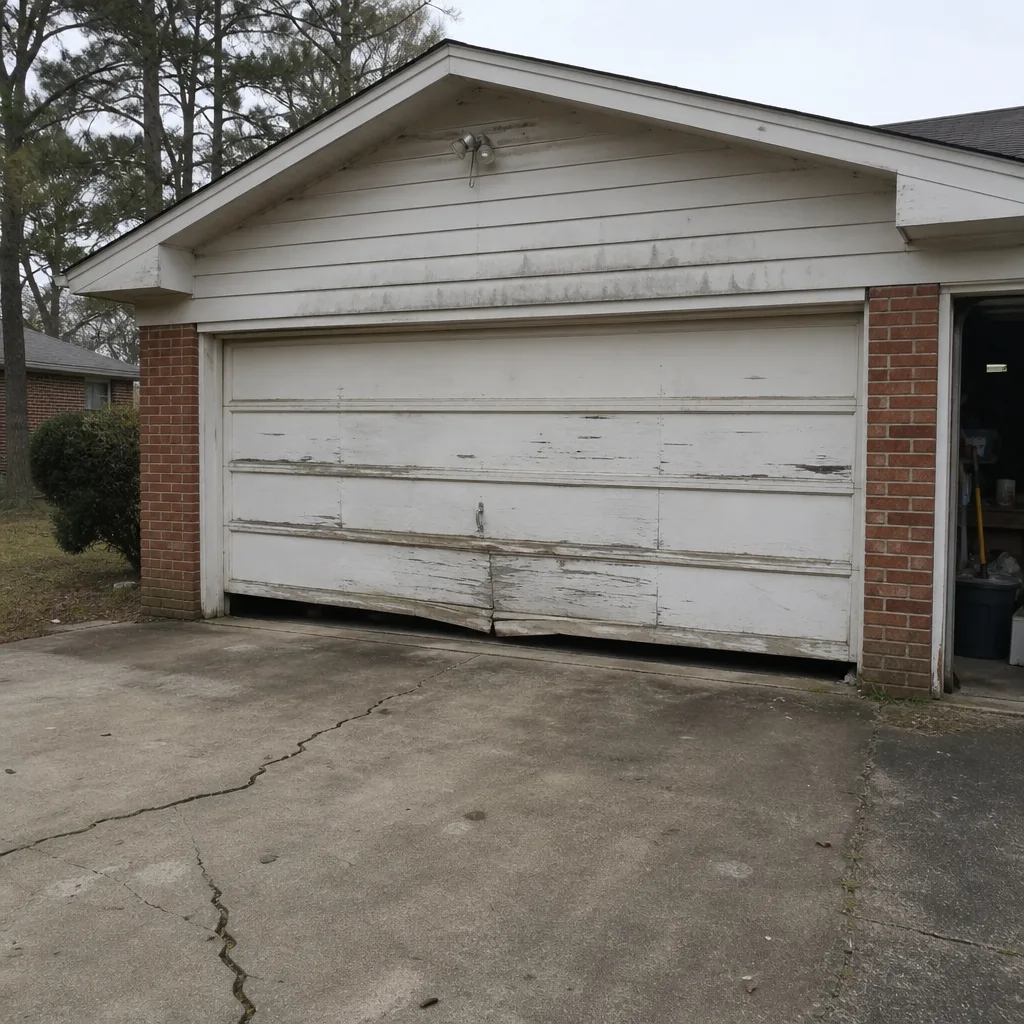 Before
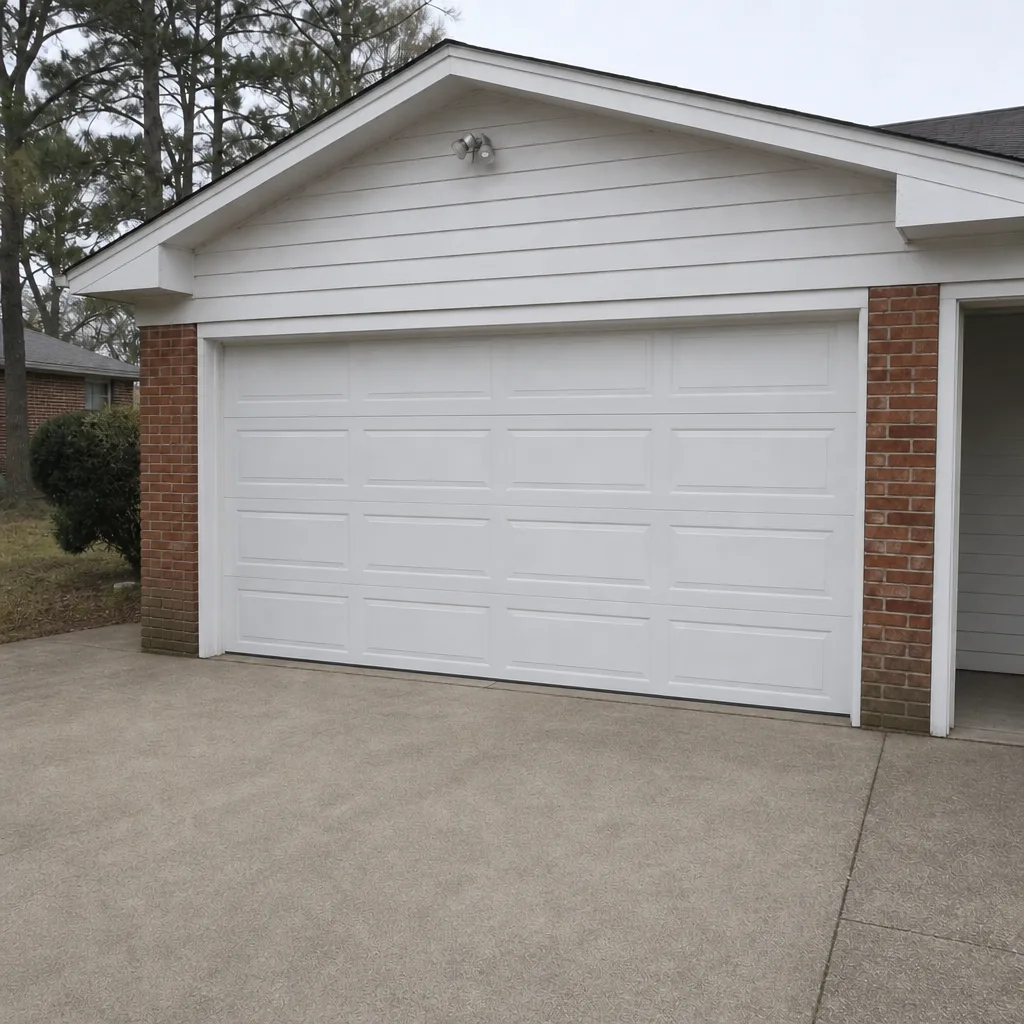 After
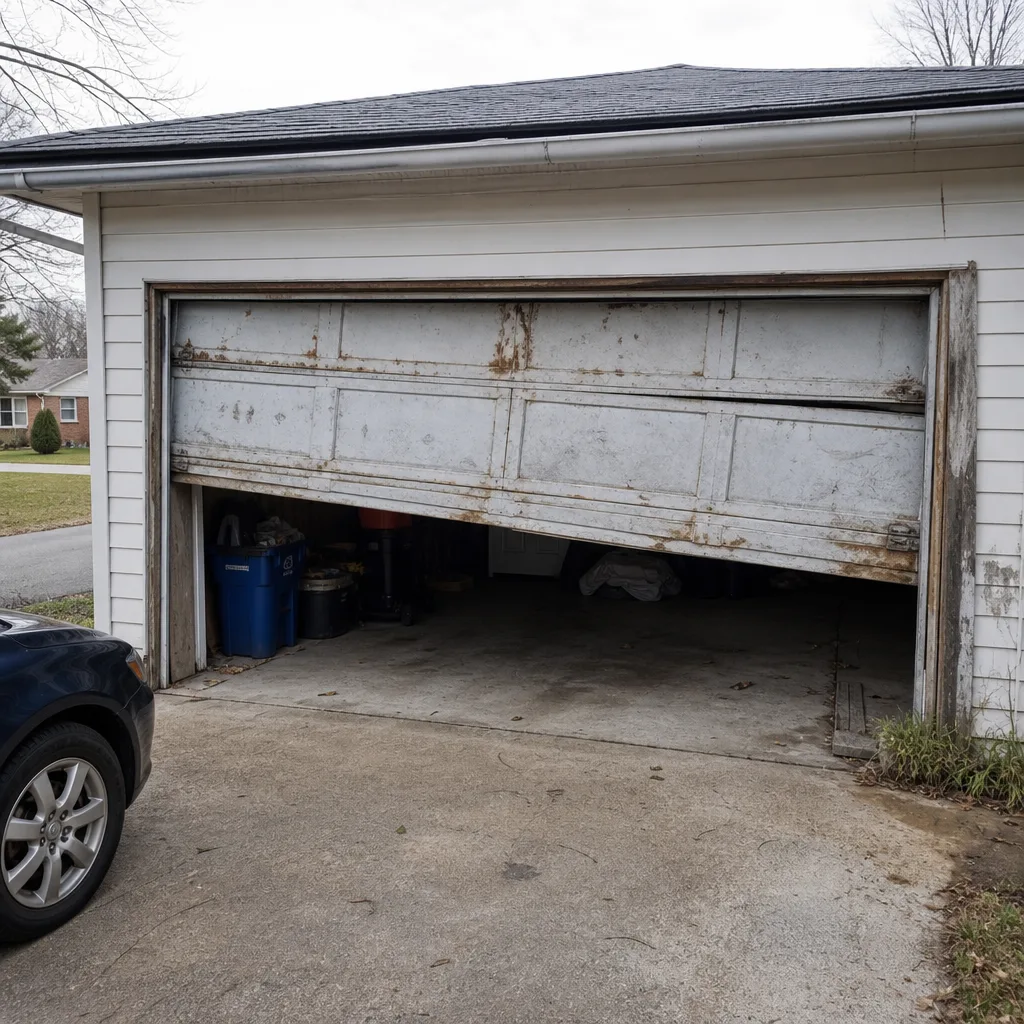 Before
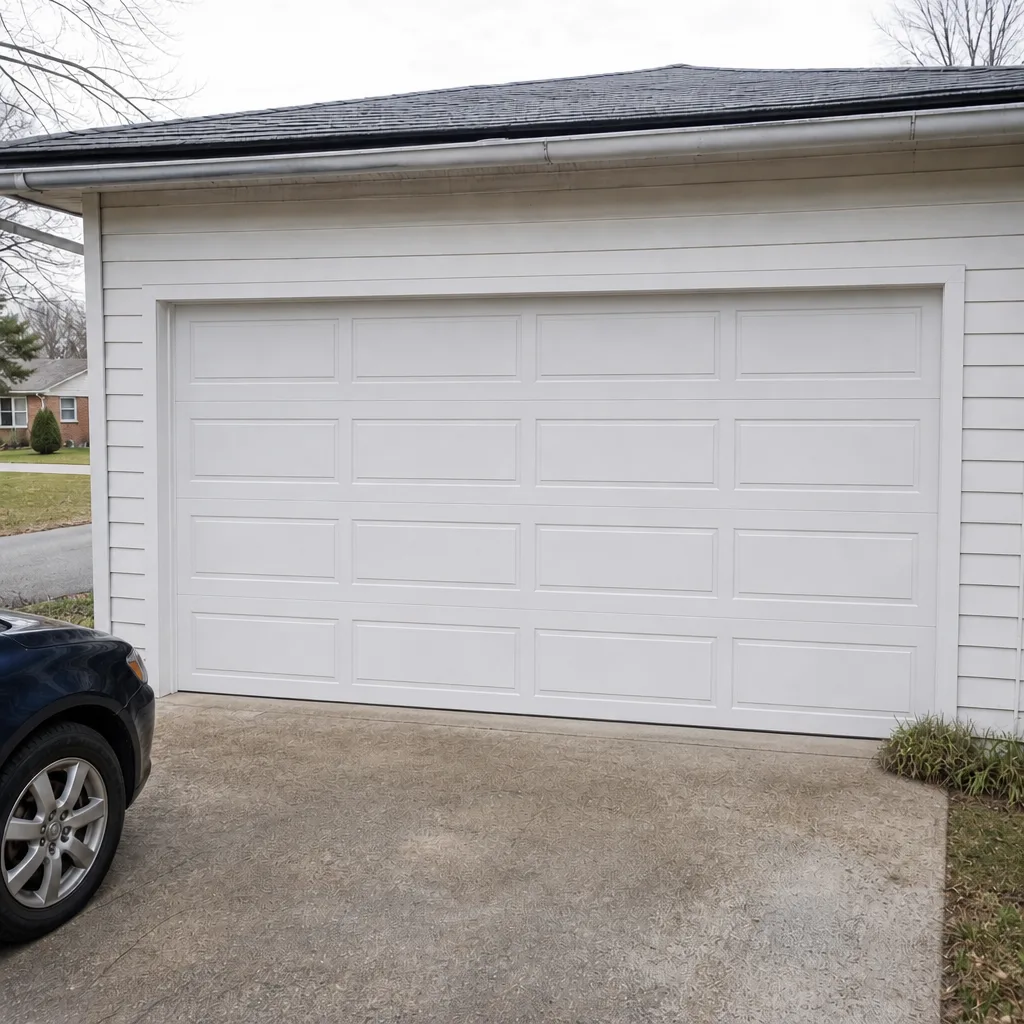 After
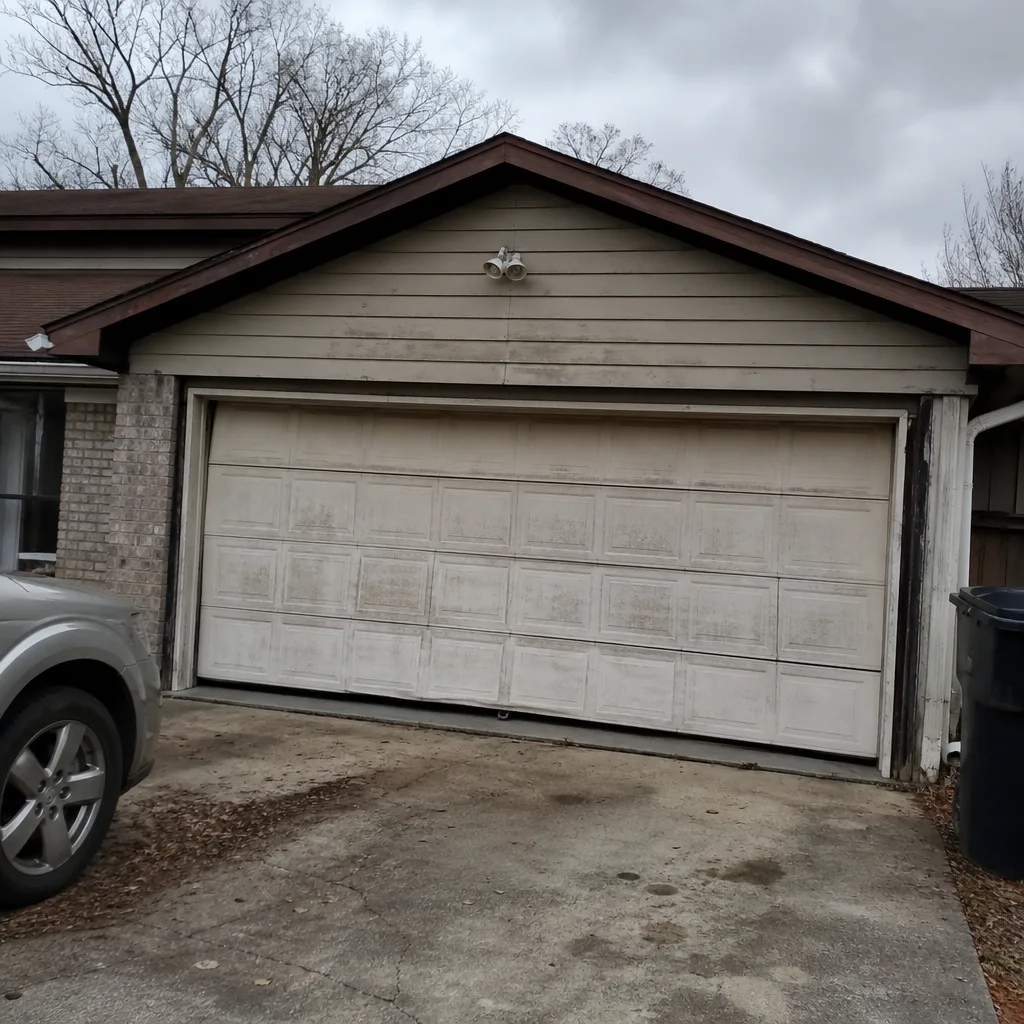 Before
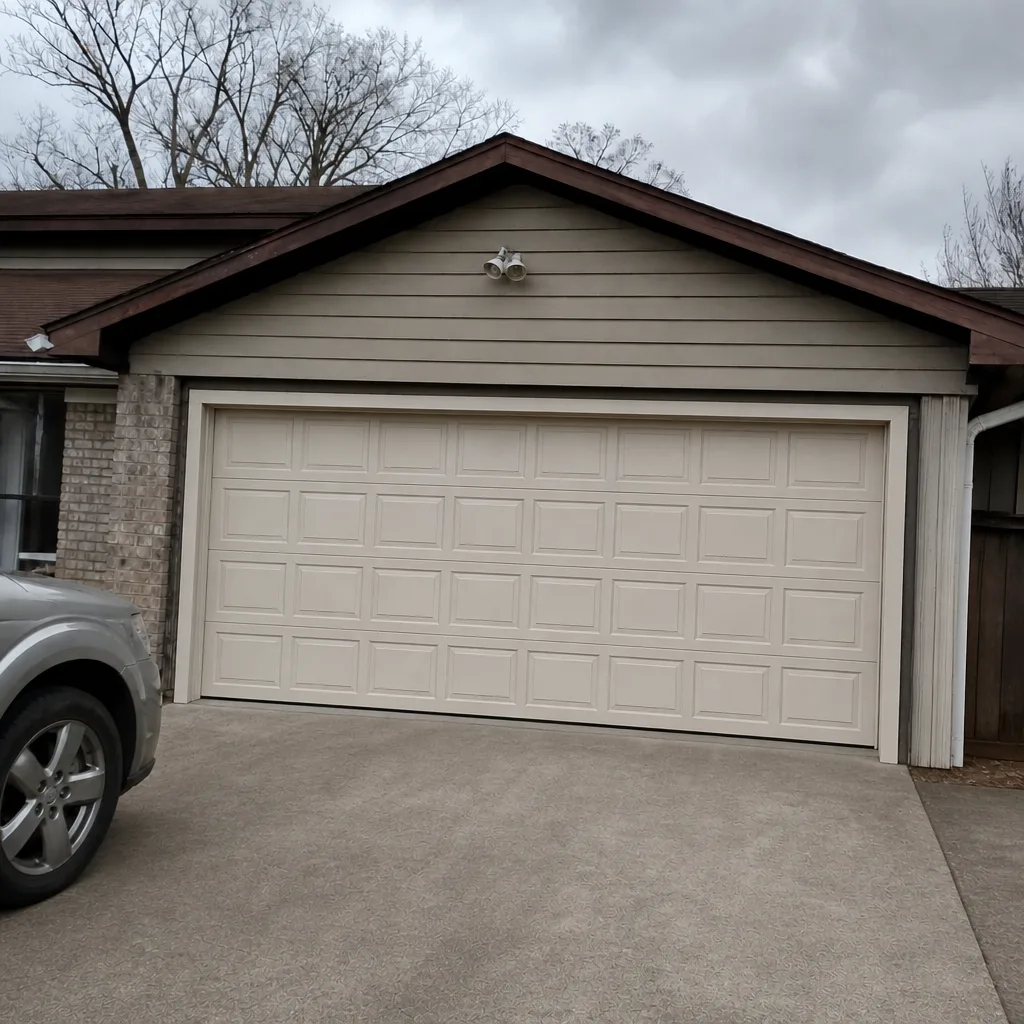 After
When to Call a Professional
Call a trained technician the moment any of these are true: the spring has visibly broken, a cable is loose or frayed, the door is visibly crooked or off one track, the opener hums without lifting the door, the safety reverse fails the paper-towel test, or you cannot lift the door by hand with the opener disengaged. Springs and cables are the hard stop. Below that line, plenty of small problems – noisy rollers, dry hinges, misaligned sensors, loose hardware – are safe to inspect and often easy to fix.
We work on whatever brand is on your door or opener, and we run the right diagnostic for the right system. If the door reverses in the afternoon and you’ve already tried the sensor alignment, that’s a glare problem, not a part problem – and it’s worth having us check before you buy anything. For neighbors in Spout Springs and throughout the Fayetteville area, we’re glad to walk through the symptoms on the phone first.
Eaton Garage Door Repair offers free estimates in Fayetteville – call (855) 473-7101. If a technician visit makes sense, we dispatch fast, 7am-7pm, and the written quote is agreed before any work begins.
Frequently Asked Questions
Maybe, but not always. Roughly half the doors we see with this symptom have a sensor issue – misalignment, dirty lens, or low-angle Fayetteville sun hitting the receiving eye – and the other half have a track obstruction, a worn roller, or a jamb binding that makes the door harder to close than the opener can push past. Run the sensor LED test first. If both LEDs are steady, look at the track and the jamb before you replace anything. Call (855) 473-7101 for an exact quote – estimates are free.
Most non-spring repairs – sensor realignment, roller replacement, hinge tightening, track adjustment, opener reset – come in modestly, and a single spring replacement runs higher because of the tension and the part. Your written estimate sets the final price, and we quote and agree on it before any work starts. Call (855) 473-7101 for an exact quote – estimates are free.
No. Springs are under extreme tension and can cause serious injury or death if released incorrectly. That’s the hard line in garage door troubleshooting, and no responsible garage door technician will hand a homeowner step-by-step spring instructions. Look for the break, note whether the door can be lifted by hand, and call a trained technician. Call (855) 473-7101 for an exact quote – estimates are free.
When the motor hums or runs without lifting the door, the most likely cause is a broken spring or cable, not the opener itself. The door has lost spring assistance, so the opener is pushing all the weight alone – and continuing to run it damages gears that were fine before. Stop running the door and get it inspected. Call (855) 473-7101 for an exact quote – estimates are free.
No, but it helps. We work on doors and openers from Amarr, Wayne Dalton, LiftMaster, Chamberlain, Genie, Craftsman, Raynor, and Clopay – so whichever system you have, we’ve seen the failure before. Model numbers speed up the parts trip. If you can’t find one, describe the door’s age and type and we can narrow it down. Call (855) 473-7101 for an exact quote – estimates are free.
Stuck doors are usually our first priority, and same-day service is often possible. We answer 24/7, and we dispatch fast from 7am to 7pm, Sunday through Friday. A call outside those dispatch hours is booked into the next opening. Call (855) 473-7101 for an exact quote – estimates are free.
The Bottom Line
Sort your garage door problem into the right category before you touch anything. Split it first into won’t move versus moves wrong. If the door won’t move at all, start with power, sensors, and the opener. If it moves but moves wrong, start with tracks, rollers, and the jamb. From there, watch two full cycles, note the exact symptom and the noise, and keep your hands off the springs and cables. Springs and cables are the hard stop. Fayetteville’s humidity swings add one local wrinkle: a door that binds on one side of the jamb is a jamb issue, not a bent track, and checking it morning and afternoon tells you which. Document the symptom before you call – it’s the shortest path to a fast diagnosis and an accurate quote.
If you’re in Fayetteville and want a technician to read the door’s behavior with you, call Eaton Garage Door Repair at (855) 473-7101 for a free estimate. We answer 24/7. Fast dispatch from 7am to 7pm, Sunday through Friday. The price is set per job by the written estimate, agreed before any work starts.
Written by the team at Eaton Garage Door Repair.