
Last updated November 15, 2026
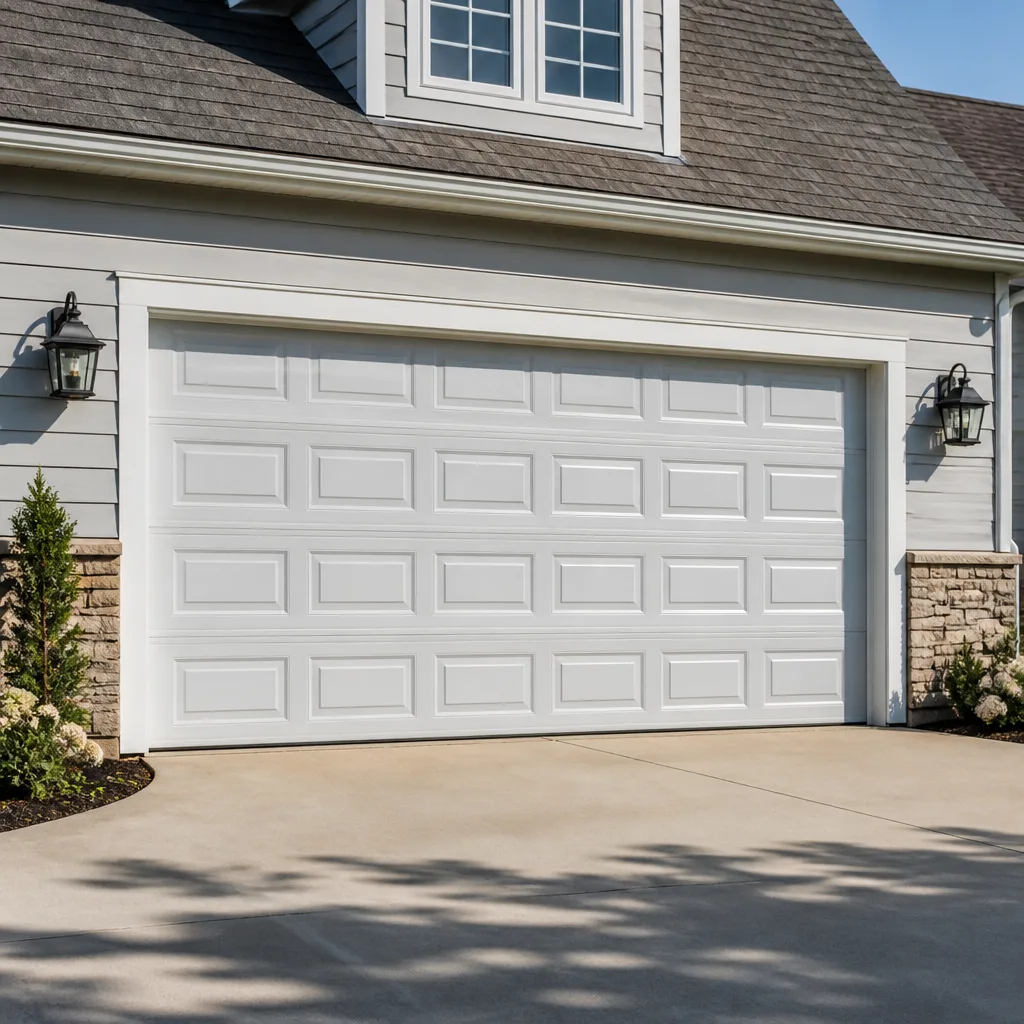 Raised-panel steel
 Carriage house
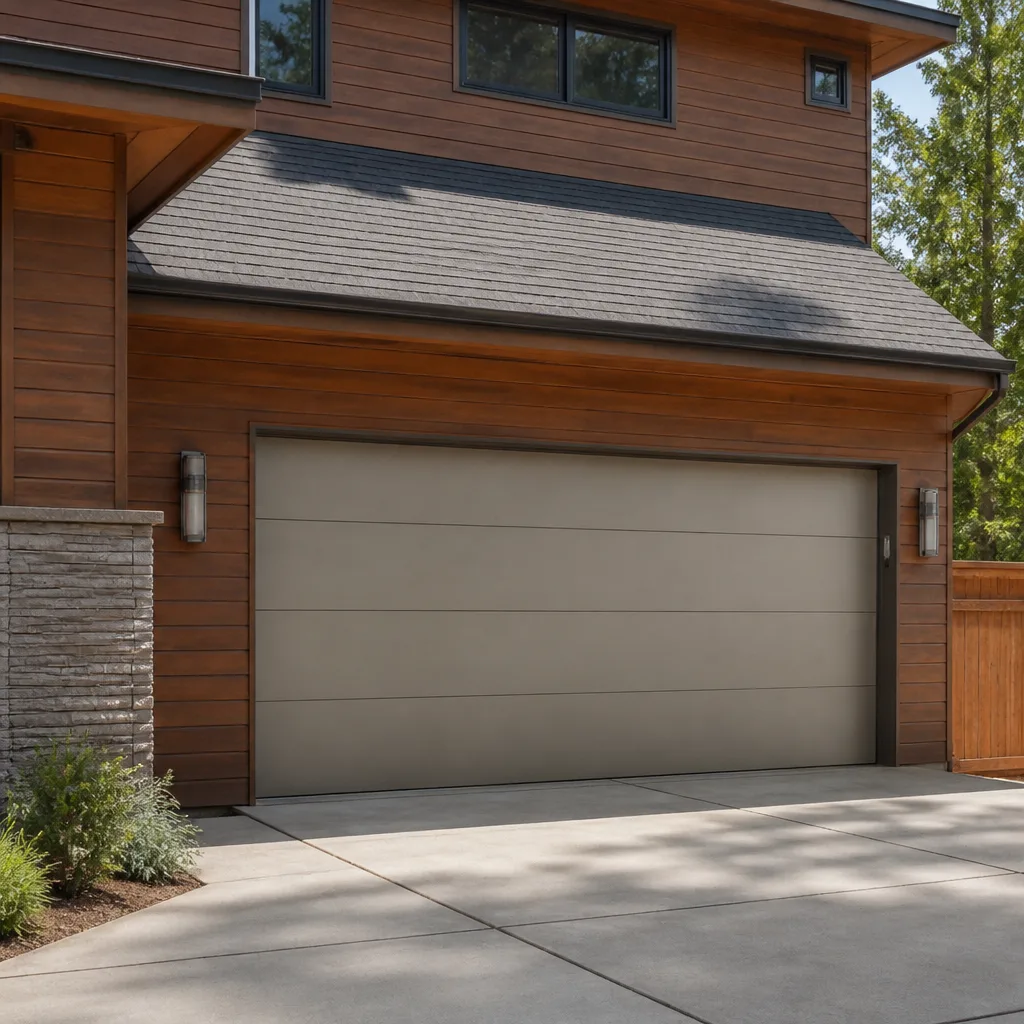 Modern flush
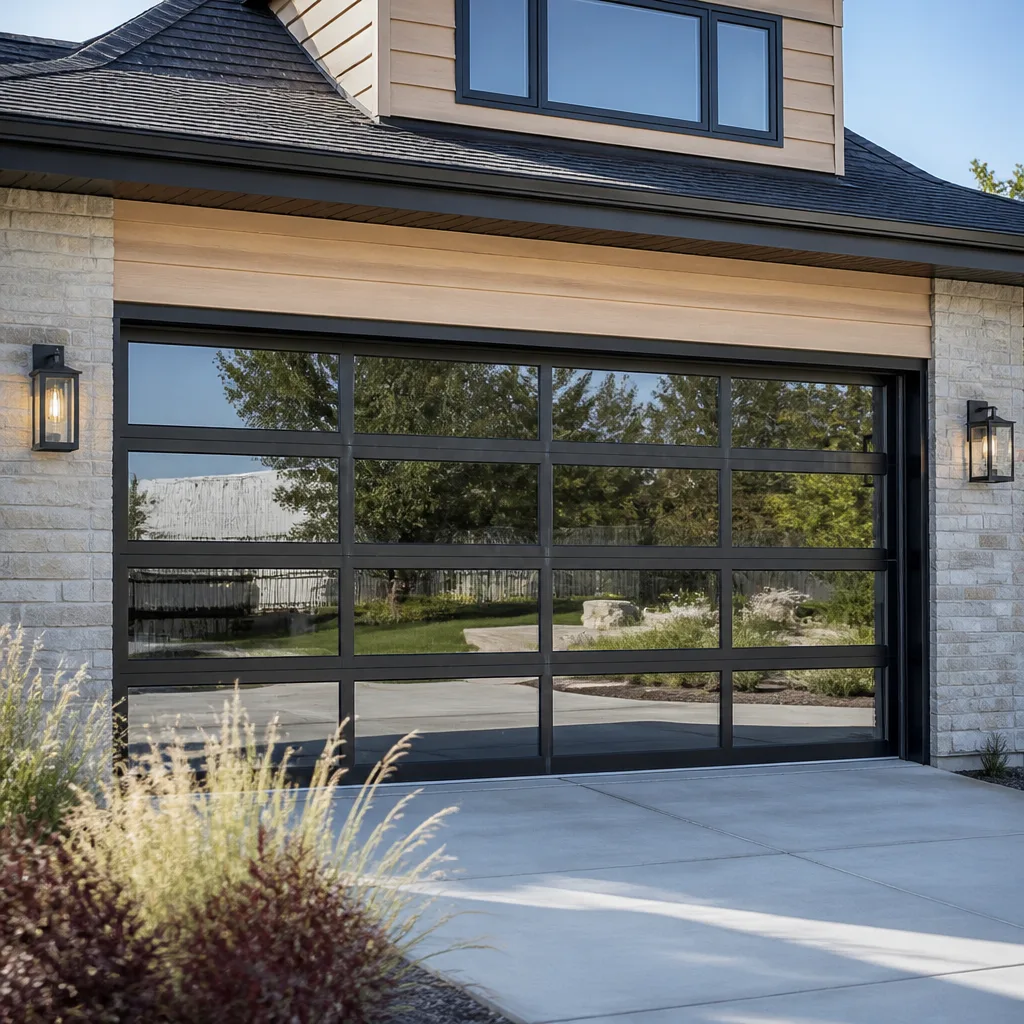 Full-view glass
 LiftMaster openers
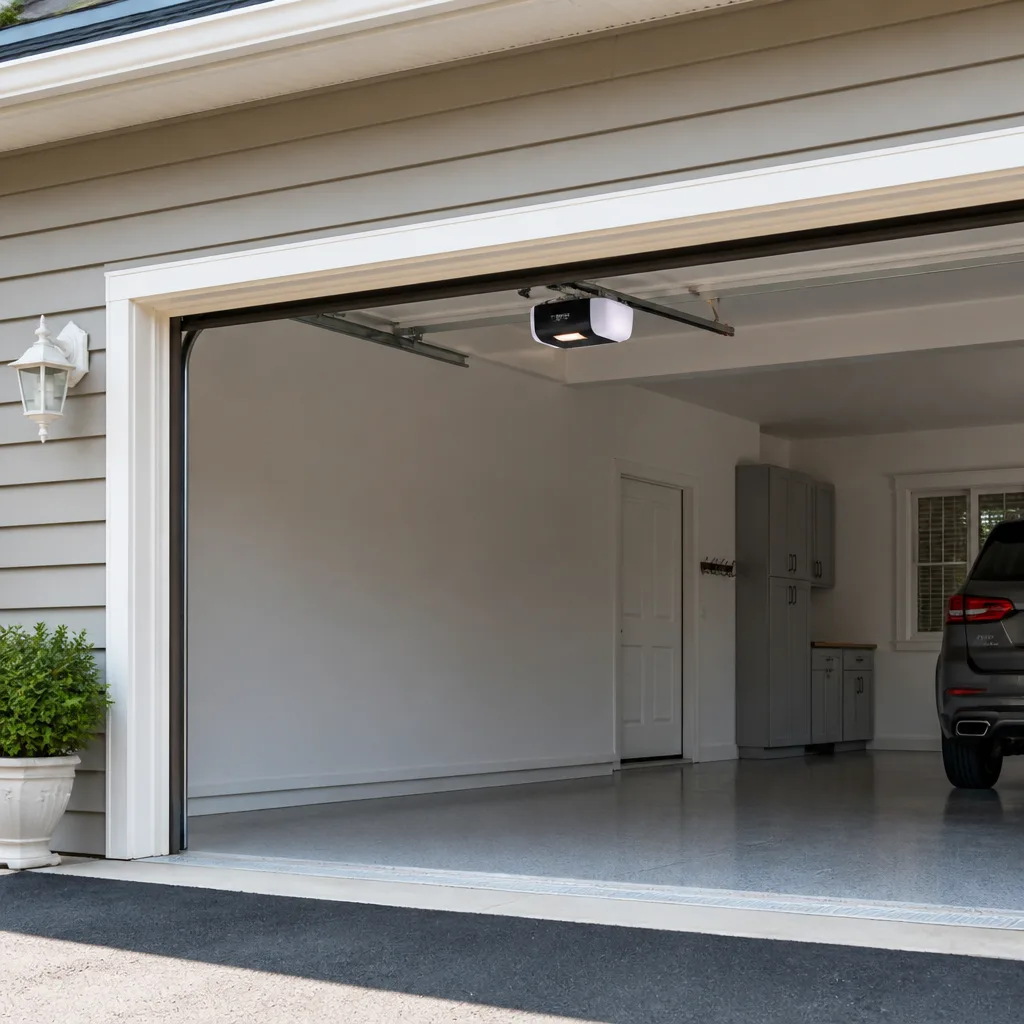 Chamberlain openers
Full 25-point door and opener safety check with every visit - springs, cables, rollers, tracks, and your LiftMaster or Chamberlain opener included
You get a price before we start. It does not change when the pro arrives.
Get your free estimateSeasonal Garage Door Care for Fayetteville: Year-Round Homeowner’s Guide
Most garage door maintenance schedules you’ll find online were written for a place that gets four clean seasons and a dry summer. Fayetteville doesn’t work that way. Here we get long, heavy humid summers, short but sharp winter freezes that show up overnight, and a spring pollen season that coats every horizontal surface on your property, including the inside of your door’s tracks. That mismatch matters. A national checklist tells you to lubricate “in spring,” which in Fayetteville often means pushing grit and pollen into the moving parts instead of clearing them out first. This guide replaces the generic calendar with one built around how Fayetteville actually feels across twelve months. You’ll get a month-by-month plan, the local failure patterns we see most, and clear lines on what you can handle yourself versus what needs a technician. Fayetteville garages don’t get a break from the weather, and neither should your maintenance.
Quick Answer
Seasonal garage door care in Fayetteville comes down to four checkpoints: clean and inspect in March when pollen peaks, lubricate in late spring before humidity climbs, check seals and weatherstripping in October, and prepare moving parts for sudden freezes in December. The dominant local stressors are pollen in spring, heat and humidity in summer, and quick overnight temperature drops in winter. Cleaning and lubricating are homeowner tasks. Springs, cables, and opener electronics need a trained technician.
Styles & brands we work with
- Raised-panel steel
- Carriage house
- Modern flush
- Full-view glass
- LiftMaster openers
- Chamberlain openers
Table of Contents
- Why Fayetteville’s Climate Breaks the Standard Maintenance Calendar
- Spring in Fayetteville: Pollen, Tracks, and Torsion Springs
- Summer Heat and Your Opener’s Circuit Board
- Fall: The Seal Inspection That Saves Your Winter
- Winter: Sudden Drops, Contracting Seals, and Sticking Doors
- Storm Preparedness Before Hurricane-Season Storms Reach Fayetteville
- The Fayetteville Month-by-Month Maintenance Calendar
- What You Can Do Yourself vs. What Needs a Technician
Why Fayetteville’s Climate Breaks the Standard Maintenance Calendar
Garage door manufacturers design and test their hardware for a broad national average. Fayetteville doesn’t sit near that average. The city gets well over 50 inches of rain in a typical year, most of it in warm months, and it sits inside one of the highest pollen corridors in the country. Add humid summers that regularly push garage interiors past 100 degrees and winters that swing hard overnight, and you have an environment that puts more stress on a door than the manual anticipates.
What that means in practice:
- Moisture is the constant. All that rain keeps ambient humidity high for much of the year, which makes rust and corrosion on unpainted hardware more likely than in drier regions.
- Pollen is an abrasive. It’s not just a nuisance on your windshield. Pollen works into track channels and spring coils and acts like fine grit against moving parts.
- Heat stresses electronics. Garage interiors here get hotter than the operating range many openers are rated for, which is why control boards fail more often in summer.
- Freezes are short but sharp. Fayetteville rarely faces long deep freezes, but quick overnight drops are enough to shrink rubber seals and make a door stick.
Every section below is calibrated to those four realities. Follow the standard national schedule and you’ll do roughly the right tasks at roughly the wrong times. Follow a Fayetteville schedule and the door performs better with less corrective repair.
Spring in Fayetteville: Pollen, Tracks, and Torsion Springs
Spring is when pollen peaks in Fayetteville, and that’s the single biggest seasonal cleaning job you’ll face. Pollen doesn’t just drift past your garage door. It settles into the track channels, coats the torsion spring coils above the door, and builds up on the rollers. Left alone, it turns into a sticky, abrasive film that grinds against metal every time you open and close.
Here’s what happens to specific parts:
- Torsion spring coils. Pollen packs into the gaps between coils. Combined with spring oil, it forms a paste that attracts more grit and accelerates wear on a component that’s already under heavy tension.
- Track channels. Pollen collects in the lower curve of the track, especially the vertical section, and mixes with any lubricant residue to gum up the rollers.
- Hinges and rollers. The pivot points fill with pollen dust, and the door starts to sound rough or move unevenly.
In March, before the season’s worst, garage door repair calls in our experience often trace back to nothing more than grit-packed hardware that was never cleaned. A wet cloth, a soft brush for the tracks, and a shop vacuum will clear most of it. Clean first, then lubricate. Lubricating over pollen just traps it.
Spring is also when NC humidity starts climbing. Wait until late spring, after pollen has settled, to apply a garage-door-specific lubricant to hinges, rollers, and springs. Cleaning in March and lubricating in late April or May in Fayetteville works better than one combined task.
Summer Heat and Your Opener’s Circuit Board
Garages in Fayetteville get brutally hot. On a July afternoon, the interior of a closed garage can run far hotter than the outside air, and well above the temperature range opener manufacturers rate their electronics for. That gap is where summer failures happen.
The control board is the part that suffers most. It’s the logic center of the opener, and heat degrades it in two ways:
- Component stress. Capacitors and solder joints are rated for a window of operating temperatures. Sustained heat shortens their life and can lead to intermittent failures.
- Motor strain. Heat also makes the door hardware expand and tighten, so the motor works harder to move it. Higher resistance means longer run cycles and more heat inside the unit.
What you’ll notice when summer heat is the culprit: the opener runs but strains on the top half of the door, or it stops midway and reverses, or it just won’t respond to the remote on the hottest days but works fine in the morning. Those are classic heat-related symptoms rather than a dead unit.
A few things that help in Fayetteville summers:
- Keep the garage ventilated where possible. A cracked door for an hour in the cool of the morning helps.
- Don’t store heat-generating equipment near the opener head.
- Test the safety reverse monthly. Summer heat can shift the door’s balance, which changes how the reverse mechanism behaves.
- If an opener from a brand like Genie or Chamberlain keeps cutting out on hot days, that’s the unit telling you something. It needs a proper look, not another remote battery.
When the symptoms escalate, garage door opener repair is the call to make. Electronics and heat are a bad pair, and a board that fails completely is a bigger problem than one that stutters.
Fall: The Seal Inspection That Saves Your Winter
October is when the door’s seals matter most in Fayetteville. The bottom seal and the perimeter weatherstripping are what keep out rain, wind, and the occasional pest. They’re also the first parts to give out, and they give out quietly. A seal can crack and lose its flexibility long before it visibly falls apart.
Here’s how to check seals in fall:
- Close the door and look at the bottom seal. It should sit flat against the floor along the full width with no gaps or daylight showing.
- Run a hand along the bottom edge from inside. You’re feeling for hard, brittle, or cracked rubber. Flexibility is what makes a seal work.
- Check the perimeter weatherstripping on the sides and top. Look for gaps, tears, and peeling.
- Look for water intrusion inside the garage after rain. A dark stain on the floor under the door is a seal issue.
Replacing a bottom seal is one of the more homeowner-friendly garage door tasks, and it’s a good fall job in Fayetteville because it prepares the door for winter. Perimeter weatherstripping on the frame is a bit more involved, but still manageable for a careful homeowner. The instruction manuals that come with replacement seals from makers like Clopay or Amarr will tell you exactly what your door needs.
This is also the season to check the door’s balance. Disconnect the opener and lift the door halfway by hand. It should hold there on its own, and it should move smoothly without excessive effort. If it drops or feels heavy, the springs are likely tiring, and that’s a spring problem, not a seal problem.
Winter: Sudden Drops, Contracting Seals, and Sticking Doors
Fayetteville winters aren’t the kind that lock you in for weeks. They’re short and swingy. A mild afternoon can turn into a hard overnight freeze in a matter of hours, and that pattern puts more stress on a garage door than a stable cold would.
Two things happen when temperatures drop fast:
- Rubber seals contract. The bottom seal loses flexibility and shrinks slightly. A seal that sat flat in October can pull away from the floor and leave a gap by December.
- Metal parts tighten. Cold metal contracts, which changes the fit of hinges and rollers. A door that ran smoothly all fall can suddenly stick, bind, or sound harsh.
December preparation in Fayetteville should focus on freeze readiness. Lubricate the moving parts once more before the first hard freeze, since cold lubricant is thicker and you want it fresh and thin. Check the bottom seal again for any crack or gap that opened as temperatures dropped. And test the door’s operation on a cold morning rather than only on warm afternoons, because that’s when you’ll actually catch a problem.
If your door sticks in cold weather, don’t force it. A binding door under a tired spring is a situation where cables can snap. The fix might be lubrication, might be adjustment, and might be a worn part. Our technicians have up to 11 years of experience reading that difference, and a door that sticks in the cold is worth calling someone about before a small problem gets bigger.
Storm Preparedness Before Hurricane-Season Storms Reach Fayetteville
Fayetteville sits well inland, but the outer bands of hurricane-season storms still reach us with strong wind and heavy rain. Your garage door is the largest opening on your house, and in high wind it’s often the first thing on the building to fail. The components that give way first, in our experience, are the weakest points in the system: fatigued panels, worn hinges, and aged bottom seals that let water in under wind-driven rain.
Before storm season in Fayetteville, do these tasks:
- Inspect the panels. Look for dents, cracks, and loose fasteners anywhere on the door’s face. A failing panel is a wind-entry point.
- Check the hinges. Every hinge should be firmly attached with no wobble. Loose hinges let the door flex under load, which is how panels crack in wind.
- Inspect the bottom seal and perimeter weatherstripping. Wind-driven rain finds every gap in a seal, so an aging seal means water in the garage.
- Test the manual release. You need it to work if the opener loses power during an outage. Find it, test it, and know how to use it.
- Look at the tracks for any bend or misalignment. A door that’s already running rough has a hard time in high wind.
- Confirm the safety reverse. A functioning reverse mechanism is a backup safety system, and it needs to work.
What you don’t need to do is board up your garage door in Fayetteville. That’s a coastal response. The inland risk is wind load and water intrusion, and the fix is a door that’s in good structural repair before the storm. Makers like Wayne Dalton build their doors with windload ratings in mind, and if your door isn’t rated or the hardware is worn, that’s a conversation to have well before storm season.
The Fayetteville Month-by-Month Maintenance Calendar
This is the calendar we’d hand a Fayetteville homeowner who wants their door to last. It’s built around local weather patterns, not a national average.
March
- Thorough clean of tracks, rollers, hinges, and the torsion spring coils
- Vacuum pollen residue from the track channels
- Test safety reverse
- Check the door’s balance by hand (disconnected from the opener)
Late April to May
- Lubricate hinges, rollers, and springs with garage-door-specific lubricant
- Confirm the bottom seal is intact after winter
- Test the opener’s response and range
June through August
- Watch for heat-related opener symptoms: strain at the top of the door, intermittent failures
- Ventilate the garage during heat waves where possible
- Test safety reverse monthly
- Note any clicking, groaning, or unbalanced sounds
October
- Thorough seal inspection: bottom seal and perimeter weatherstripping
- Check the balance of the door again
- Re-lubricate moving parts in preparation for the seasonal change
- Look for water stains under the door after rain
November
- Test the door on a cold morning specifically
- Prepare for storm season along the outer bands
- Inspect panels and hinges for wind-related weak points
December
- Lubricate the moving parts once more before the first hard freeze
- Check seals again for cold-weather contraction
- Confirm manual release works
- Test the door’s emergency backup battery on openers that have one
January and February
- Test the door after any overnight freeze
- Watch for early signs of sticking or binding
- Clear ice and debris from the base of the door, and keep the track area clear
That’s twelve months of light effort that adds up to fewer corrective repairs. The tasks take a couple of hours total per year, and the point is to catch problems before they become spring and cable failures.
What You Can Do Yourself vs. What Needs a Technician
Not every garage door task is created equal. Some are simple homeowner work; others involve stored energy that can hurt you badly. Here’s the honest breakdown.
Homeowner tasks
- Cleaning tracks, rollers, and hinges
- Vacuuming pollen from track channels
- Lubricating moving parts with garage-door-specific lubricant
- Testing the safety reverse
- Testing the door’s balance by hand
- Replacing a bottom seal or light perimeter weatherstripping
- Changing remote batteries and testing openers
Technician tasks
- Any work on torsion springs or extension springs
- Any work on the cables
- Track realignment or adjustment
- Opener control board, motor, or electrical diagnosis
- Panel replacement
- Roller replacement on a door under spring tension
- Any repair that requires the door to be under load or partially disassembled
The springs and cables are the danger. A torsion spring is under enough tension to seriously injure you if it releases unexpectedly, and the cables carry load as well. Springs also let go through fatigue with no warning. Per the earlier warning: don’t touch them. If you hear a loud bang from the garage and the door won’t lift, that’s a spring failure, and it needs a trained technician, not a DIY repair.
Openers are less dangerous but still on the professional list when it’s an electronics or control board problem. A board that’s failing from heat, a motor that’s straining, or a safety reverse mechanism that’s out of adjustment are all jobs where diagnosis matters more than replacement. Eaton Garage Door Repair covers both the door and the opener under one company, so a Springdale-area homeowner with a failing opener on a Genie or Chamberlain system doesn’t need to call a separate contractor. And our technicians work on whatever brand you have, from Clopay and Amarr doors to LiftMaster and Chamberlain openers, so you get the right diagnosis for your system the first time.
Common Mistakes to Avoid
- Following a national maintenance schedule without adjusting for Fayetteville. A “spring cleaning” calendar written for a dry climate will have you lubricating over pollen instead of clearing it out first. Adjust the tasks to local weather: clean first in March, lubricate after pollen settles.
- Lubricating a dirty track or spring. Lubricant over grit makes a paste that wears parts faster. Clean first, then lubricate, every time.
- Ignoring heat-related opener symptoms. An opener that cuts out on hot days is telling you something. Look at it while it’s still fixable, not after the board fails completely.
- Skipping the fall seal check. A seal that’s fine in October can pull away from the door after an overnight freeze in December. Check twice: once before cold arrives and once after the first freeze.
- Putting off a slow-starting failure. A door that sticks in cold weather or a spring that’s starting to sound rough doesn’t fix itself. Catch it before it turns into a snapped cable or a spring that lets go.
- Treating a stuck door as something to force. If the door won’t go up smoothly, stop and get it diagnosed. Forcing a binding door puts load on the springs and cables and can make the failure worse.
- Hiring a multi-trade contractor for a specialty job. Garage doors and openers are their own trade. A general handyman working on a torsion spring is a call you don’t want to make. Garage doors are all we do, and that’s why our diagnosis is faster and more accurate.
See the difference
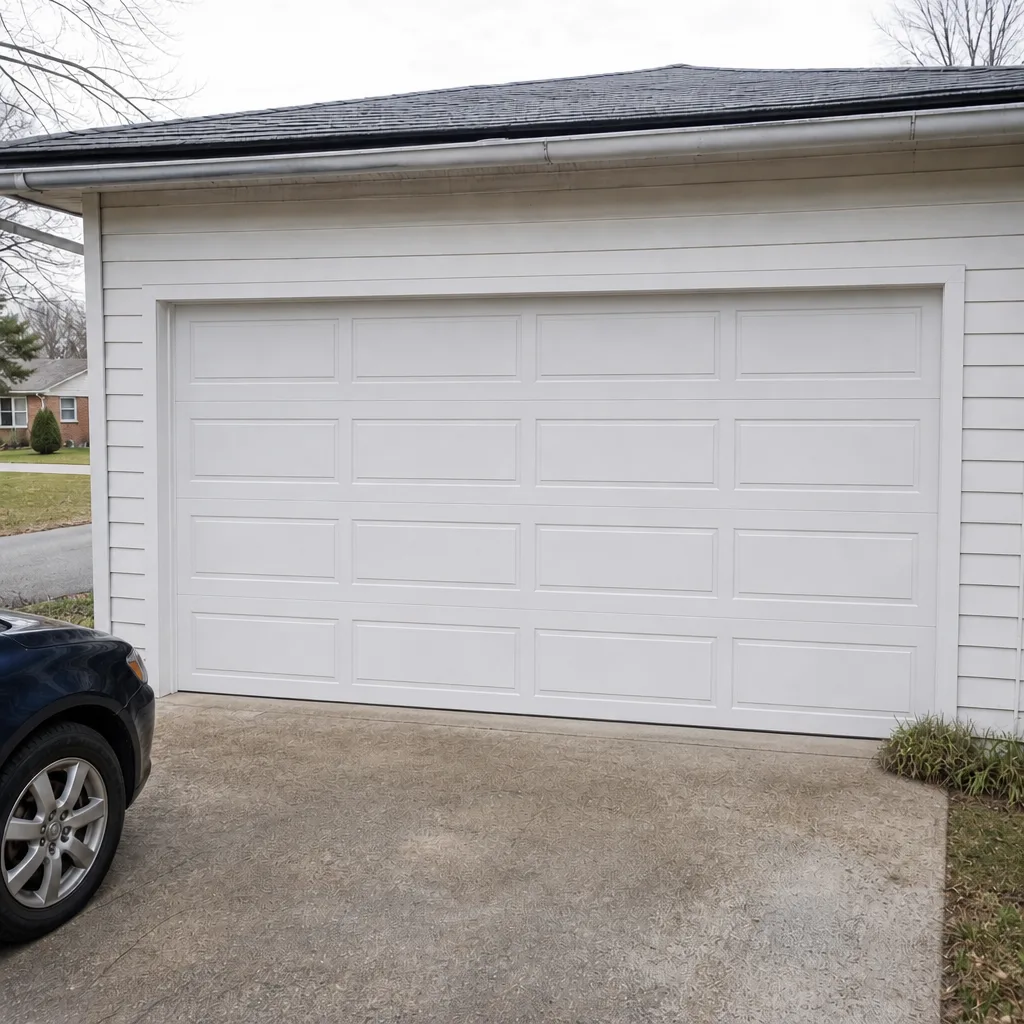
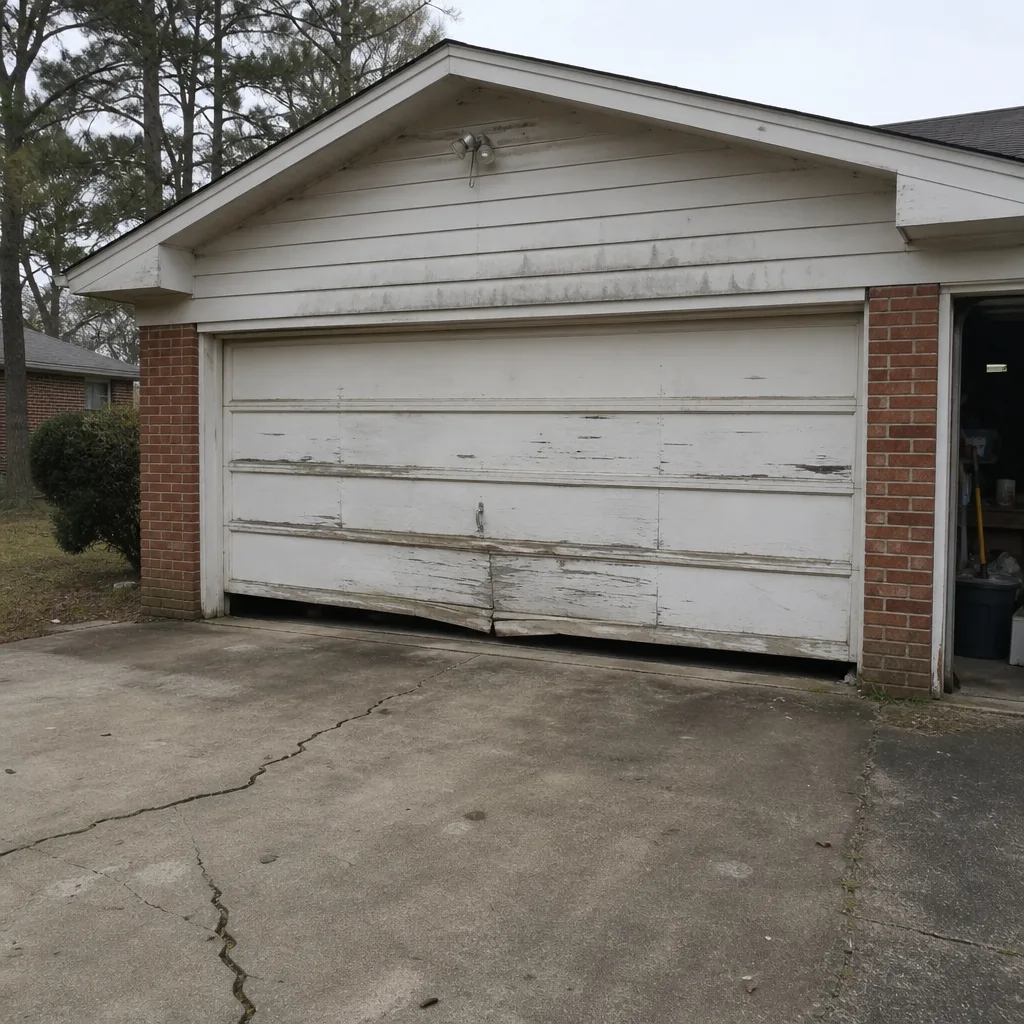 Before
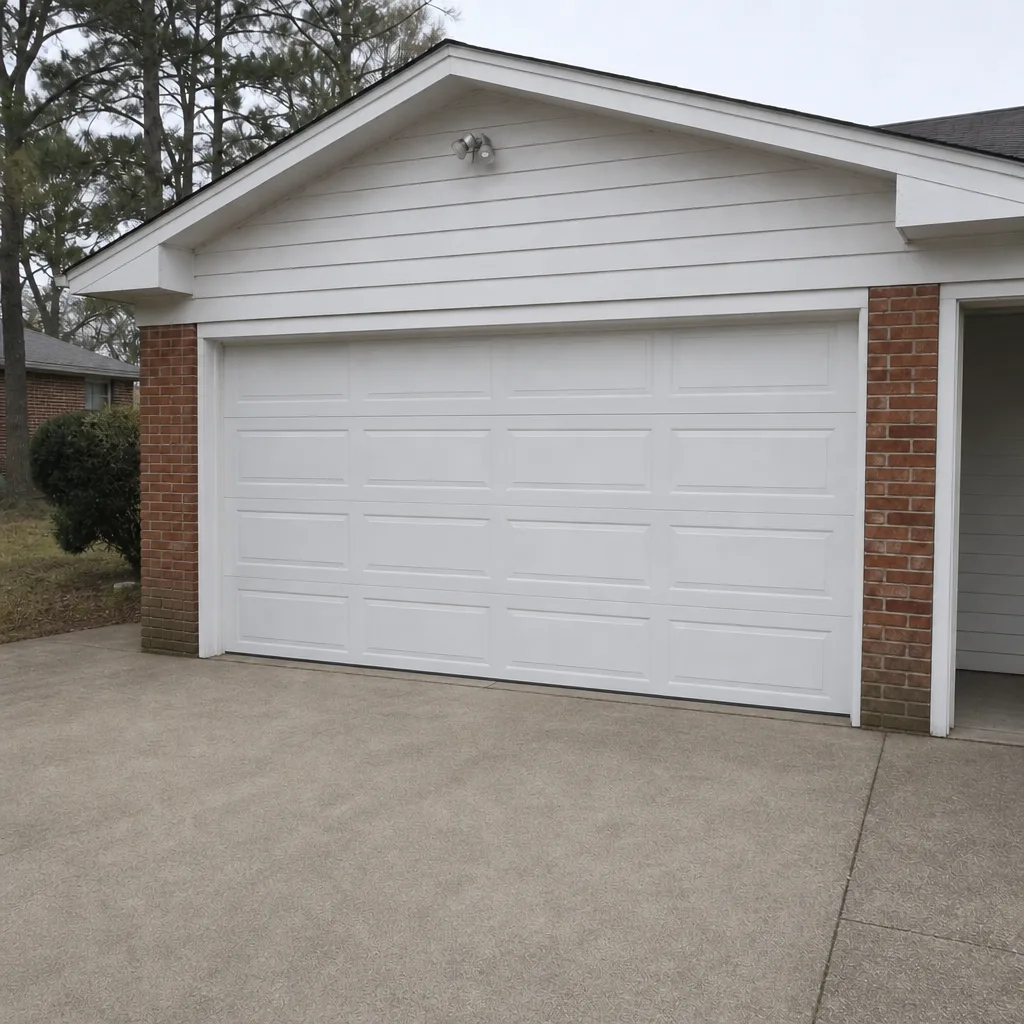 After
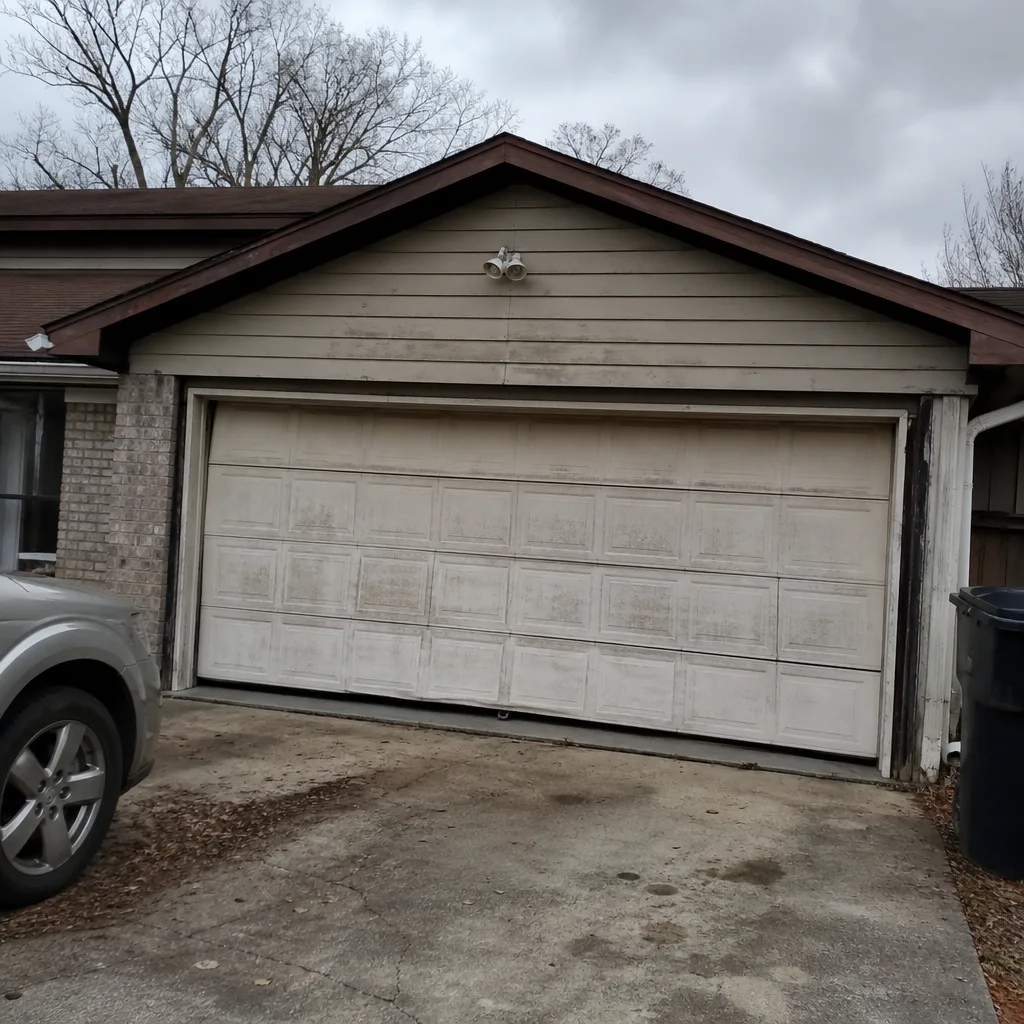
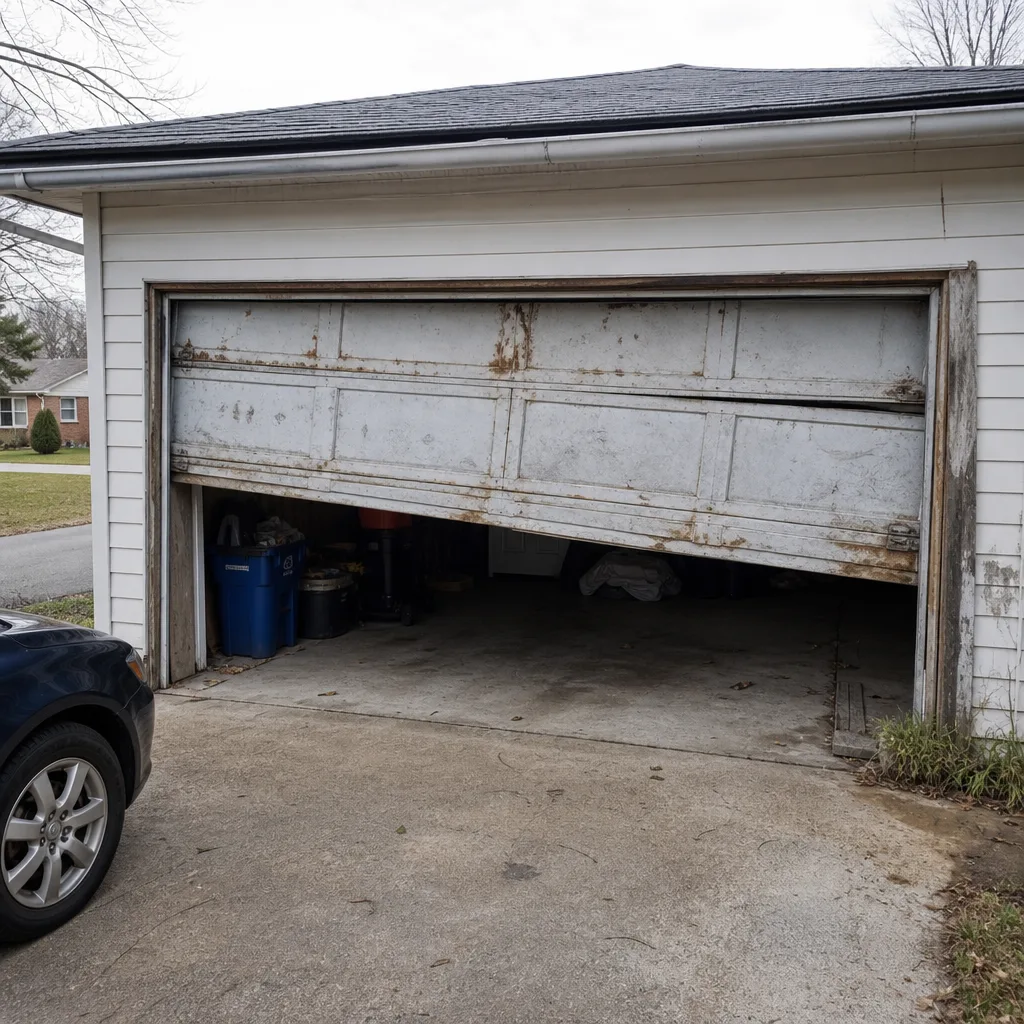 Before
 After
 Before
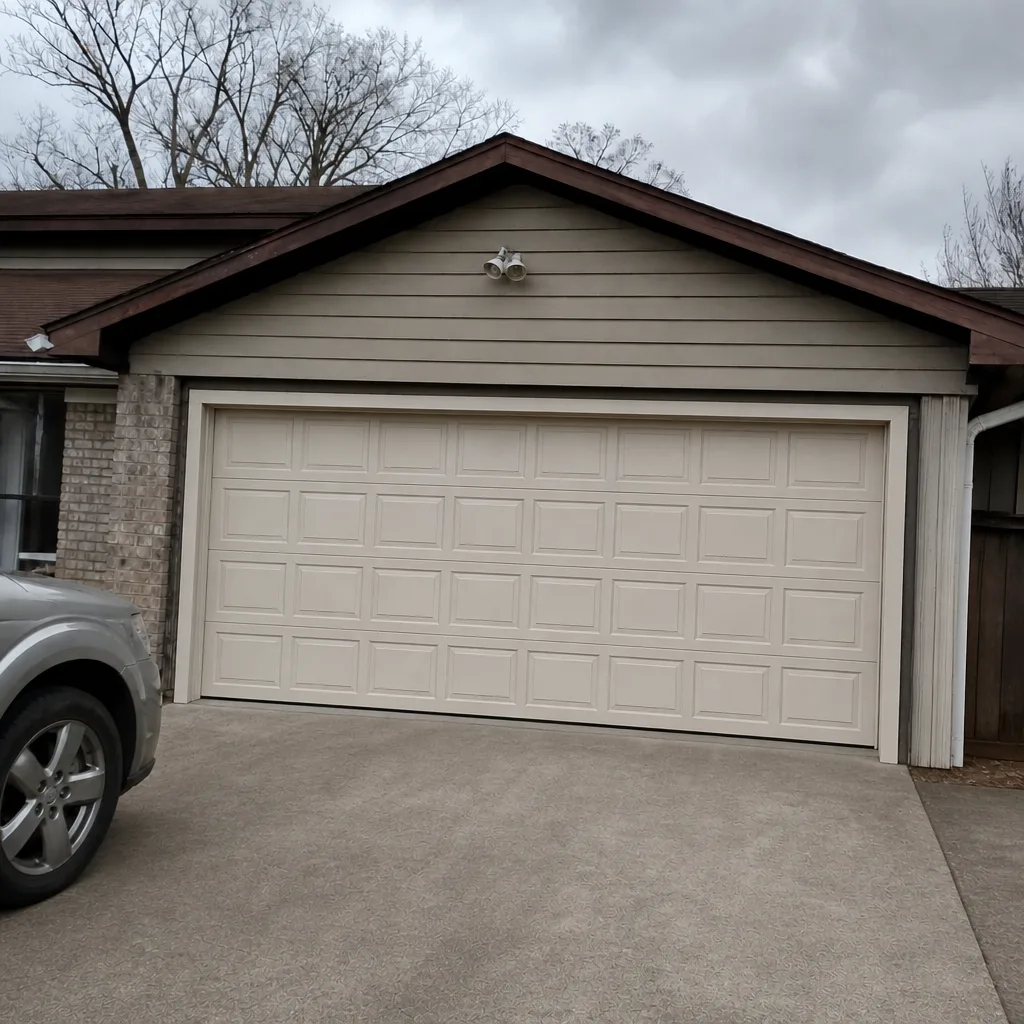 After
When to Call a Professional
A few situations need a call, not a cleaner and a can of lubricant. If you hear a loud bang from the garage and the door won’t open, a spring has failed; stop and call. If the door is off its tracks, or the cables look slack or tangled, call. If you notice cracks or dents in a panel large enough to compromise its structure, that’s a repair, not a maintenance item. If the door runs unevenly, moves heavily, or has a sagging or visible gap on one side, the springs or the framework need a look. If the opener is straining, cutting out on hot days, responding inconsistently, or making sounds it didn’t make before, that’s an opener repair call. Any situation involving springs, cables, or electrical components should be handled by a trained technician. Eaton Garage Door Repair offers free estimates in Fayetteville, and our technicians have up to 11 years of experience. Call (855) 473-7101.
Frequently Asked Questions
Twice a year at minimum, with a deeper clean in March when pollen peaks and a thorough seal inspection in October. Fayetteville’s pollen and humidity mean cleaning and lubricating should be treated as separate steps, not combined.
Because Fayetteville’s freezes tend to come on quickly, rubber bottom seals contract faster than they can recover and pull away from the door, while cold metal on hinges and rollers tightens and binds. Check seals after every significant overnight freeze and lubricate before the first hard freeze of the season.
Heat. Fayetteville garage interiors get hotter than many openers are rated for, and control boards fail in summer more often than any other season. If your opener cuts out on hot days and works in the morning, the unit is telling you its electronics are struggling. Have it diagnosed by a technician.
Yes, and you should, but it needs to happen before you lubricate. Use a wet cloth and soft brush, or a shop vacuum, to clear pollen from the track channels and from the torsion spring coils. The cleaning is homeowner work. Don’t try to remove the springs or touch the cables.
Inspect panels for dents and cracks, check that every hinge is firmly attached, test the manual release, confirm safety reverse works, and look at the tracks for any bend. Wind-driven rain from storm bands finds every gap in an aging bottom seal, so replacing a worn seal is a good pre-storm task too.
Our technicians are experienced, with up to 11 years of experience working on garage doors and openers. We work on eight of the most widely installed brands, from Genie and Chamberlain openers to Clopay and Amarr doors. If you want to discuss credentials for a specific job, call us and ask before we book anything. Call (855) 473-7101 for a free estimate.
The Bottom Line
Seasonal garage door care in Fayetteville is simpler than it sounds once you stop following a national calendar. Clean deeply in March when pollen peaks. Lubricate after pollen settles in late spring. Watch for heat-related opener symptoms through the summer. Inspect seals in October and check them again after the first freeze in December. Prepare for storm season before hurricane-band weather reaches us. The tasks you can do yourself are mostly cleaning, lubricating, testing, and checking seals. Springs, cables, opener electronics, and any repair that requires the door to be under load are technician work. Follow this rhythm for a year, and you’ll spend less on corrective repairs than the homeowner who waits for something to break. When a part needs replacing, our technicians work on whatever brand you have, so we diagnose correctly the first time. Related areas get the same treatment in our Spout Springs guide, and you can read more about Eaton Garage Door Repair and the full range of doors and openers we handle.
Call (855) 473-7101 for a free estimate. We answer 24/7. Fast dispatch from 7am to 7pm, Sunday through Friday.
Written by the team at Eaton Garage Door Repair.