
Last updated November 15, 2026
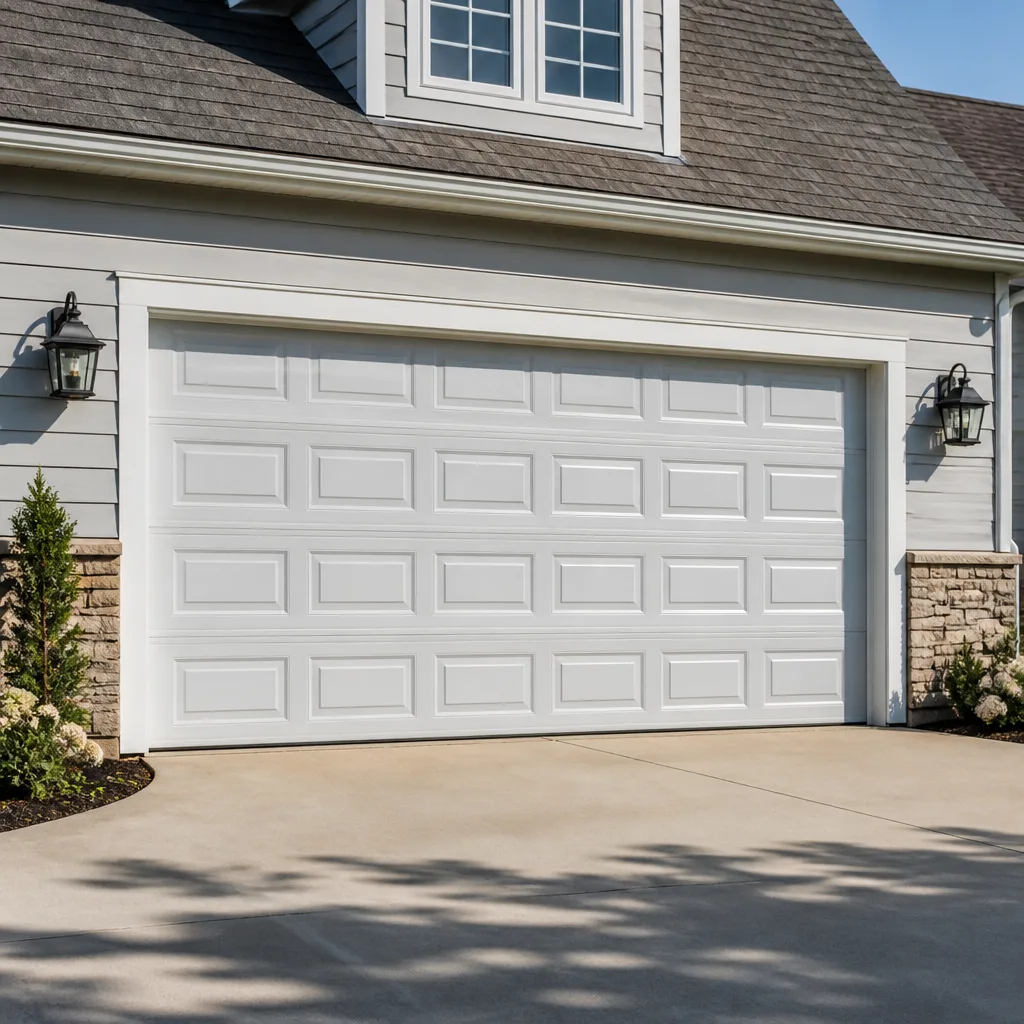 Raised-panel steel
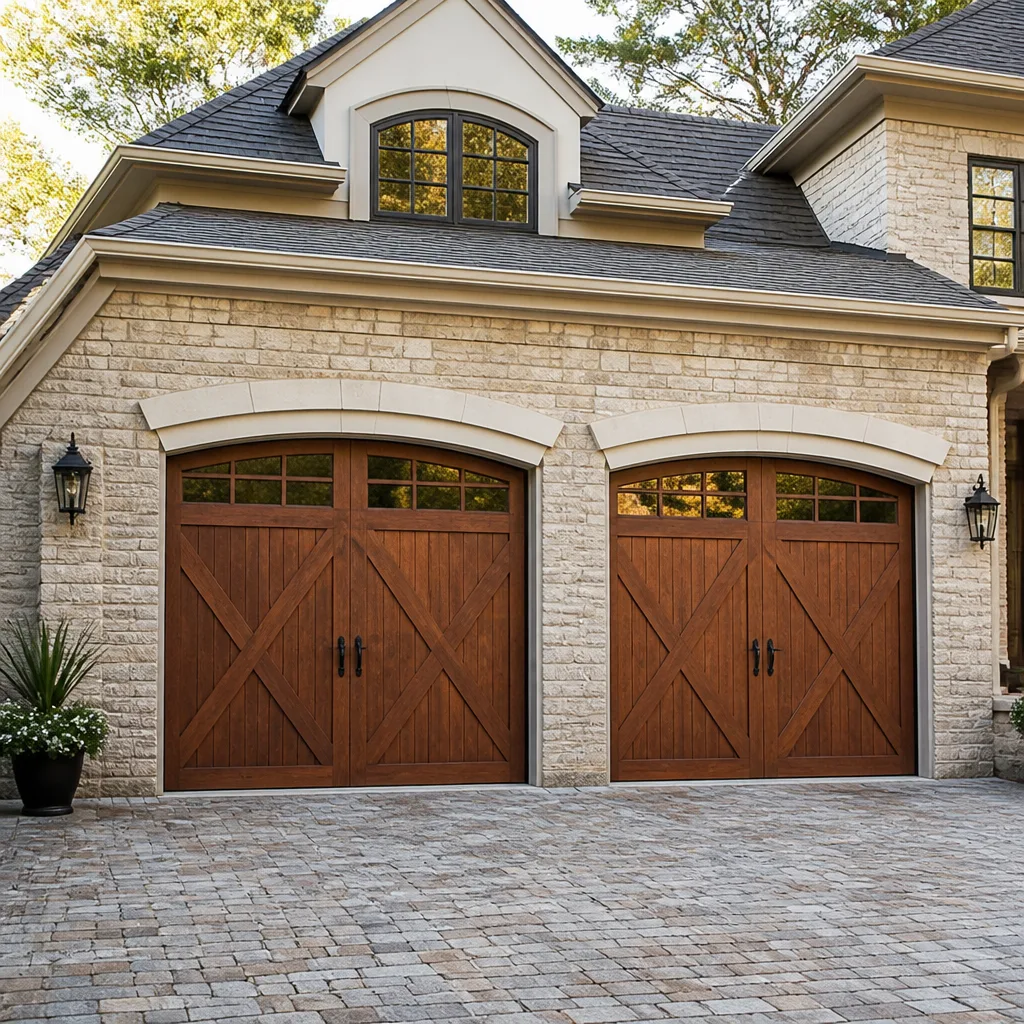 Carriage house
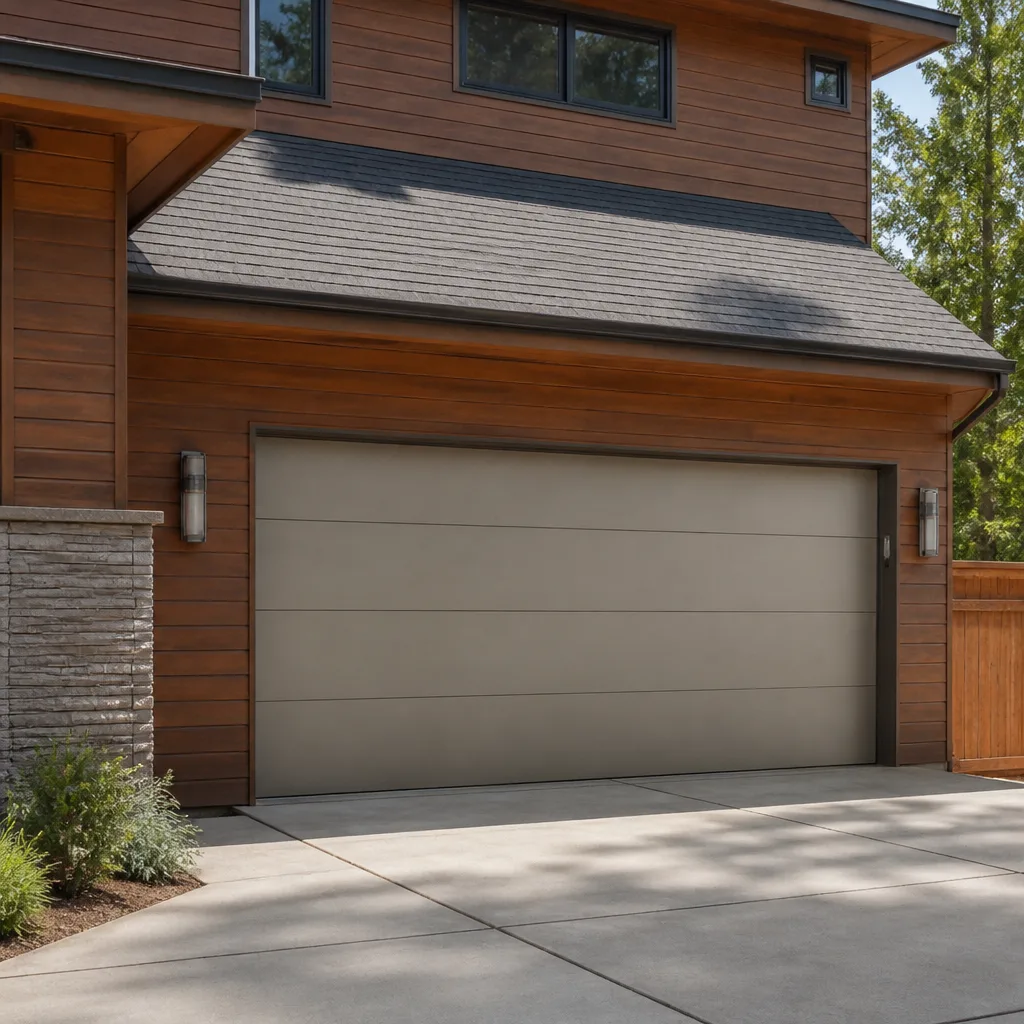 Modern flush
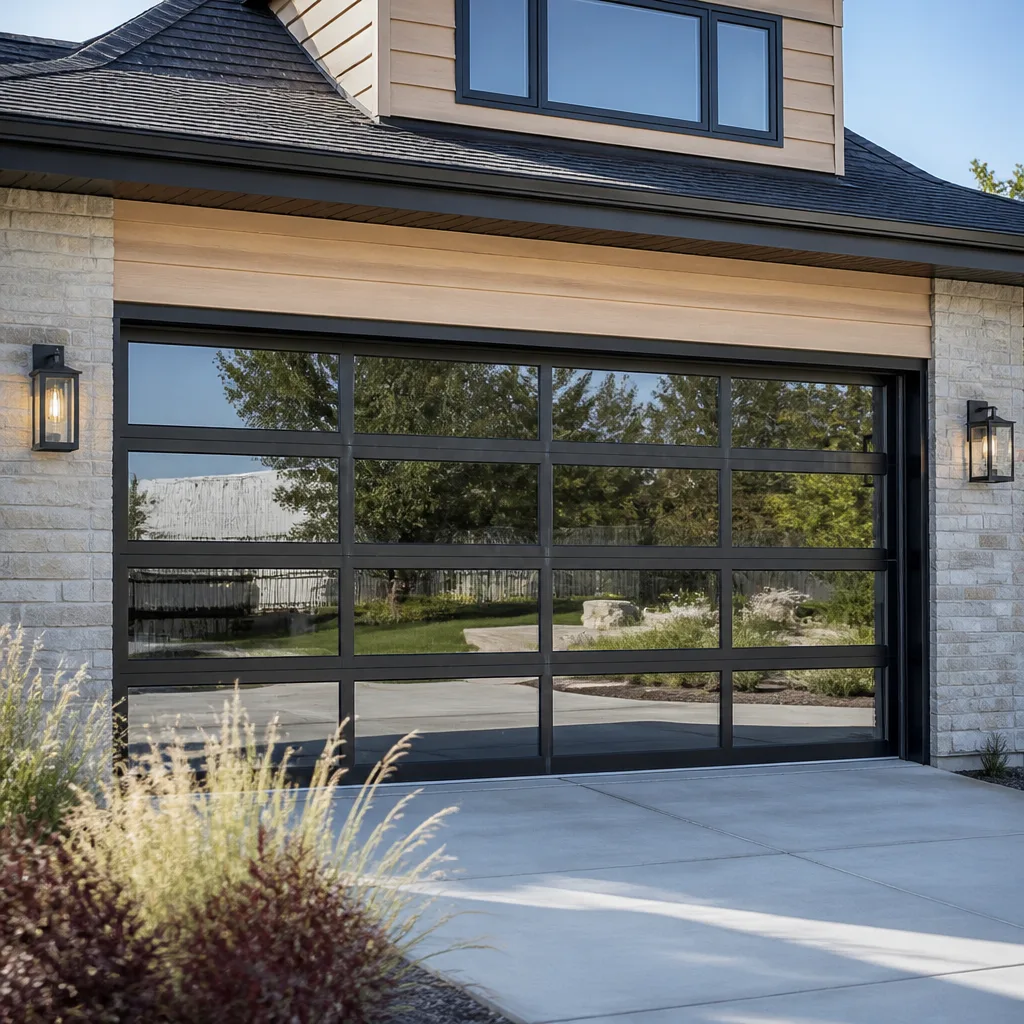 Full-view glass
 LiftMaster openers
 Chamberlain openers
Full 25-point door and opener safety check with every visit - springs, cables, rollers, tracks, and your LiftMaster or Chamberlain opener included
You get a price before we start. It does not change when the pro arrives.
Get your free estimateDIY vs Professional Garage Door: The Fayetteville Homeowner’s Decision Guide
Most articles about garage door repair split the world into two camps and hand you a blanket verdict: do it yourself or call a pro. That framing is wrong. A garage door is not one system but a stack of separate tasks, and the risk climbs steeply as you move from the weather seal at the floor to the torsion spring at the top. Replacing a bottom seal takes twenty minutes and a screwdriver. Winding a torsion spring can injure you permanently in the time it takes to blink. Everything in between needs a judgment call. This guide sorts every common garage door job into three buckets, safe, cautious, and professional-only, so you can look at the actual task on your list and know which side of the line it falls on. We’ll also cover the hidden costs of a failed attempt, the brand-specific quirks on doors common around Fayetteville, and how to prep a job to keep a pro’s time, and your bill, down.
Quick Answer
Safe DIY jobs on a garage door are limited to the weather seal, bottom rubber, lubrication, visual inspections, photo-eye alignment, and opener remote or keypad programming. Everything involving torsion springs, extension springs, cables, drums, bottom brackets, and the high-tension hardware that holds the door’s weight is professional-only. Panel replacement, track realignment, and opener logic board work sit in the middle: possible to attempt, but easy to make worse. Our technicians have up to 11 years of experience, and the injuries we hear about most come from spring work, not from seals or remotes.
Styles & brands we work with
- Raised-panel steel
- Carriage house
- Modern flush
- Full-view glass
- LiftMaster openers
- Chamberlain openers
Table of Contents
- Why the DIY Question Is Really a Risk Question
- The Three Buckets: Safe, Caution, Professional-Only
- The Torsion Spring Reality: Why This One Is Different
- Brand-Specific Gotchas on Doors Common in Fayetteville
- The Hidden Cost of a Failed DIY Attempt
- The Gray Zone: Prep Work That Lowers Your Professional Bill
- What Fayetteville Conditions Do to a Garage Door
- Cost Comparison: When DIY Saves and When It Costs
Why the DIY Question Is Really a Risk Question
The usual DIY-versus-professional debate is framed almost entirely around money. Is the part cheaper than the call? Can I save the labor? That framing gets people hurt, because it ignores the one variable that matters most: what happens if the job goes wrong. A garage door is one of very few systems in a home where the stored energy in a single component can kill or maim you in under a second and leave no room to react. The money question is real, but it’s the second question, not the first.
Here’s a better way to think about it. Every job on a garage door has two costs: the cost of doing it, and the cost of getting it wrong. For a bottom seal, the cost of getting it wrong is a leaky seal and a wasted fifteen dollars. For a torsion spring, the cost of getting it wrong can include an emergency room visit, a bent door section, and a repair bill far larger than the original job. The risk multiplier is what changes across tasks, not the dollar amount of the parts.
We’ve watched this play out across Fayetteville long enough to see the pattern. Homeowners who sort their to-do list by risk rather than by price tend to have fewer surprises. They handle the low-stakes items themselves, prep the medium-stakes items carefully, and hand the high-stakes items to someone who does them every day. That’s the whole method, and the rest of this guide applies it task by task.
One more thing worth naming. “DIY” and “professional” aren’t the only two options. There’s a middle path where a homeowner does the parts of a job that carry no risk, then hands the rest to a technician, cutting the bill without touching the dangerous components. We’ll get to that in the gray-zone section.
The Three Buckets: Safe, Caution, Professional-Only
Every common garage door job fits into one of three categories, and we don’t hedge on which is which. Read the task you’re considering and match it to its bucket. If it’s not on either of the first two lists, treat it as professional-only.
Bucket 1: Safe DIY
These are jobs a homeowner with basic tools can complete safely. None involve stored tension, and none affect how the door balances or closes.
- Bottom seal replacement – slides into the bottom retainer, no tension involved
- Side and top weatherstripping – nail or adhesive strip around the frame
- Lubrication – rollers, hinges, tracks, and the opener rail, per the manufacturer’s guide
- Visual inspection – checking for frayed cables, worn rollers, or sagging sections
- Photo-eye alignment – repositioning the safety sensors at the bottom of the opening
- Remote and keypad programming – pairing a new remote or resetting a keypad code
- Light bulb replacement on the opener unit
Bucket 2: Proceed With Caution
These jobs are technically achievable but carry a real chance of making the problem worse or of involving hidden tension you can’t see. If you attempt any of these, read the specific steps for your door model first.
- Panel replacement – a single section swap is doable, but door alignment matters and the panel has to match the existing hinge spacing
- Track realignment – a bent section of vertical track can often be nudged back, but if the door binds you’ve likely made a spring problem worse
- Roller replacement – straightforward once the door is secured and the spring tension is released, but removing tension is the dangerous part
- Opener logic board reset – a factory reset on a modern opener is a menu process, but you can wipe your travel limits and need to re-teach them
- Sensor wiring replacement – a low-voltage job, but a bad splice can cause intermittent closing that looks like a logic board failure
Bucket 3: Professional-Only
These involve stored tension, overhead weight, or both. Do not attempt them yourself.
- Torsion spring replacement or adjustment – stores enough energy to cause serious injury
- Extension spring replacement – same stored-tension problem, different geometry
- Cable replacement – cables hold the tension that keeps the door balanced
- Drum and bottom bracket work – the bottom bracket is under tension whenever the cables are wound
- Center bearing plate work – supports the torsion shaft on the header
- Full opener replacement – involves the rail, header bracket, and the door’s balance
If you’re in Fayetteville and the task is on the professional-only list, this is where we come in. Call Eaton Garage Door Repair and we’ll tell you what it involves and what the written estimate covers.
The Torsion Spring Reality: Why This One Is Different
A torsion spring stores enough energy to cause permanent injury in under a second. That isn’t a scare tactic; it’s the basic physics of the component. The spring is a coiled steel rod that’s wound hundreds of times when the door is closed, and that energy is what lifts a door that can weigh several hundred pounds. When a spring is wound or unwound with the wrong tool, the wrong number of turns, or the wrong body position, the stored energy releases at once.
Three things make spring work harder than it looks:
- The tension isn’t visible. A wound spring looks identical to an unwound one. You cannot tell by looking whether the door is safe to work on.
- A spring can fail while you’re handling it. Old springs snap. That’s what they do. A spring that’s been in place for years has a predictable lifespan, and the failure happens without warning.
- Winding bars are the wrong tool for most homeowners. The proper winding bar is a specific length and diameter for a reason. A screwdriver or a piece of rebar is what causes most of the injuries we hear about.
Here’s what the injury pattern looks like in practice, without dressing it up. The most common serious injuries from DIY spring work are to the hands, wrists, and forearms, from a bar slipping out of a wound spring, and to the head and face from a spring or bar snapping back. These are hospital-level events, not bandage-level events. A broken finger from a slipped winding bar ends a weekend project and starts a medical bill.
None of this is meant to frighten anyone away from the safe DIY list. Replacing a bottom seal is genuinely easy, and we’re happy to be out of a job on that one. The point is narrower: spring work is in a category of its own, and the sensible move is to leave it to someone with the tools and the training. Our technicians have up to 11 years of experience with torsion and extension springs on every major door brand, and that experience is measured in exactly this kind of judgment.
One more piece of the puzzle worth flagging. A broken spring often isn’t the only damage. When a torsion spring snaps, the door drops, and the cables, drums, and bottom brackets can all take secondary damage in the same moment. That’s a reason to have the whole assembly inspected rather than just swapping the spring, and it’s the kind of thing a trained eye catches before it becomes a bigger repair down the road.
Brand-Specific Gotchas on Doors Common in Fayetteville
Garage doors look similar from the street, but each manufacturer has its own quirks, and those quirks matter when you’re deciding whether to attempt a job. Here are the ones we see most often on doors in the Fayetteville area, and where the DIY line falls for each.
Clopay
Clopay doors are common here, and the panels are designed to interlock in a specific order. A homeowner replacing a single panel will sometimes get the alignment slightly off, and the result is a door that binds on the track. Replacing one Clopay section is possible, but the panel has to sit flush with its neighbors or the door will run rough. That’s a caution-bucket job, not a safe one.
Amarr
Amarr doors often use a slightly different hinge spacing than other brands, which means a universal replacement hinge may not seat correctly. The safest DIY work on an Amarr is limited to lubrication, weatherstripping, and the opener remote. If you’re considering hinge or roller work, check the model first, because the wrong part can cause the door to bind.
Wayne Dalton
Wayne Dalton’s torsion systems on some models use a different spring plate and cable arrangement than the more common Clopay or Amarr setups. The visible difference matters because a homeowner following a general online tutorial may be looking at the wrong geometry. For Wayne Dalton spring or cable work, treat it as professional-only without exception.
Opener brands: LiftMaster and Chamberlain
LiftMaster and Chamberlain openers, including the myQ-connected systems, are the other place brand quirks show up. A remote that won’t pair is almost always a programming issue, not a hardware failure, and it’s fixable from the keypad or the wall control. A logic board reset is a menu operation on these openers, but the reset wipes your travel limits, and re-teaching them is where homeowners get stuck. If your LiftMaster or Chamberlain opener is doing something you can’t sort out from the manual, that’s a good moment to have us look at it.
Genie systems have their own chain and belt arrangements, and the opener repair side of our work covers them alongside the other major brands. If you’re not sure which brand you have, the model plate on the back of the opener or inside the door jamb will tell you.
The Hidden Cost of a Failed DIY Attempt
The classic DIY cost story goes like this: a homeowner buys a part for thirty dollars, spends an afternoon on the job, and something goes wrong. The cheap part is now a bigger repair, and the total bill ends up higher than if a professional had handled it the first time. The pattern repeats because the cheap part rarely fails alone. It fails with a bent track, a snapped cable, or a door that’s now out of balance.
Here’s how the escalation typically works, task by task:
- A track adjustment on a binding door. The track gets nudged, the door still binds, and the underlying spring problem gets worse. What was a spring repair becomes a spring plus track replacement.
- A panel swap done off-alignment. The panel seats crooked, the door runs rough, and the uneven travel wears the rollers and the opener gear. Now it’s a panel, a set of rollers, and opener work.
- A remote or logic board attempt that wipes the travel limits. The opener closes too far and the door hits the floor, which stresses the bottom section. What was a fifteen-minute reset becomes a service call plus a travel-limit recalibration.
- A spring or cable attempt that fails mid-job. The worst case, and the one with the highest cost in every sense. A hospital visit plus a full assembly replacement is the ceiling, and it’s not rare.
We’re not pointing this out to talk you out of DIY. The point is narrower: the price of the part is not the price of the job. The true cost of a DIY attempt is the part plus the probability that you’ll need a professional afterward anyway, multiplied by the cost of the secondary damage. For a bottom seal that math favors DIY every time. For a spring, the math is upside down.
The honest answer when a job is on the fence is to get a written estimate before you start. A free estimate costs you nothing and gives you a real number to compare against the DIY route. Call (855) 473-7101 for a free estimate, and the price we quote is agreed before any work starts.
The Gray Zone: Prep Work That Lowers Your Professional Bill
The best move for a lot of Fayetteville homeowners is neither full DIY nor a straight hand-off. It’s doing the low-risk prep work so a professional’s time is spent on the actual job. This cuts the bill without touching the dangerous components, and it’s the answer we give most often when someone asks how to save money on a repair.
Here’s the prep list. None of it involves stored tension, and all of it shortens the time a technician spends on the easy part of a service call:
- Clear the garage floor. Move anything that blocks the door’s travel and the area directly under the spring and track. This is the single biggest time saver.
- Clear the driveway under the door. The technician needs room to work from both sides.
- Note the exact symptoms. Write down whether the door is stuck open or closed, what the opener does when you press the button, and whether the issue started suddenly or slowly. A clear symptom history speeds up the diagnosis.
- Locate the model plate. Find the model number on the door and the opener, and have it ready. This is especially useful on Clopay, Amarr, and Wayne Dalton doors where the exact model changes the parts needed.
- Check your remote and keypad first. If the opener doesn’t respond, try a fresh remote battery and a wall-control press before calling. If the wall control works and the remote doesn’t, that’s a programming job, not a hardware failure.
- Photograph the hardware. A clear photo of the spring, drum, and bottom bracket helps the technician confirm the right parts before the visit.
The line not to cross is here: don’t loosen, remove, or adjust anything that holds tension. That means the springs, the cables, the drums, and the bottom brackets. Prep work is about clearing space, gathering information, and ruling out the easy causes. The dangerous hardware stays untouched until the technician arrives.
This is also where a single-trade focus pays off. Because garage doors are all we do, a technician can diagnose a spring, a track, or an opener logic issue in the same visit rather than referring you to a second contractor. The result is one free estimate and one written price instead of two.
What Fayetteville Conditions Do to a Garage Door
Garage doors here deal with a specific set of conditions that shape how they wear and which jobs come up more often. Fayetteville summers bring heat and humidity that work on the wood and metal of a door, and the seasonal swing between hot, sticky months and cooler ones causes the door’s materials to expand and contract. That movement is normal, but it’s also why a door that ran smoothly in spring can start to drag by late summer.
A few things we see more of around Fayetteville because of the local climate and housing stock:
- Weatherstripping wears faster than the door. Heat and humidity break down the bottom seal and the side strips, which lets water and pests in. This is squarely in the safe-DIY bucket, and it’s the most common job a homeowner can handle without help.
- Hardware works loose over time. The constant expansion and contraction loosens hinge bolts and track brackets. A visual inspection every few months catches this before it becomes a binding door.
- Older doors in established neighborhoods. Fayetteville has a wide mix of housing, from older homes near downtown to newer construction on the edges. A door installed decades ago may have a spring system that’s been repaired more than once, and that history matters when a technician evaluates it.
The humidity also affects the opener. Modern LiftMaster and Chamberlain openers with myQ connectivity are sealed, but the wall control, the photo-eye wiring, and the outdoor keypad are all exposed to the same moisture the door is. If your keypad stops working after a wet stretch, it’s worth checking the battery and the wiring before assuming the opener needs replacing.
None of this changes the three-bucket rule. What it changes is how often you should look at your door and how quickly a small issue on the safe list should get handled. A bottom seal that’s failing in a Fayetteville summer lets more water in than one failing in a drier climate, and a loose hinge that’s ignored here becomes a binding door sooner.
When a repair call does come up, we handle garage door repair and garage door opener repair across the area, and we’re familiar with the brands most common on Fayetteville homes. If you’re just outside the city, our work in Spout Springs follows the same approach.
Cost Comparison: When DIY Saves and When It Costs
Pricing on garage door work is set per job by a written estimate, so we won’t hand you a fake table of “real local prices.” What we can give you is the honest shape of the math, task by task, so you can decide where the line falls for you. The written quote sets the final price, and the estimate itself is free.
Here’s how the cost comparison breaks down by bucket:
- Safe DIY tasks – the part is cheap and the labor is your own time. A bottom seal, weatherstripping, lubrication, and remote programming are all jobs where DIY saves real money with almost no risk of making things worse.
- Caution tasks – the part may be affordable, but the labor involves judgment calls that can go wrong. A panel swap can be done, but a misaligned panel or a bent track turns a one-part job into a multi-part repair.
- Professional-only tasks – the cost of the job itself is set by the written estimate, and the cost of a failed attempt is open-ended. Springs, cables, drums, and bottom brackets are the tasks where the professional route is the cheaper route once risk is priced in.
- The gray zone – prep work is free, and it shortens the professional’s time on the job. Clearing the floor, gathering symptoms, and locating the model plate can all reduce the scope of what the technician has to do.
The pattern that matters: the dollar gap between DIY and professional narrows as the task gets safer and widens as the task gets riskier. For a seal, DIY wins on cost and loses nothing on safety. For a spring, the math inverts, because the potential cost of a failure dwarfs the labor savings.
Our technicians have up to 11 years of experience, and that experience is often spent telling homeowners which jobs they don’t need us for. If a task is on the safe list, we’ll say so. If it’s on the professional-only list, we’ll explain why and give you a written price before anything starts. That’s the estimate in plain terms: you’ll know the number before the work begins, and the number doesn’t change because you asked.
Common Mistakes to Avoid
- Trying to wind a torsion spring with a screwdriver or a piece of rebar. This is the most common cause of serious DIY injuries. A winding bar exists for a reason, and the wrong tool is where most of the hospital visits come from.
- Assuming a door that looks fine is safe to work on. A wound spring looks identical to an unwound one. You cannot judge the tension by sight, so treat any spring work as though the door is loaded.
- Replacing a single panel without checking the brand’s alignment. A Clopay or Amarr panel that sits slightly off will bind the door on the track, turning a cosmetic fix into a repair.
- Adjusting the track to stop a binding door before checking the springs. A door that binds is often a symptom of a tension problem, not a track problem. Nudging the track can make the real issue worse.
- Resetting a LiftMaster or Chamberlain logic board without recording the travel limits first. A factory reset wipes them, and re-teaching the door’s open and close points is where most homeowners get stuck.
- Ignoring a failing bottom seal through a Fayetteville summer. Heat and humidity break the seal down faster here, and a leaky seal lets water and pests into the garage. This one is on the safe list, so there’s no reason to put it off.
- Calling a general handyman for spring or cable work. A multi-trade or general home-service company may not have the tools or the specific training for torsion work. This is a job for a garage door specialist, and we only work on doors.
See the difference
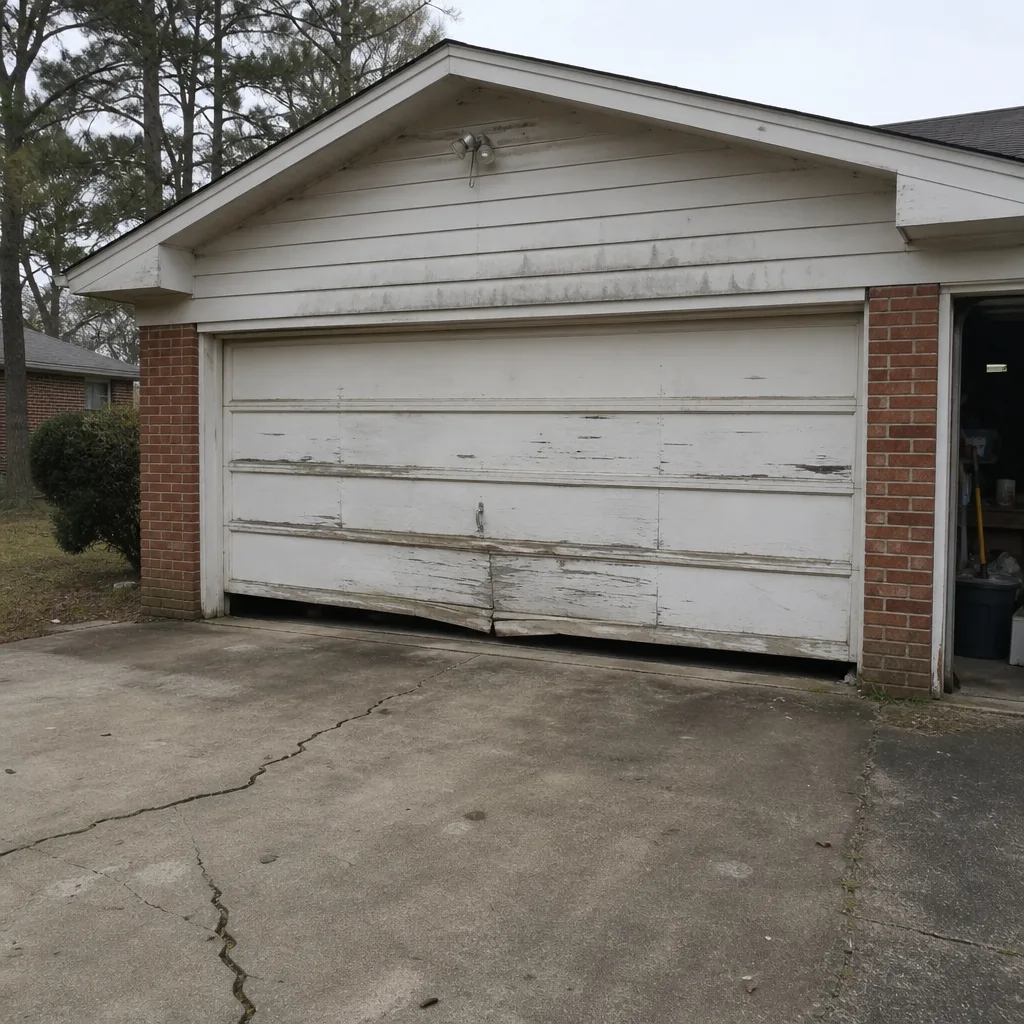 Before
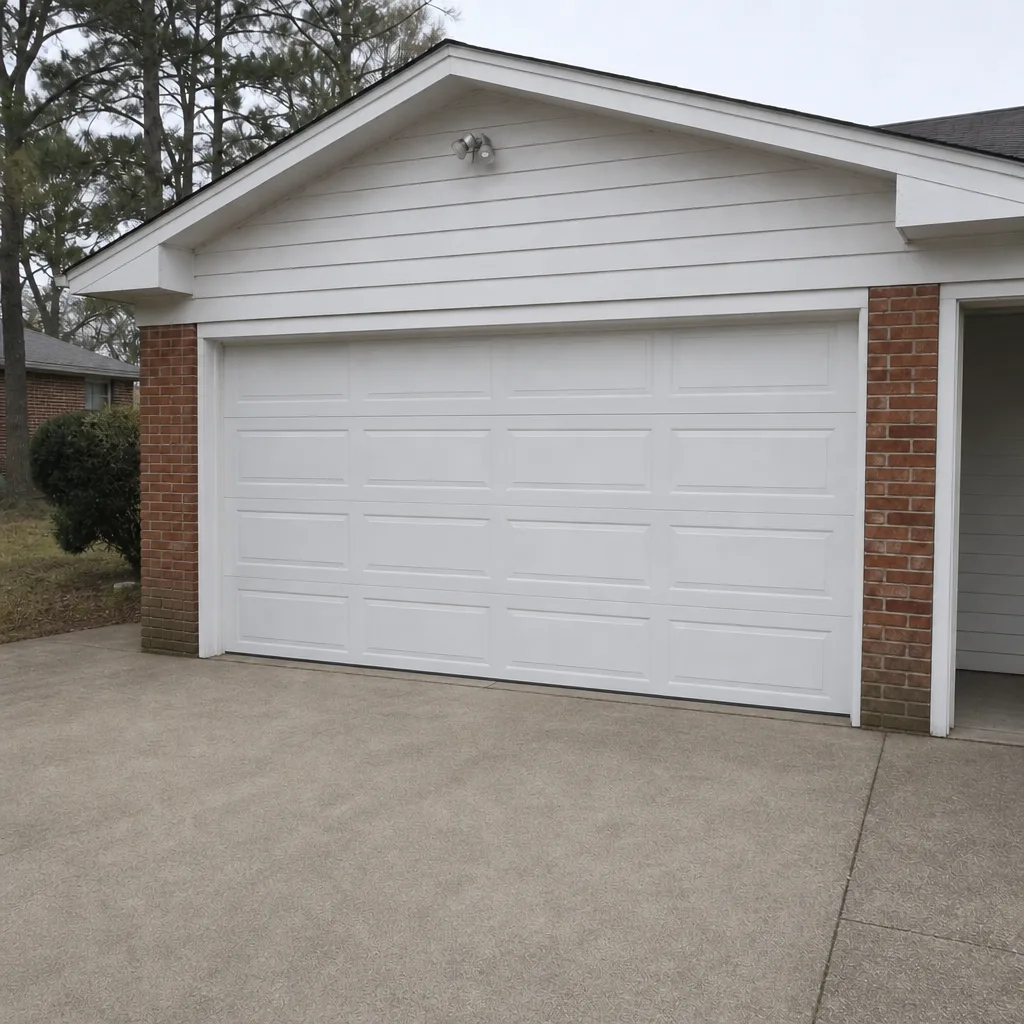 After
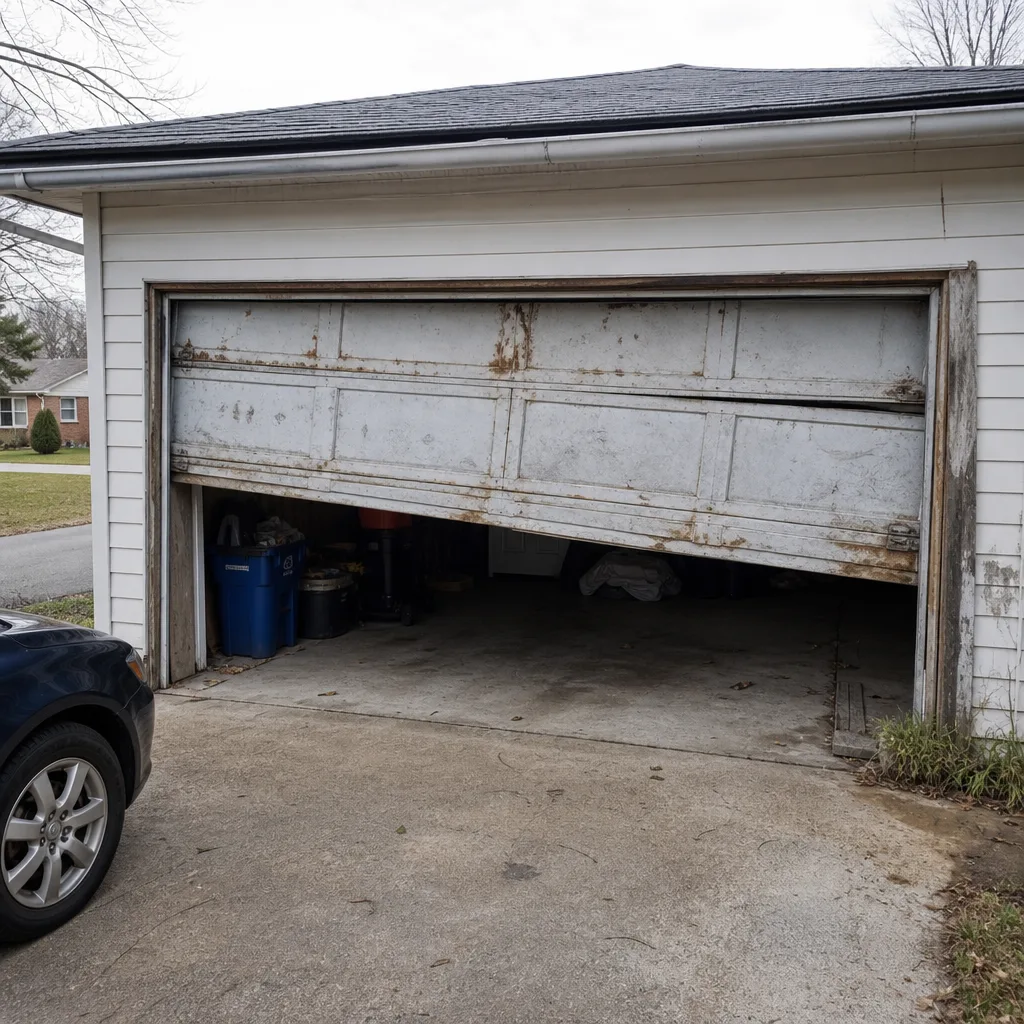 Before
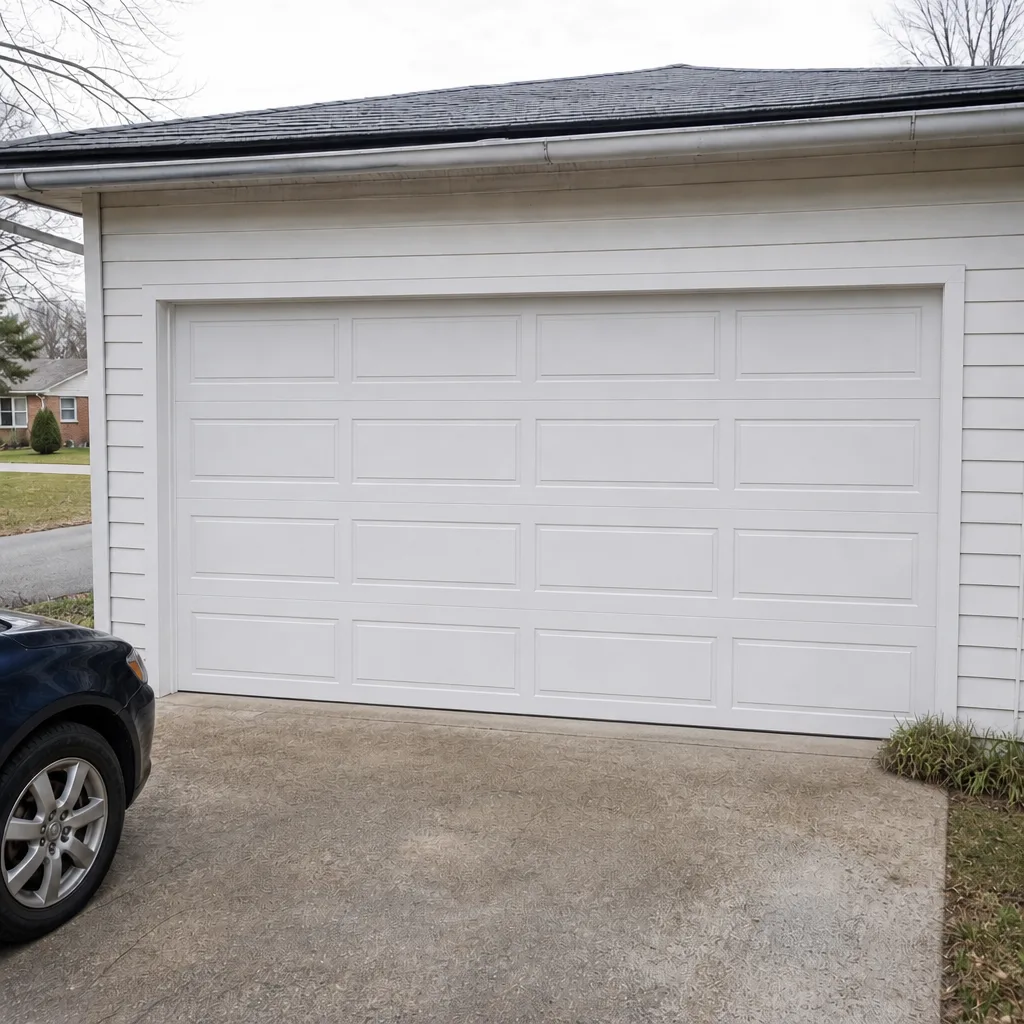 After
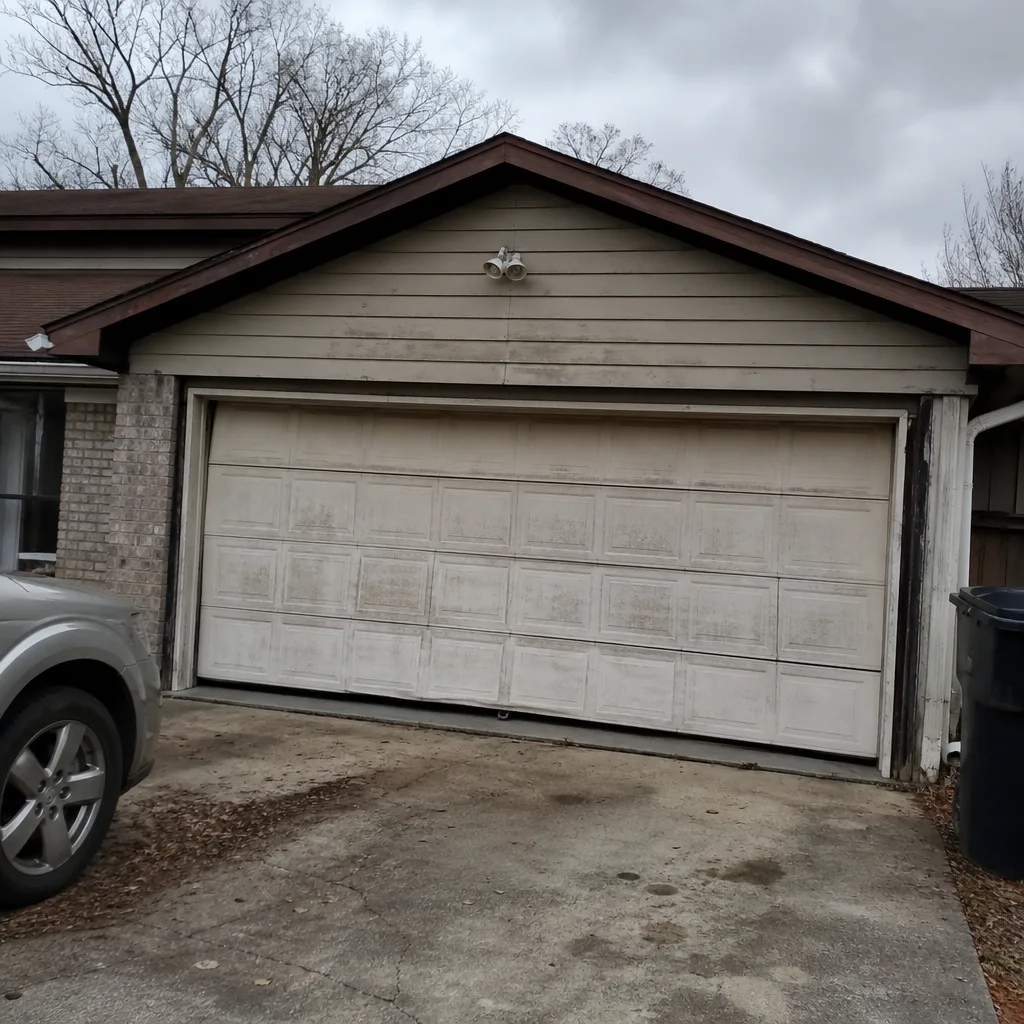 Before
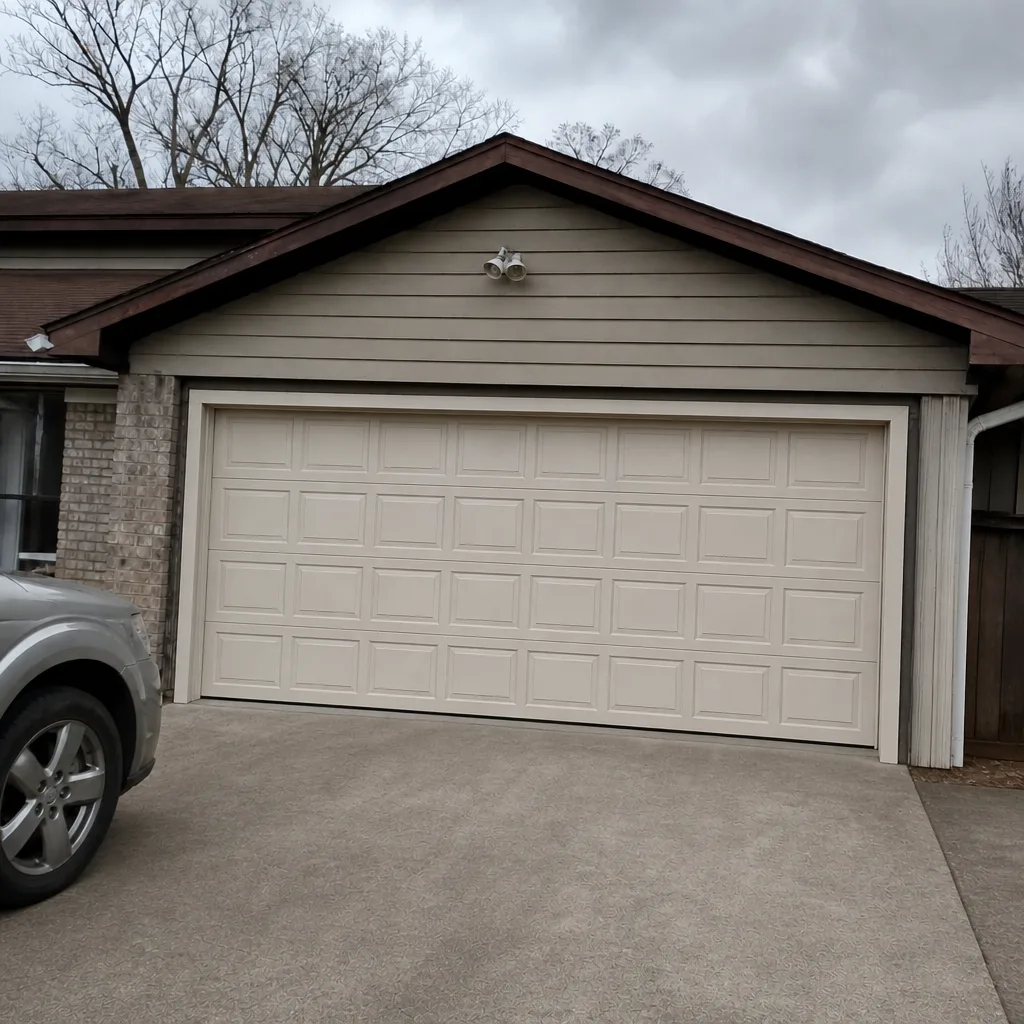 After
When to Call a Professional
Call a professional for any job on the professional-only list: torsion springs, extension springs, cables, drums, bottom brackets, and center bearing plates. Call us if the door is stuck open or closed, if the opener runs but the door doesn’t move, if you hear a loud bang from the garage, or if the door is visibly off its track. Call us if a DIY panel or track attempt didn’t go as planned, because the secondary damage is easier to fix early. And call us if a LiftMaster, Chamberlain, or Genie opener is doing something the manual doesn’t explain. Eaton Garage Door Repair offers free estimates in Fayetteville – call (855) 473-7101. We answer 24/7. Fast dispatch from 7am to 7pm, Sunday through Friday, and the price is quoted and agreed before any work starts.
Frequently Asked Questions
No. Torsion springs store enough energy to cause permanent injury in under a second, and the proper winding tools and training aren’t something a homeowner can pick up from a video. A wound spring looks the same as an unwound one, so there’s no visual way to judge the risk. Call (855) 473-7101 for a free estimate on spring replacement.
Replacing the bottom seal, adding weatherstripping, lubricating the moving parts, adjusting the photo-eye sensors, and programming a remote or keypad are all safe for a homeowner. None of them involve stored tension or affect the door’s balance. If a job involves springs, cables, drums, or bottom brackets, leave it to a professional. Call (855) 473-7101 if you’re not sure which side a task falls on.
Most self-installed panels bind because the new section sits slightly out of alignment with its neighbors, and the door then drags on the track. Clopay and Amarr doors are especially sensitive to this, because each brand has its own hinge spacing. A technician can usually realign the panel and adjust the track in the same visit. Call (855) 473-7101 for a free estimate.
Try a fresh remote battery and a wall-control press first. If the wall control works and the remote doesn’t, it’s a programming issue, not a hardware failure. If neither works, the opener itself needs a diagnosis, and that’s when a call is worth it. Call (855) 473-7101 and we’ll tell you what the written estimate covers before any work starts.
Spring life depends on how often the door is used, not on the calendar, and Fayetteville’s humidity and heat swings mean the surrounding hardware tends to wear faster than the spring itself. A door that’s used heavily will need spring work sooner than a door that’s rarely opened. There’s no set year count that applies to every home. Call (855) 473-7101 if your door is heavy to lift or the opener strains.
Our technicians are experienced professionals, with up to 11 years of experience on the major door and opener brands, and we carry the licensing and insurance required for the trade. We work on LiftMaster, Chamberlain, Genie, Clopay, Amarr, Wayne Dalton, Craftsman, and Raynor systems. Call (855) 473-7101 for a free estimate, and the price is agreed before any work starts.
The Bottom Line
The DIY-versus-professional question for a garage door isn’t really about money, it’s about risk, and the risk changes completely depending on the task. Bottom seals, weatherstripping, lubrication, sensor alignment, and remote programming are safe for any homeowner and worth doing yourself. Panel swaps, track adjustments, and opener logic resets are possible but easy to make worse. Springs, cables, drums, and bottom brackets are professional-only, full stop, because the stored energy in those components can cause permanent injury in less than a second. The gray zone exists, and prep work is where you can save real money without touching the dangerous parts. If you’re in Fayetteville and the job on your list is on the professional side, call (855) 473-7101 for a free estimate. We answer 24/7, with fast dispatch from 7am to 7pm, Sunday through Friday, and the price is quoted and agreed before any work starts.
Written by the team at Eaton Garage Door Repair.