
Last updated November 15, 2026
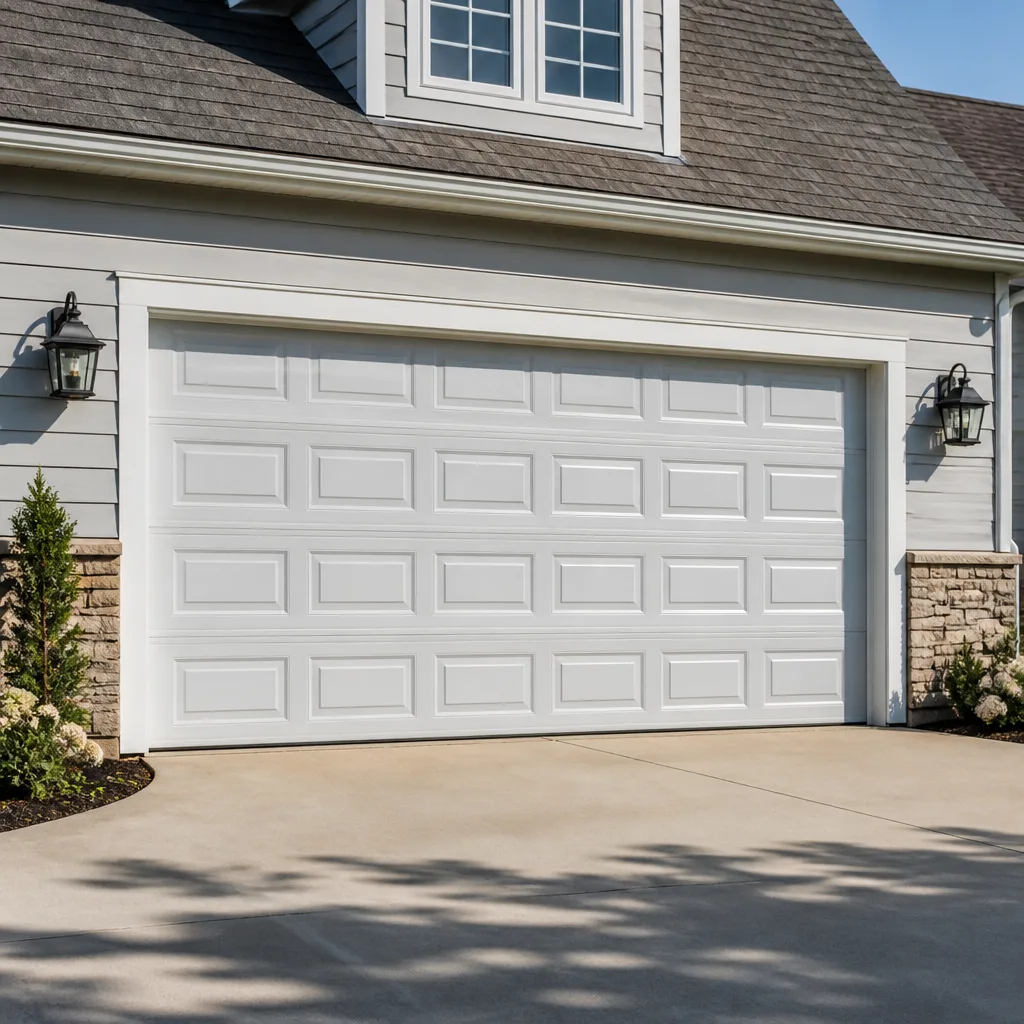 Raised-panel steel
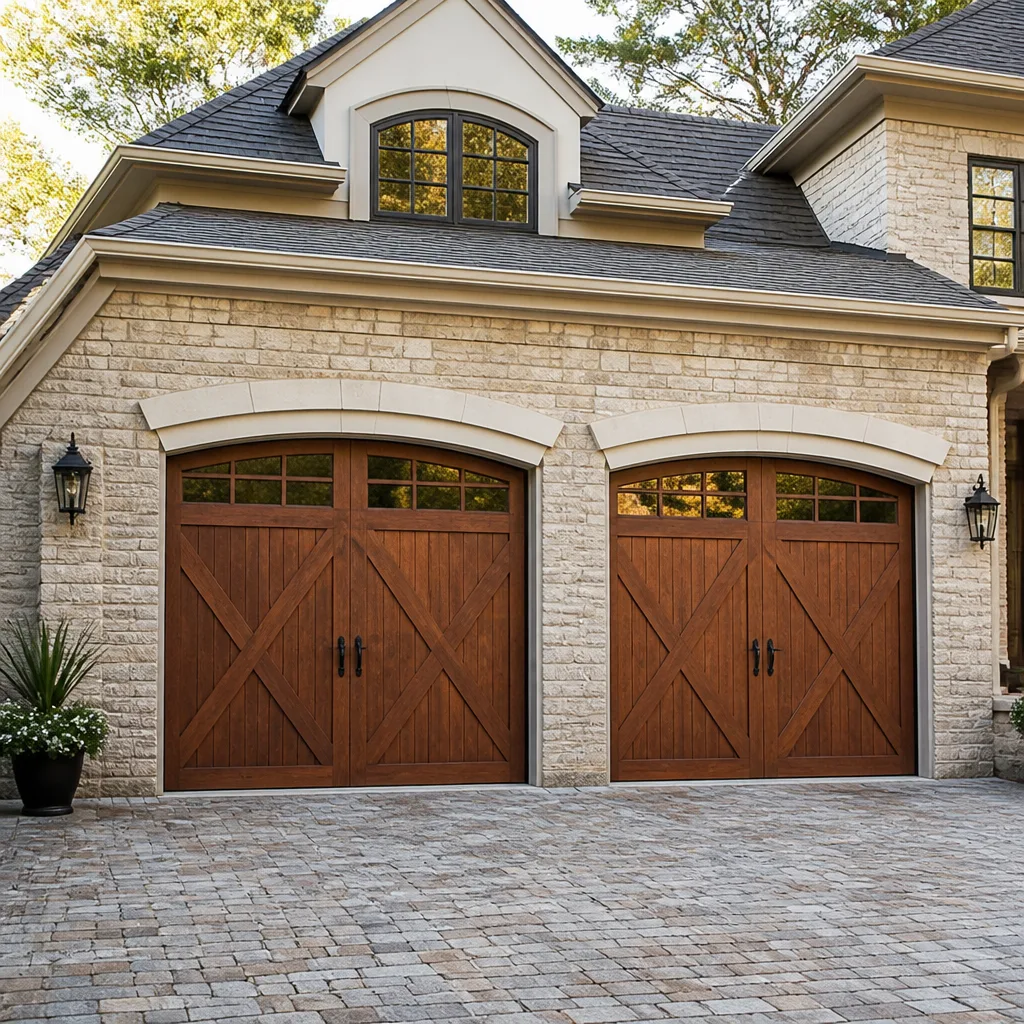 Carriage house
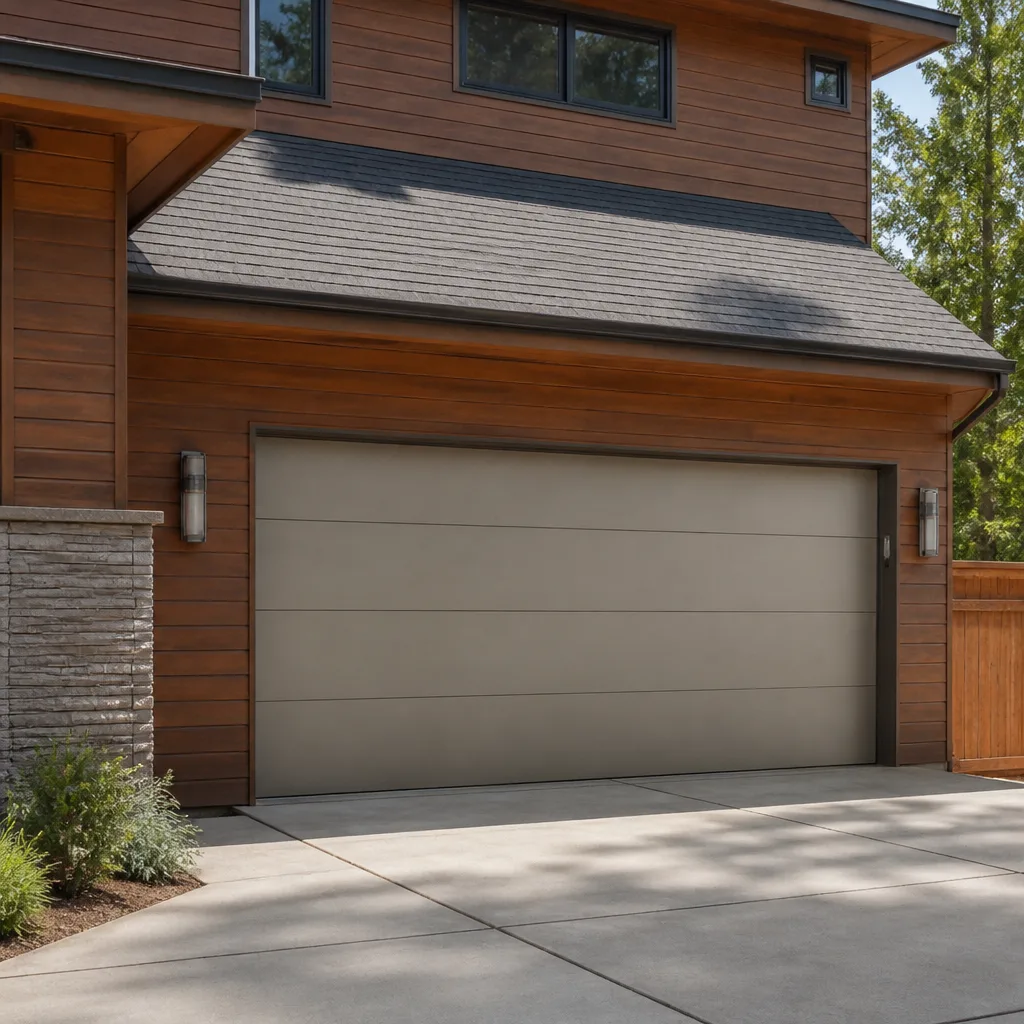 Modern flush
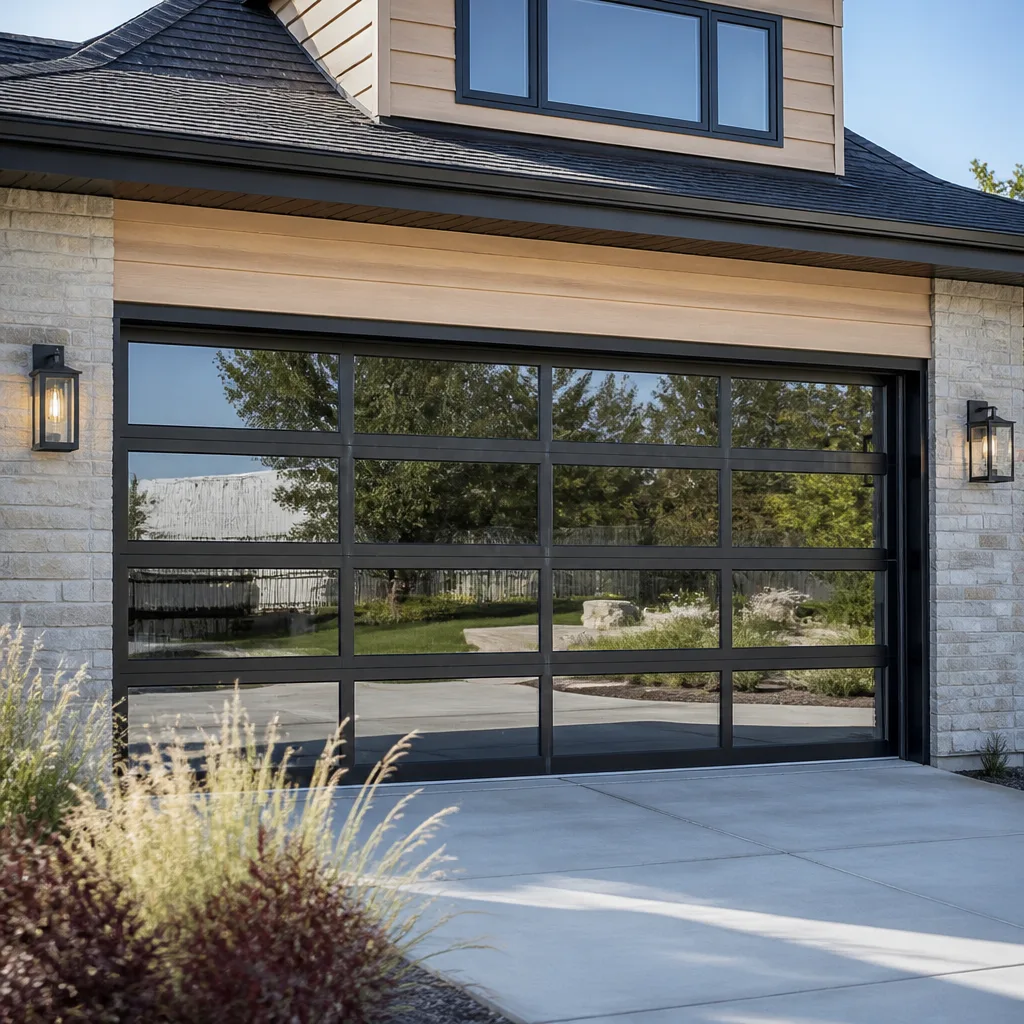 Full-view glass
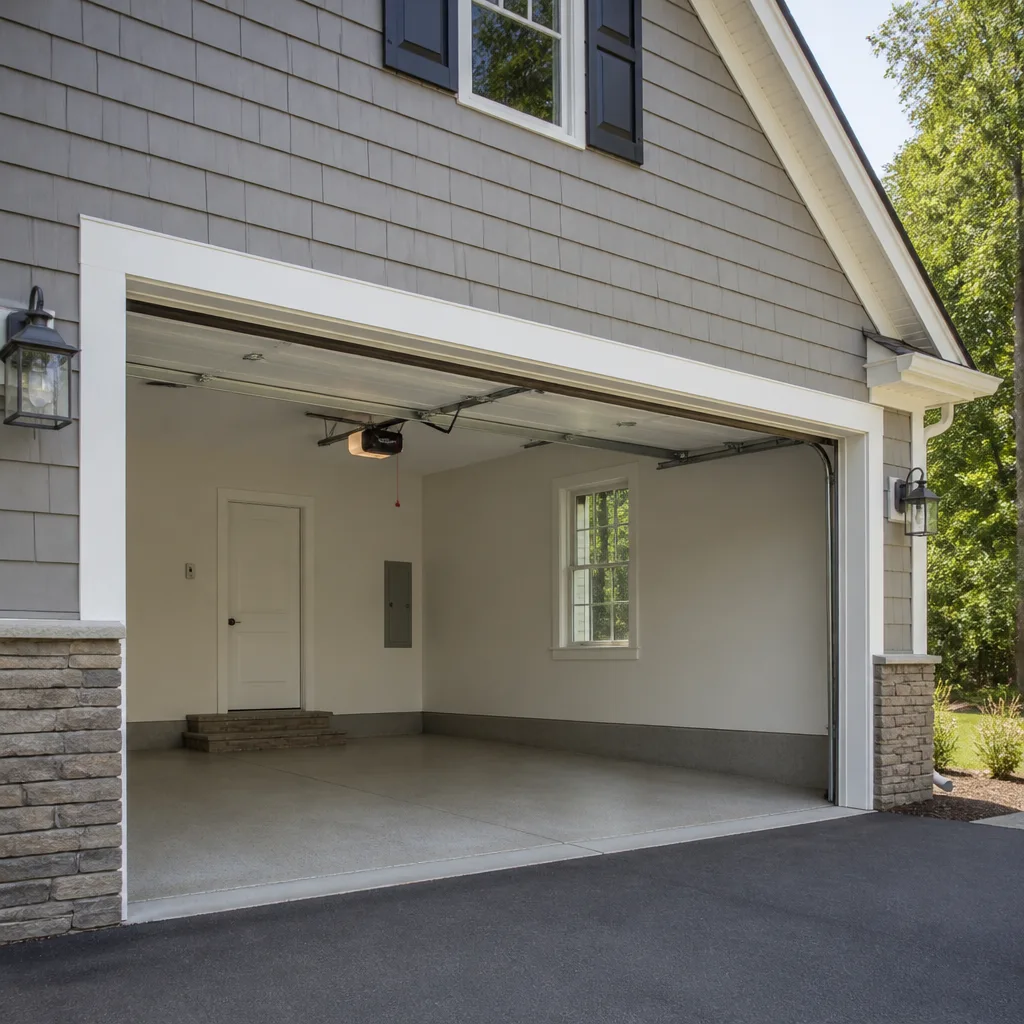 LiftMaster openers
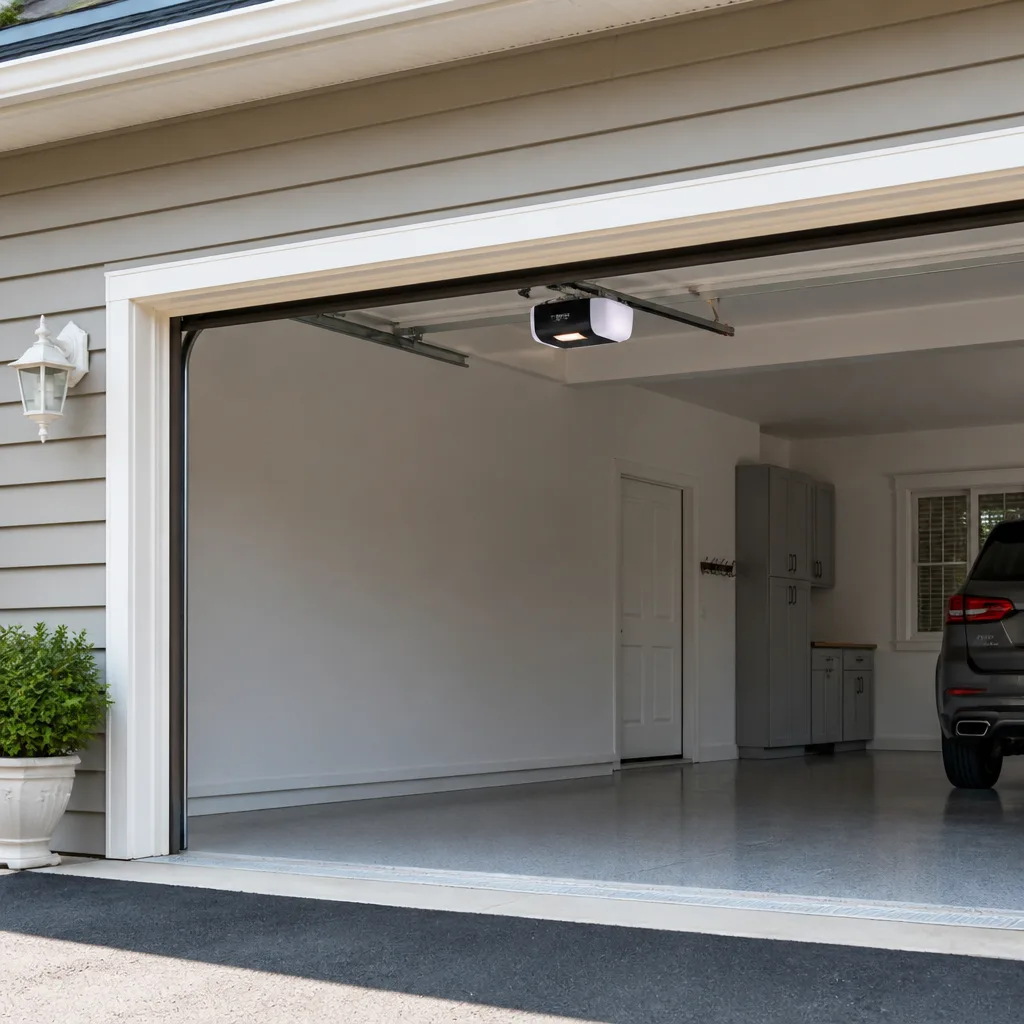 Chamberlain openers
Full 25-point door and opener safety check with every visit - springs, cables, rollers, tracks, and your LiftMaster or Chamberlain opener included
You get a price before we start. It does not change when the pro arrives.
Get your free estimateHow to Hire a Garage Door Contractor in Fayetteville: A Step-by-Step Guide
Most people assume the company they found online does garage doors for a living. In Fayetteville, that’s often not true. A lot of the listings competing for your click are general home service franchises and handyman outfits that added “garage door repair” to their menu to fill gaps in their schedule. You usually find out at the worst possible moment – when the technician is standing in your driveway and can’t source the right spring, or has never opened the panel of your Clopay door. This guide walks you through how to tell a real garage door specialist from an opportunist, so you hire the right company the first time. We’ll cover the exact questions to ask, what licensing actually means in North Carolina, the local red flags worth knowing, and how to read a quote rather than just compare a number.
Quick Answer
To hire a garage door contractor in Fayetteville, look for a company that does garage doors and openers as its main trade, not a side service. Ask three questions before you book: which brands they service and keep parts knowledge for, who actually performs the work, and whether the quote is written and agreed before any work starts. A real specialist answers all three without hesitation.
Styles & brands we work with
- Raised-panel steel
- Carriage house
- Modern flush
- Full-view glass
- LiftMaster openers
- Chamberlain openers
Table of Contents
- How Do You Tell a Specialist from a Generalist?
- What Questions Should You Ask Before You Book?
- What Do Licensing and Insurance Actually Look Like in NC?
- What Are the Red Flags Specific to Fayetteville?
- How Do You Evaluate a Quote Beyond the Price?
- Why Does the Cheapest Bid Often Cost More Later?
- Why Brand Familiarity Matters More Than You Think
- What Should the Hiring Process Look Like?
How Do You Tell a Specialist from a Generalist?
A garage door specialist sells, repairs, and services doors and openers as the core of the business. A generalist treats a garage door as one more item on a long menu that already includes gutters, pressure washing, and small HVAC jobs. The difference shows up in how they diagnose.
A door that won’t open is a symptom, not a diagnosis. The cause could be a snapped torsion spring, a stripped opener gear, a misaligned safety sensor, a frayed cable, or a bent track. Each has a different fix and a different cost. A specialist knows how to work through those possibilities in order, on the brand that’s actually installed. A generalist often guesses, replaces the obvious part, and comes back when the door still won’t close.
In our experience, the clearest test is to ask what the technician thinks is wrong before they touch anything. A specialist will tell you what they’re checking for and why. A generalist tends to jump straight to a part swap.
There’s a second tell: the car or van that arrives. A dedicated garage door company travels with the tools, springs, rollers, cables, and common opener parts needed to handle the majority of jobs on the first visit. A generalist shows up with hand tools and a plan to order what they need. In Fayetteville, where a broken door often means a car trapped in the garage or a house left wide open, that difference matters.
Finally, a specialist will talk you through the options on garage door repair honestly, including when the door is worth fixing versus replacing. A generalist has less reason to give you that honest read because their business doesn’t depend on doors alone.
What Questions Should You Ask Before You Book?
The questions below separate a brand-specialist technician from a generalist in about two minutes on the phone. Ask them before you schedule.
- “Which brands do you work on regularly?” A specialist names a list without thinking hard. It should include the big ones: LiftMaster, Chamberlain, Genie, Clopay, Amarr, Wayne Dalton, Craftsman, and Raynor. If the answer is “we work on everything,” ask a follow-up: which of those do you see most often in your parts sourcing?
- “What’s the difference in how you’d diagnose a LiftMaster opener versus a Genie?” A real specialist can tell you. Each manufacturer uses different control boards, sensor systems, and error codes. A generalist won’t know.
- “How do you source parts?” This is where the opportunist gets exposed. Springs, for example, come in specific wire gauges, lengths, and wind directions. A specialist knows how to measure and match a spring to the door’s actual weight. A generalist may try to fit whatever is on the truck.
- “Who does the work?” If the company subcontracts to another outfit, you want to know. A garage door specialist performs the work with its own technicians, not by passing the job along.
- “Will I get a written quote before work starts?” The answer should be a clear yes. Never let a job proceed on a verbal estimate.
- “Are you insured for garage door work specifically?” See the next section for what this actually means.
If a company stumbles on the brand question or the diagnostic question, that’s your signal. Call someone else. It costs nothing to ask, and it tells you more than any review page.
What Do Licensing and Insurance Actually Look Like in NC?
Most homeowners assume garage door repair in North Carolina falls under some kind of general contractor’s license. It usually doesn’t in the way people picture. General contractor licensing in NC is aimed at construction and large-scale building projects, and routine garage door repair is a specialized trade that falls outside that framework for most small jobs. So when someone tells you they’re “fully licensed,” ask exactly what that refers to.
The more important question is insurance. A company that works on a door with a torsion spring under tension, or that installs a new door overhead, should carry general liability insurance and workers’ compensation coverage for its technicians. That protects you if something goes wrong on your property or a technician is injured. Ask for proof and don’t be shy about it. A specialist will answer without offense because they expect the question.
Here’s what you should verify:
- Liability insurance: Ask for a certificate of insurance. Any legitimate company can produce one.
- Workers’ compensation: If they don’t have it, an injured technician could potentially come after you as the homeowner.
- Written agreement: Get the scope of work in writing before anyone picks up a tool.
- Business registration: If the company’s name feels unfamiliar, check that it’s a registered business in North Carolina before you pay a deposit.
One more important safety note: torsion springs on a garage door are under extreme tension and can cause serious injury if handled by anyone without training. This is not a DIY job, no matter how handy you are. Any contractor who suggests you can safely handle the spring yourself is telling you something about their judgment. Call a trained professional and let them do the work.
What Are the Red Flags Specific to Fayetteville?
Fayetteville has a moving population. Fort Liberty cycles families in and out regularly, and the wider metro sees a lot of relocations around new assignments and transitions. That churn creates a specific problem in the local market: out-of-area companies that flood Google Ads and directory listings to catch newcomers who don’t yet have a trusted contractor.
Those companies may not be local in any meaningful sense. They might use a call center dispatcher, a subcontracted crew, and a service area that stretches far beyond Fayetteville. When something goes wrong after the job, follow-up becomes difficult.
Watch for these red flags:
- No local phone number and no verifiable local address. A company that can only be reached through a web form or an out-of-state call center is worth questioning.
- Ads that appear everywhere but reviews that mention a different city. Check where the review writers actually live.
- “We’re in the area this week” pitches. Garage door repair isn’t a door-to-door seasonal service.
- Pressure to book immediately. A specialist gives you a written estimate and a fair amount of time to decide.
- No written quote. If a company can’t put the scope of work in writing, that’s a hard stop.
- Quotes that change after the technician arrives. A reputable company puts the price in writing before work starts; the written estimate is the price.
Local knowledge matters too. Fayetteville’s climate swings between hot humid summers and occasional cold snaps, and doors in neighborhoods like Haymount or off Ramsey Street face the same seasonal movement every year. A local specialist knows how those conditions affect springs, tracks, and weather seals. An out-of-area crew might not.
How Do You Evaluate a Quote Beyond the Price?
Comparing quotes is not about which number is smallest. It’s about whether the scope of work actually matches what’s broken. Two quotes for the same job can differ by hundreds of dollars because one addresses the real problem and the other patches a symptom.
Here’s what to compare side by side:
- What’s the diagnosis? Each quote should say what the technician found and why that’s the cause. “Spring replacement” is not a diagnosis; “snapped torsion spring on a 7-foot door, one spring” is.
- What parts are specified? The quote should name the part type, not just say “spring” or “opener part.” For springs, ask about wire gauge and expected cycle life.
- Is more than one part included? A snapped spring often means the pair is replaced together. A quote that replaces one spring on a door designed for a pair may save money now and cost more later.
- Is labor included? Confirm whether the number is the full price or excludes labor, haul-away, or disposal.
- Is a written estimate provided? It should be, and the price should be agreed before work starts.
If one quote is dramatically lower, ask what it leaves out. That’s not a sales tactic; it’s basic diligence. The cheapest bid usually reflects the cheapest parts, the least thorough diagnosis, or both.
Why Does the Cheapest Bid Often Cost More Later?
Springs are the part most often substituted. On a newer door, the manufacturer’s warranty is usually tied to the door being serviced with compatible parts. If an aftermarket spring with a lower cycle rating or the wrong gauge is installed, the door may work for a while, but the wear pattern changes and the door can come off its proper balance much sooner than it should. On a door still under warranty, that substitution can affect whether the manufacturer honors a claim.
Opener parts carry a similar risk. A Genie or Chamberlain opener has specific gear assemblies, limit switches, and safety sensor systems. The wrong replacement part may fit physically but fail in weeks because it wasn’t designed for that drive system.
What to ask:
- What is the cycle rating on the spring you’re proposing?
- Is the part a manufacturer-compatible replacement or an aftermarket substitute?
- Does installing this part affect my existing door warranty?
- Will you replace the pair, given the door has two springs?
A specialist can answer all four on the spot. A generalist will often deflect. If you’re hearing vague answers about “good quality” or “industry standard,” that’s a sign the parts story isn’t solid. For a door replacement rather than a repair, the same principle applies: Clopay and Amarr both have specific panel systems and hardware packages, and a quote that mixes incompatible components causes problems down the road.
Why Brand Familiarity Matters More Than You Think
Garage doors and openers are not interchangeable. LiftMaster, Chamberlain, Genie, Clopay, Amarr, Wayne Dalton, Craftsman, and Raynor each use different control systems, spring configurations, track assemblies, and panel designs. Knowing those differences changes the diagnosis.
A LiftMaster opener with a myQ-connected system has specific sensor behavior when it loses its Wi-Fi connection; a technician familiar with that system can diagnose it in minutes. A Genie opener with a screw-drive mechanism fails differently from a belt-drive LiftMaster. A Clopay door with a specific panel construction requires a specific replacement panel to match weather and fit.
This is where garage door opener repair gets misdiagnosed most often. A generalist sees a “door won’t close” call and assumes the door is the problem. A specialist checks the opener’s safety sensor alignment, test the opener’s force settings, and verify the door balance before deciding.
Our team is factory-familiar with all eight of the major brands listed above. That doesn’t mean every job on a LiftMaster or Clarify or a Genie takes the same path; it means we know where to look first.
What Should the Hiring Process Look Like?
A good hiring process takes less time than most homeowners expect. Here’s the sequence we recommend:
- Describe the problem accurately on the phone. Is the door stuck open, stuck closed, noisy, or completely dead? Is the opener clicking, silent, or running but not moving the door? The more accurate your description, the better the dispatcher can route the right technician.
- Ask the three qualification questions. Brands, diagnosis approach, parts sourcing. See the section above.
- Request a written quote. Confirm the price will be set per job and agreed before work starts.
- Verify insurance. Ask for a certificate of insurance for liability and workers’ compensation.
- Confirm who performs the work. If the company subcontracts, ask who they use and whether that company is insured the same way.
- Review the quote for scope, not just price. Confirm the diagnosis, part specs, and labor are all included.
- Schedule. For repair work, same-day service is often possible. For a new door or a full replacement, expect a measure, a written price, and an ordered install date. Installation is measured and scheduled, not same-day, because the door and parts are ordered to your specific opening.
- Pay only after the job is done and tested. The technician should cycle the door several times and confirm the safety reverse feature works before asking for payment.
We’ve seen how much smoother a job goes when those steps are followed. The pattern shows up most clearly in Fayetteville homes where the door is older and the original brand isn’t obvious. A specialist can identify it; a generalist will usually guess.
Common Mistakes to Avoid
- Hiring based on an ad alone. Ads can appear in front of you regardless of who’s behind them. Cross-check the business name against a verifiable local reputation before you call.
- Skipping the brand question. If the technician can’t tell you the difference between a Chamberlain and a Genie control board, you’re on the wrong call.
- Treating the lowest bid as the best bid. In garage doors, the lowest bid often means an aftermarket spring with a shorter cycle life or a generic part that wasn’t designed for your system.
- Letting a spring replacement go single when the door has a pair. Matched springs wear together; replacing one and leaving the other can unbalance the door.
- Hiring a company that won’t put a quote in writing. The written estimate is what protects you if the job scope changes.
- Skipping the insurance check because the company “seems established.” A company can have a polished website and still have no workers’ compensation coverage.
- Assuming a busy general home service company is the same as a garage door specialist. An HVAC company that added door repair to its menu will usually reach for the door tech when the job is more complex than a battery swap.
See the difference
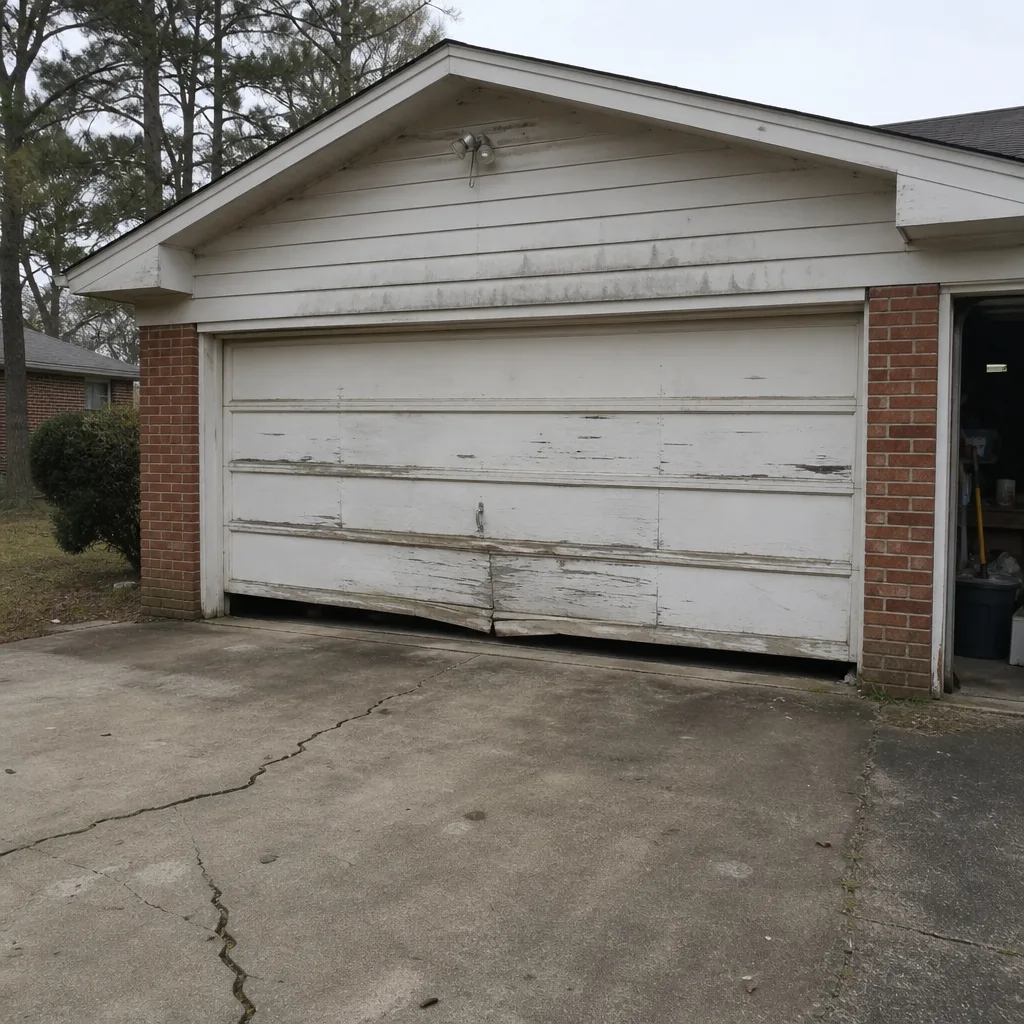 Before
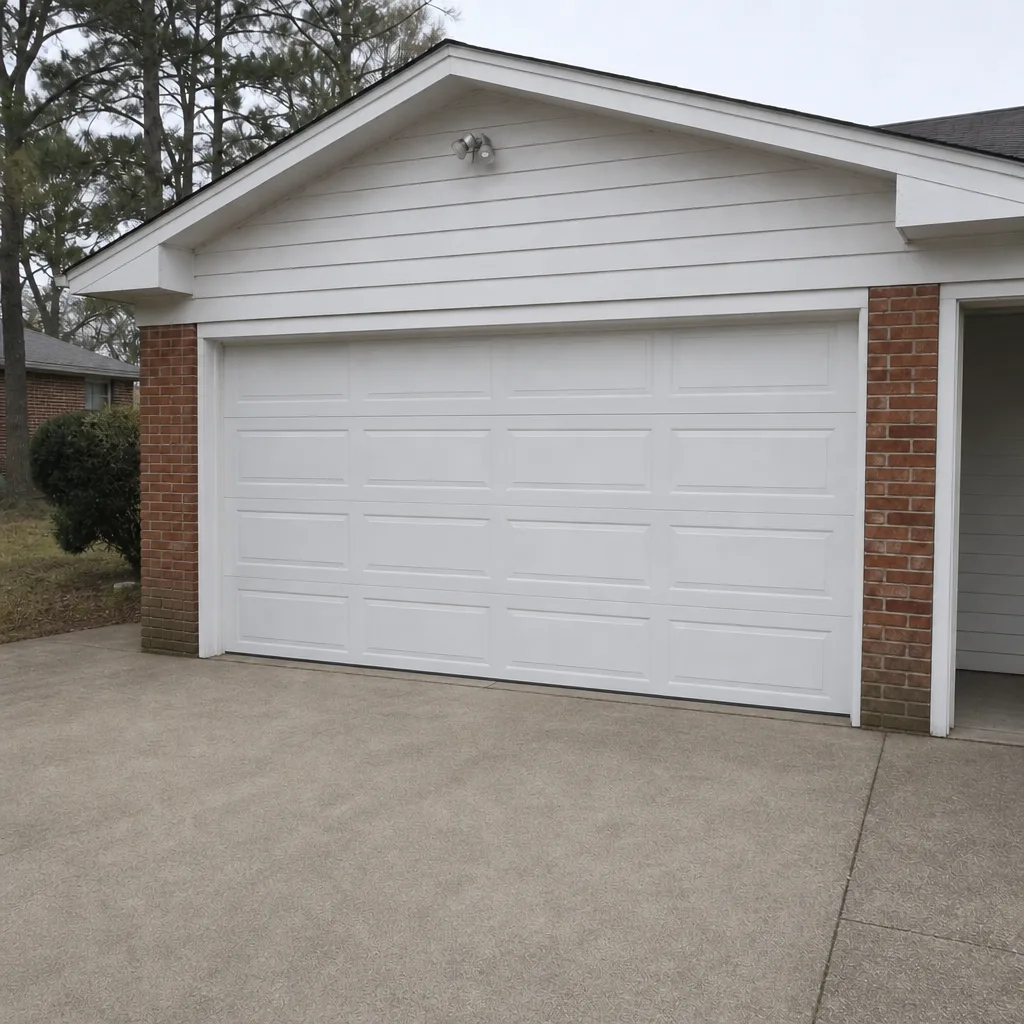 After
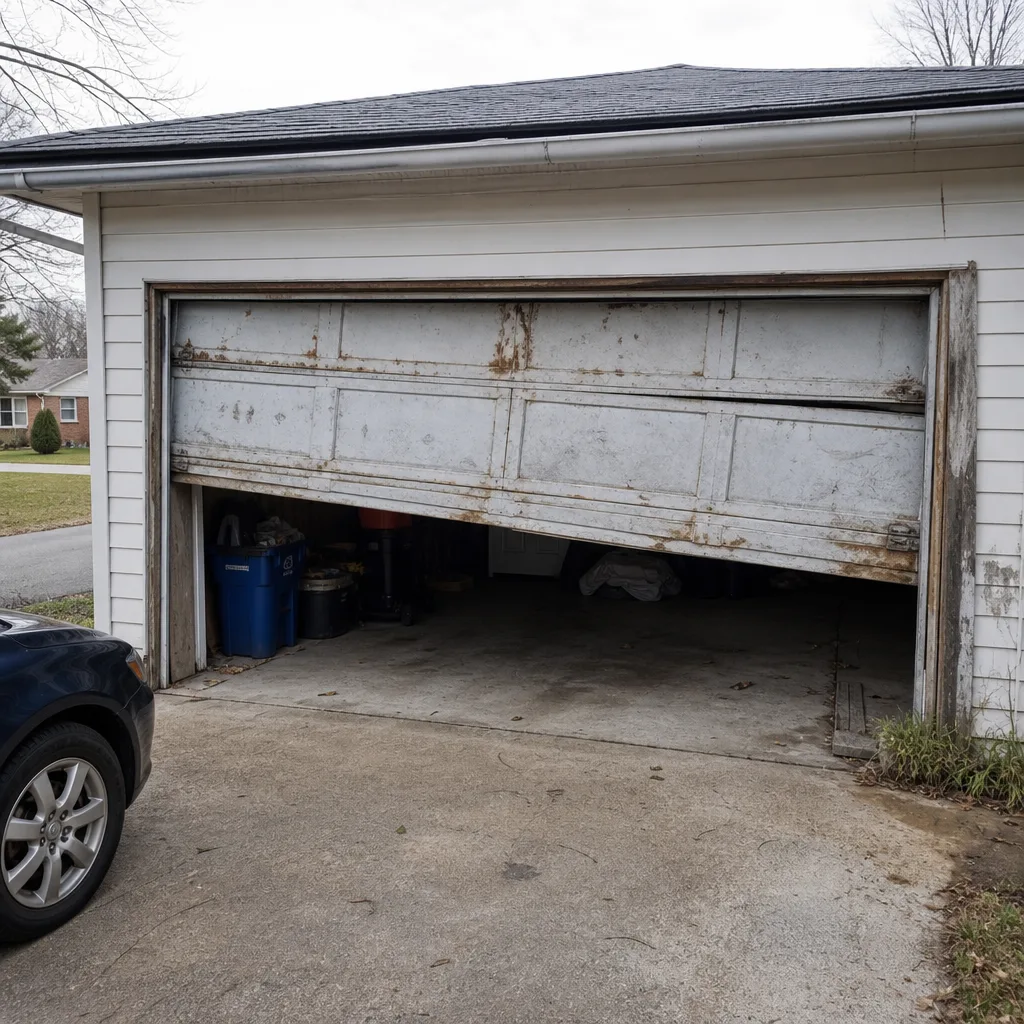 Before
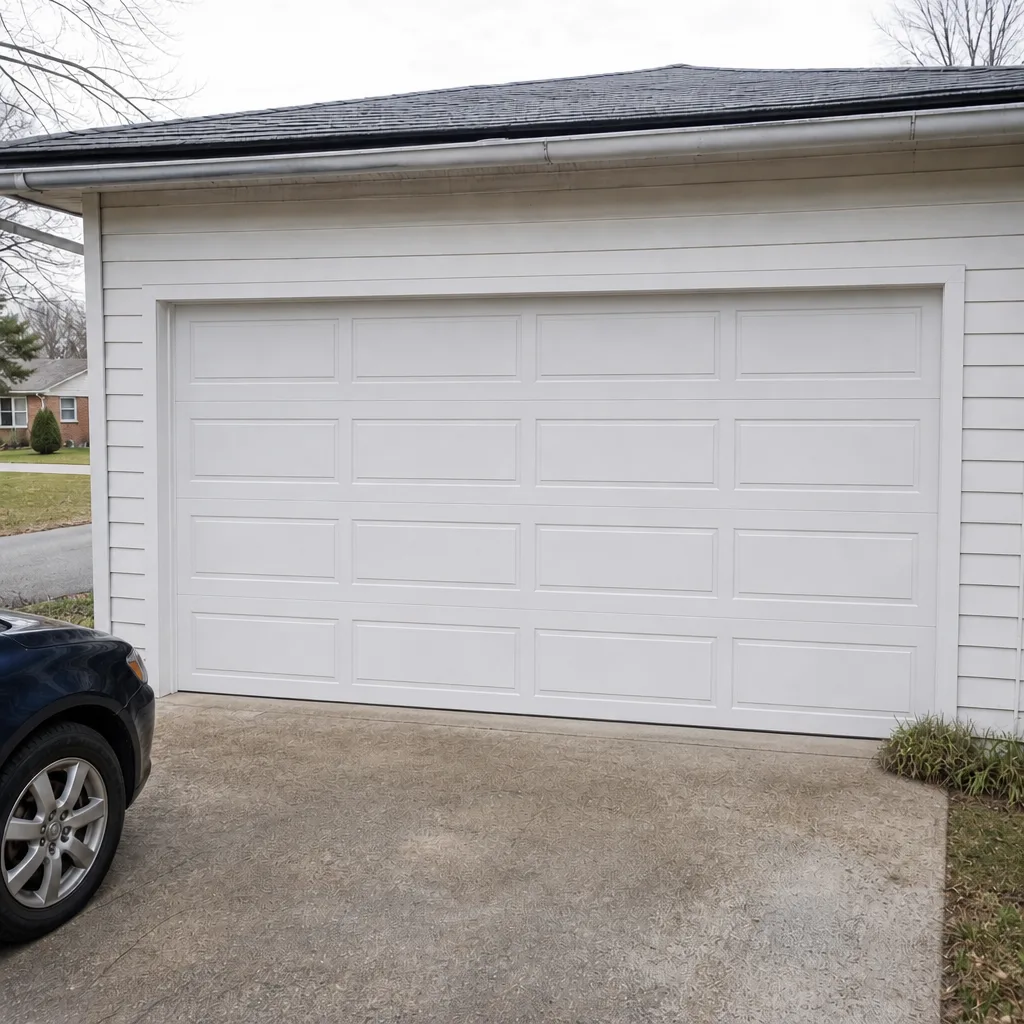 After
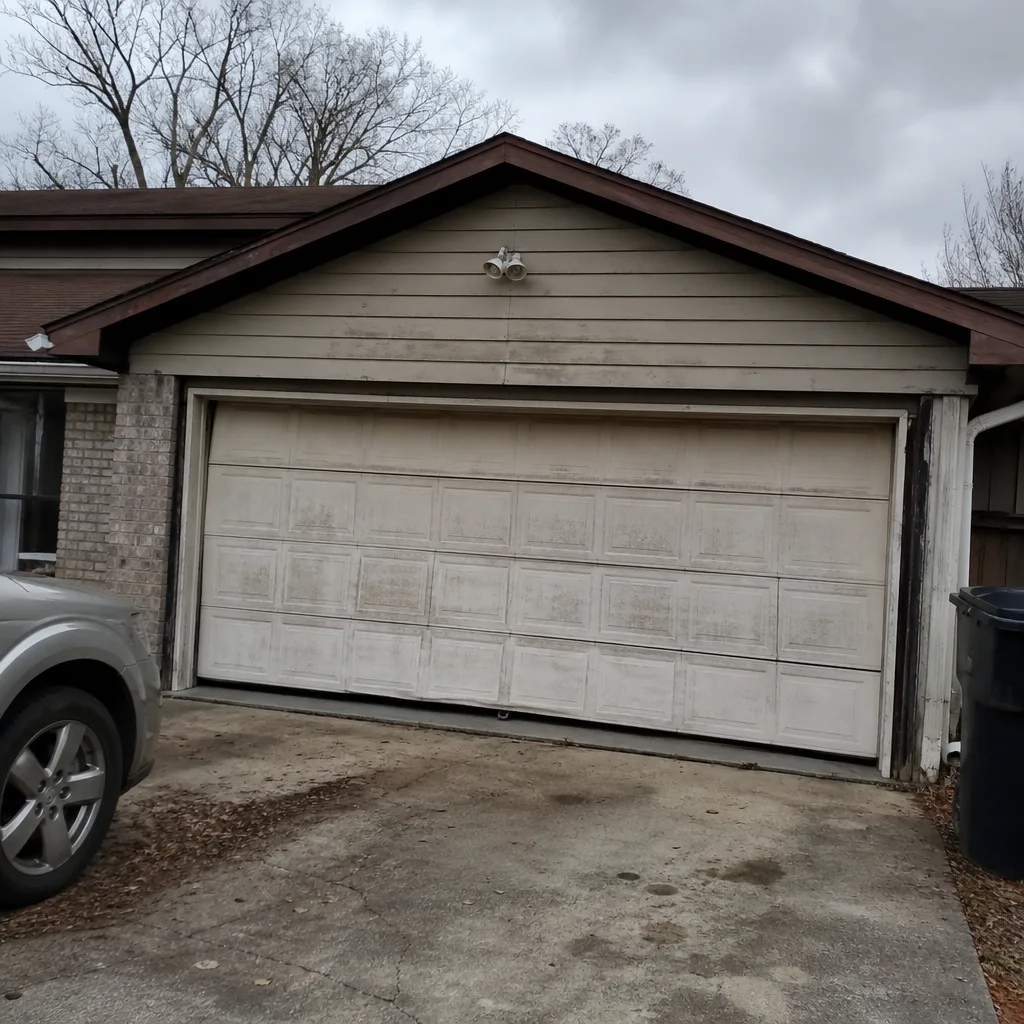 Before
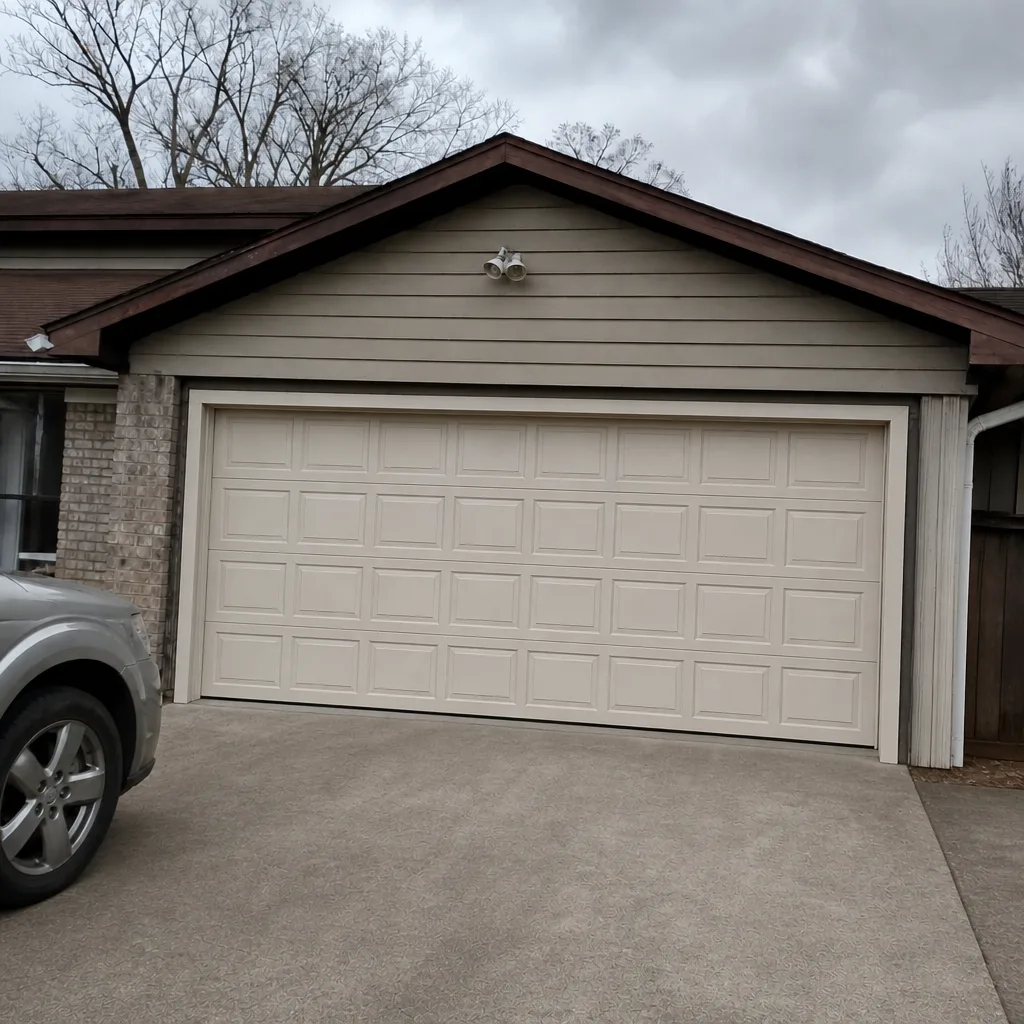 After
When to Call a Professional
Some garage door problems genuinely need a specialist on-site. If the door has snapped a torsion spring, has a visibly frayed or bent cable, has a bent or separated track, or is completely stuck and blocking your car, call. If the opener runs but the door doesn’t move, or the door reverses immediately when it closes, the safety system or opener needs diagnosis. If you’ve installed a new smart opener and can’t get myQ or the app connection working, that’s an opener-specific problem worth a specialist call.
Don’t attempt spring or cable work yourself. The tension on those parts is dangerous, and the wrong move can cause serious injury.
Eaton Garage Door Repair offers free estimates in Fayetteville – call (855) 473-7101. We answer 24/7. Fast dispatch from 7am to 7pm, Sunday through Friday.
Frequently Asked Questions
The price is set per job by a written estimate, and we give you that number before any work starts. The cost depends on what’s actually broken – a spring replacement, an opener part, a track adjustment, or a sensor reset all carry different scopes. Call (855) 473-7101 for an exact quote; estimates are free.
For most repair calls, yes, same-day service is often available. We answer 24/7, and fast dispatch runs from 7am to 7pm, Sunday through Friday. A call outside those dispatch hours is booked into the next opening. Call (855) 473-7101 to check availability.
No. The price is quoted and agreed before any work starts. If the scope of work turns out to be different from what your description suggested, the technician will tell you before touching anything and give you a revised written estimate to approve. Call (855) 473-7101 for a free estimate.
Our technicians are experienced garage door specialists, and the company is insured for the work we perform. Ask for proof of insurance and we’ll provide it.
We work on all eight of the major brands: LiftMaster, Chamberlain, Genie, Clopay, Amarr, Wayne Dalton, Craftsman, and Raynor. If you have a brand not on that list, call and we’ll tell you straight whether we’re the right company for the job.
Yes. Estimates are free and you’re under no obligation to book. Call (855) 473-7101 to describe the problem and get a written estimate.
The Bottom Line
The difference between a good garage door contractor and a bad one in Fayetteville usually comes down to three things: whether doors are their main trade, whether they can name the brands they work on and describe how they diagnose each, and whether they put a written estimate in front of you before work starts. A specialist does all three without hesitation. A generalist usually struggles with at least one. If you get clear answers on all three and a written scope of work that matches what’s actually broken, you’re in good hands. Eaton Garage Door Repair is here in Fayetteville for repair, opener service, and full installation across all eight major brands, with a free estimate before any work begins.
Call (855) 473-7101 for a free estimate. We answer 24/7. Fast dispatch from 7am to 7pm, Sunday through Friday. Our technicians have up to 11 years of experience, and we’re the specialist team that works on your brand, diagnoses correctly the first time, and handles everything from a broken spring to a brand-new door. If you’re nearby in Spout Springs, the same team serves that area too.
Looking for the full range of what we do? Visit Eaton Garage Door Repair to see our repair, opener, and installation services in detail.
Written by the team at Eaton Garage Door Repair.