
Last updated November 15, 2026
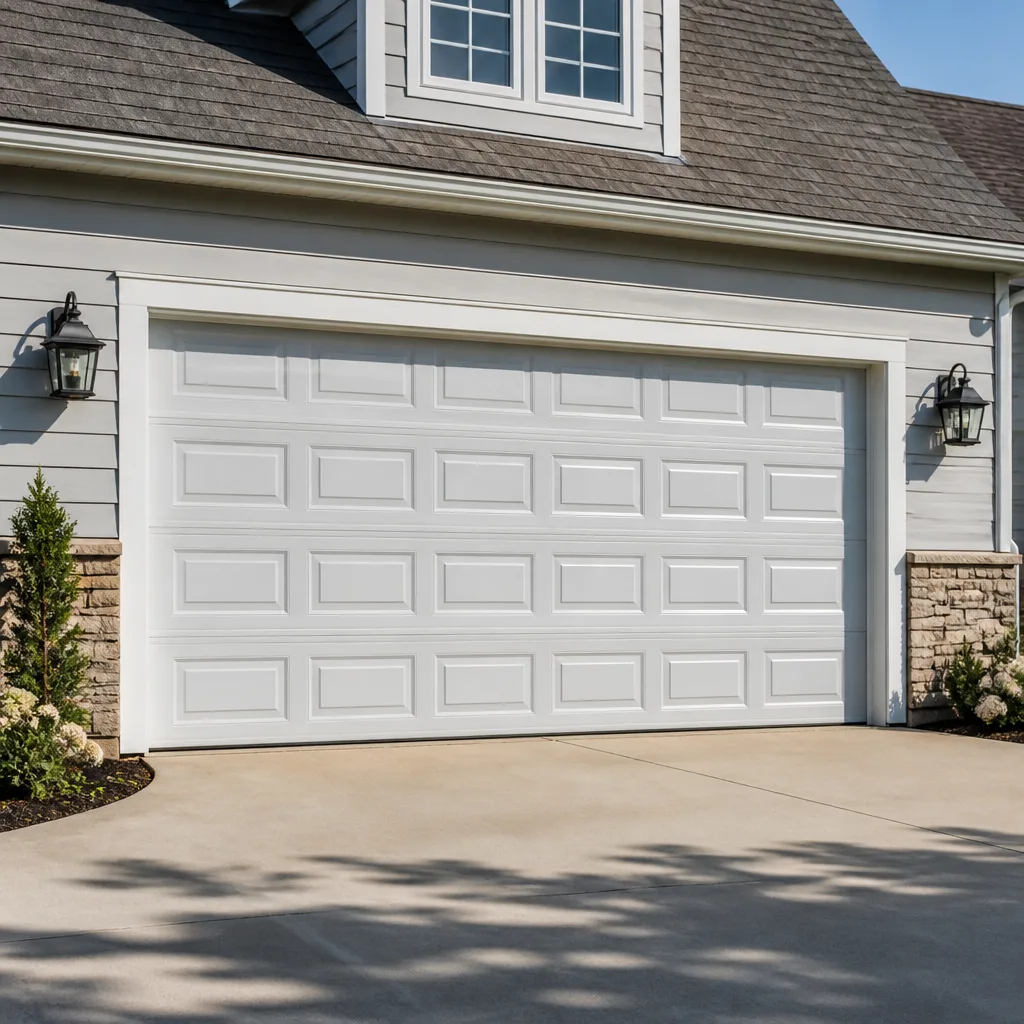 Raised-panel steel
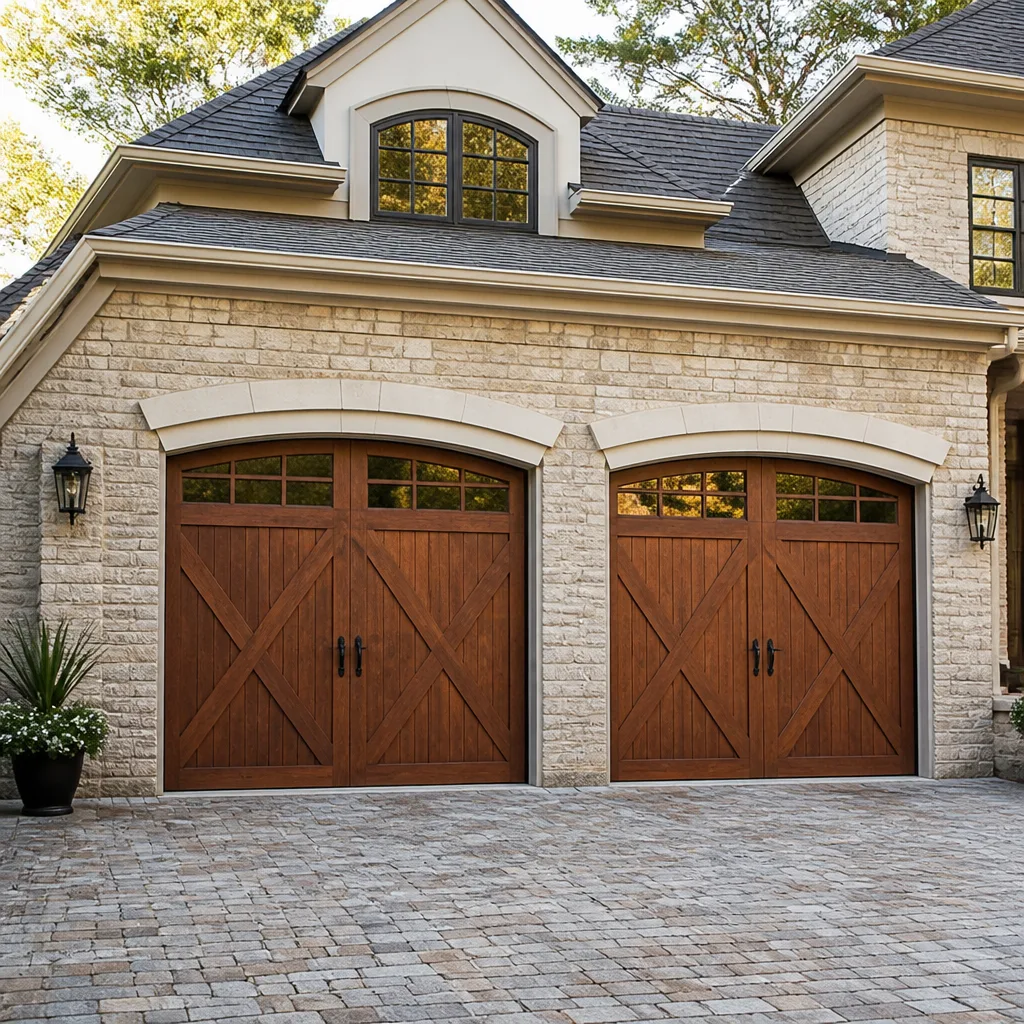 Carriage house
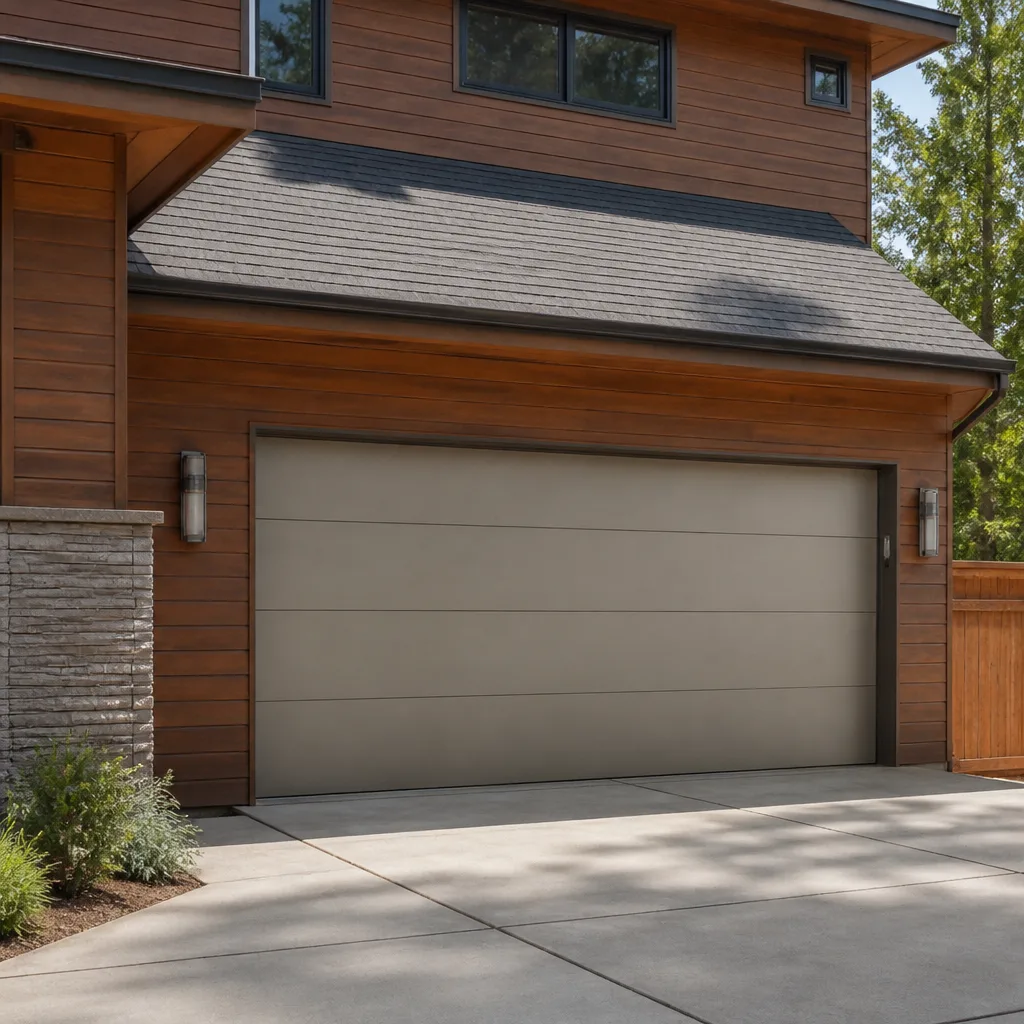 Modern flush
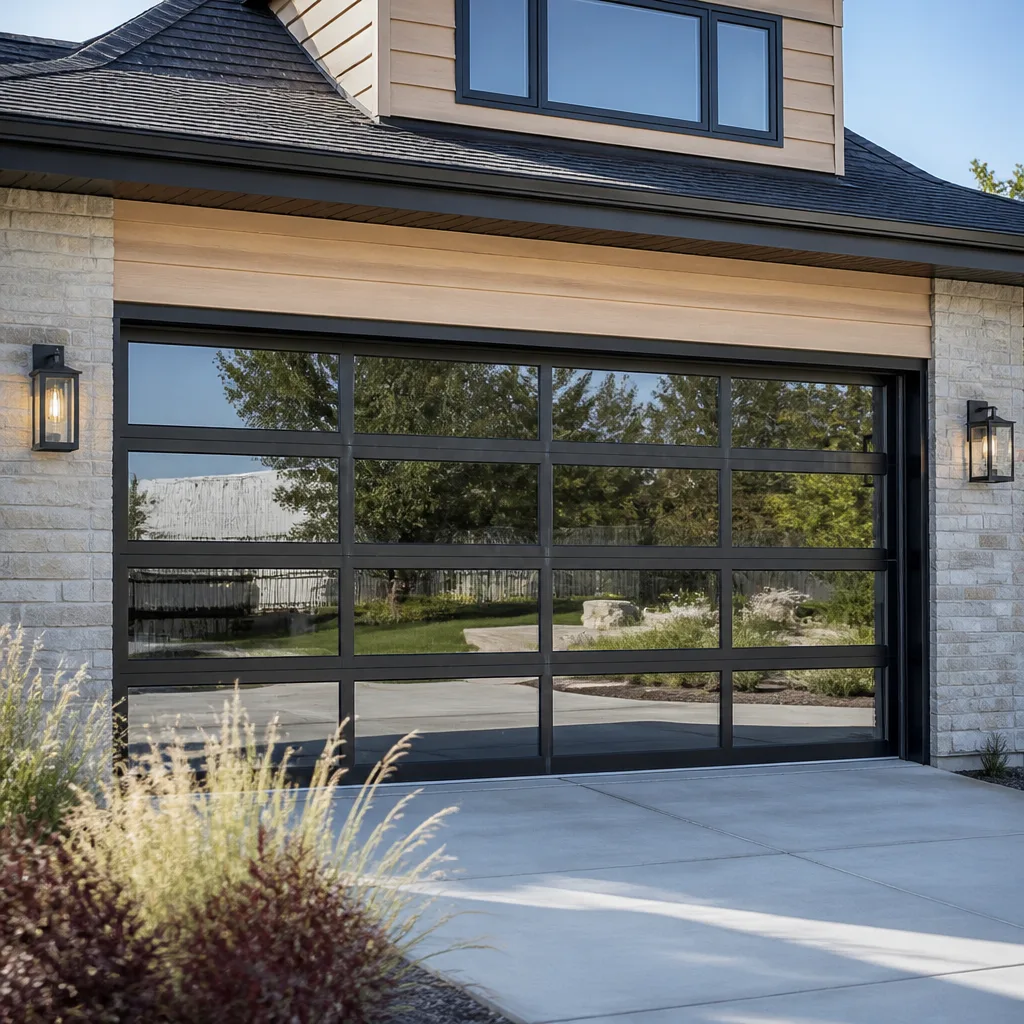 Full-view glass
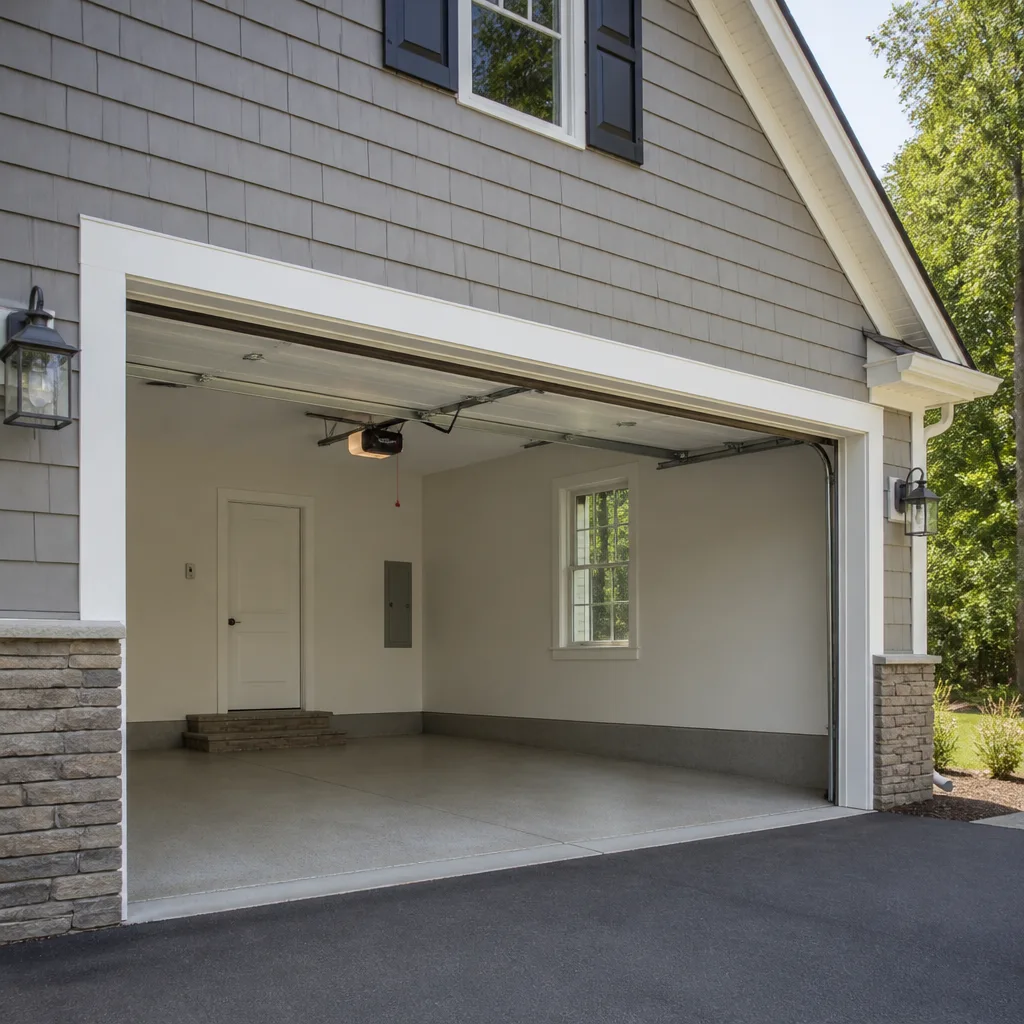 LiftMaster openers
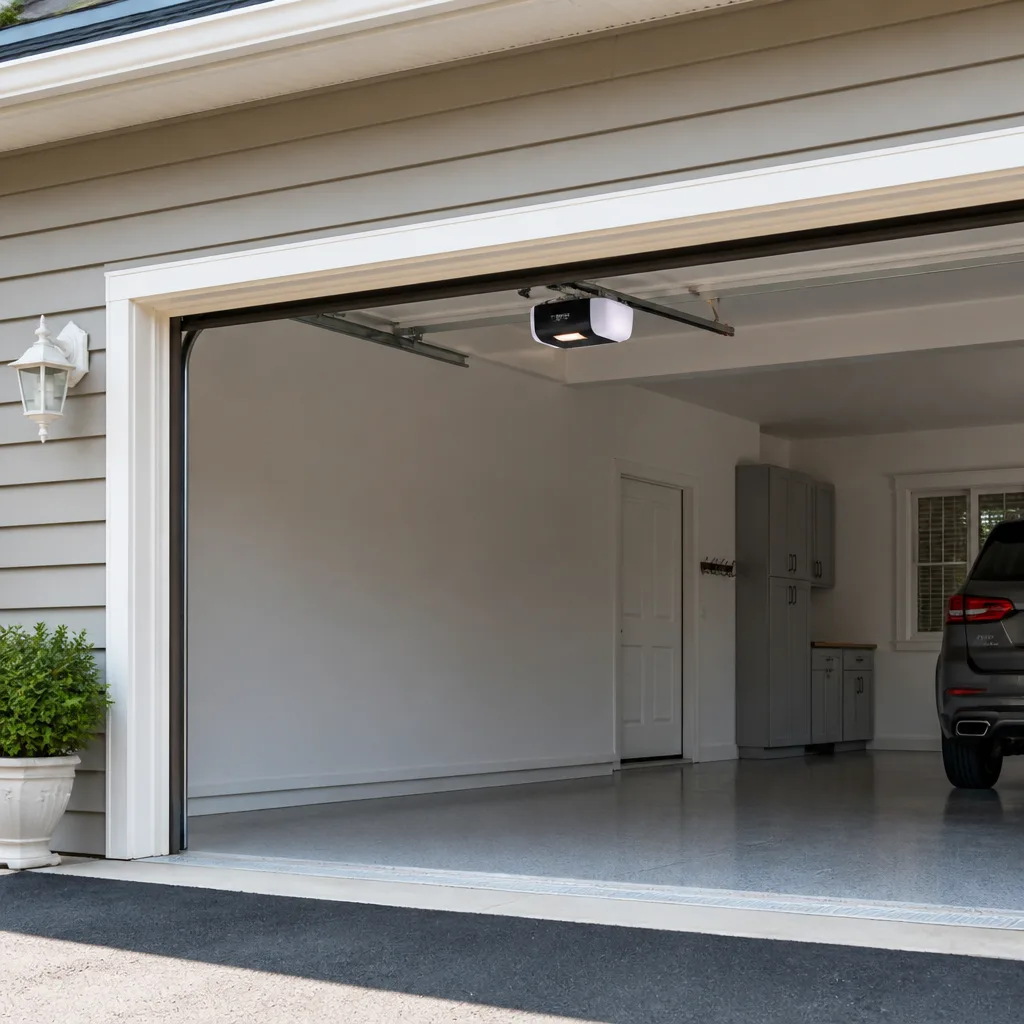 Chamberlain openers
Full 25-point door and opener safety check with every visit - springs, cables, rollers, tracks, and your LiftMaster or Chamberlain opener included
You get a price before we start. It does not change when the pro arrives.
Get your free estimateGarage Door Repair Maintenance Checklist for Fayetteville Homeowners
Most garage doors in the Carolinas don’t fail because they’re old. They fail because the hardware underneath them has been quietly oxidizing since the last humid summer, and nobody looked. A torsion spring that was fine in March can be a snapped cable by July, not from wear but from skipped lubrication and a hinge that stopped pivoting smoothly months ago. That’s the part generic ten-point checklists leave out: they tell you what to do, never what happens if you don’t. This guide ties every maintenance task to a specific failure it prevents, so you know exactly what you’re buying yourself when you spend twenty minutes with a can of lubricant in a Fayetteville garage. You’ll also learn which tasks are safe to handle and which ones you should never touch.
Quick Answer
A solid garage door maintenance routine for Fayetteville means lubricating springs, hinges, and rollers twice a year (in spring before the humidity peaks and again in fall before the first freeze), inspecting weather seals and bottom rubber for cracking, tightening track bolts and checking that the door balances at the halfway point, and testing the safety reverse monthly. Springs, cables, and any work involving tension are professional territory. Everything else on this checklist is a homeowner job.
Styles & brands we work with
- Raised-panel steel
- Carriage house
- Modern flush
- Full-view glass
- LiftMaster openers
- Chamberlain openers
Table of Contents
- Why Fayetteville’s Climate Wears Doors Differently
- Lubrication: The Task That Prevents the Most Expensive Failures
- Weather Seals and Bottom Rubber: Timing Around the Freeze
- Balance, Tracks, and Hardware Checks
- Safety Reverse Test: Monthly, Not Yearly
- What Homeowners Can Safely Do vs. What Requires a Technician
- Building a Maintenance Log That Adds Value at Resale
- Parts to Keep on Hand vs. Parts That Need Professional Sourcing
Why Fayetteville’s Climate Wears Doors Differently
Fayetteville sits in a climate that swings hard in both directions. Summers bring weeks of high humidity and heat that push metal hardware toward oxidation and warp wooden door panels at the seams. Winters are shorter but real, with enough freeze nights to crack old weather stripping and stiffen lubricant that wasn’t rated for cold. The combination means a garage door here lives through a broader range of stress than one in a mild coastal climate or a dry desert town.
What that actually does to your door, season by season:
- Late spring through summer: humidity accelerates rust on springs and hinges; wooden panels absorb moisture and can stick or delaminate; metal expands and roller bearings dry out faster.
- Fall: the shift to cooler air is the right window to re-lubricate with a product that holds up in cold, and to inspect the bottom seal before the first freeze.
- Winter freeze nights: rubber seals crack, aged lubricant thickens, and a door that was balanced in summer can start dragging.
- Spring storms: wind-driven rain tests your bottom seal and side weather stripping; debris in the tracks becomes a real problem after heavy weather.
None of this means your door is doomed. It means maintenance timing here isn’t arbitrary. Lubricating in January misses the point; lubricating in May, before the humidity climbs, is what actually protects the hardware through the worst of it. We’ve seen plenty of Fayetteville doors where the only real issue was a maintenance schedule built for a different climate.
Lubrication: The Task That Prevents the Most Expensive Failures
Skipped lubrication is the single most common cause of premature garage door wear we see, and it’s entirely preventable. Every hinge, roller, and spring coil that runs dry creates friction. Friction means the opener works harder, the springs fatigue faster, and the door starts to bind. Left long enough, a dry hinge can seize and bend a track, and a dry torsion spring can snap under load it should have handled easily.
Here’s what to lubricate and why each point matters:
- Hinges: a dry hinge stops pivoting cleanly and the attached panel starts to twist. Apply a silicone or lithium-based lubricant to each hinge joint. Skip the plastic hinges if your door uses them; they self-lubricate.
- Rollers: metal rollers need lubrication at the bearing; nylon rollers generally don’t. A dry metal roller will flat-spot and start rattling, and eventually the roller stem wears the track.
- Torsion spring coils: a light coat reduces coil-on-coil friction. Do this from outside the spring’s tension zone; if the spring is already visibly gapped or broken, stop and call a professional.
- Track curves (not the straight track): a small amount at the curved section where the door transitions from vertical to horizontal. The straight track stays dry so it doesn’t collect grit.
- Lock and opener chain or belt: a dry chain stretches and jumps; a belt just needs a check, not grease.
Do this twice a year: once in spring, before the humidity climbs, and once in fall, before the first freeze. Use a lubricant rated for cold weather so it doesn’t stiffen in January. Never use WD-40 as a lubricant on door hardware; it’s a solvent, not a lasting protectant. Twenty minutes now saves a spring replacement later, and spring work is not a homeowner job.
Weather Seals and Bottom Rubber: Timing Around the Freeze
The bottom rubber seal and side weather stripping are the door’s first line of defense against water, drafts, and pests, and in Fayetteville they take a beating from both humidity and freeze cycles. A cracked bottom seal lets water into the garage, which is where rust starts on the track feet and where wooden door bottoms rot. It also lets in cold air in winter and makes your garage harder to keep dry through the summer.
What to check and when:
- Before the first freeze (fall): run a hand along the bottom seal. Cracks, hardness, or gaps at the corners mean it’s time to replace it. Rubber that’s gone brittle from a summer of heat will crack faster at the first cold snap.
- After spring storms: check side weather stripping for wind damage and the bottom seal for debris or water pooling. A seal that’s been beaten by a season of storms should be replaced before summer.
- Check the threshold: the seal should touch the floor evenly across the full width. If you can see light under the door at any point, the seal isn’t doing its job and neither is the door’s weather performance.
Replacing a bottom seal is one of the few door tasks most homeowners can safely do themselves, and it’s inexpensive relative to the damage a failed seal can cause. If the door frame or threshold itself is out of level, though, that’s a structural issue worth a professional look. It matters more than people think, and it’s also one of the cheapest fixes on this whole checklist.
Balance, Tracks, and Hardware Checks
A door that’s out of balance is a door under strain. The spring system, whether torsion or extension, is supposed to carry most of the door’s weight so the opener only has to steer it. When that balance drifts, the opener does too much work, the springs wear faster, and the door can come down hard enough to be a hazard.
Here’s the safe balance check, done with the opener disconnected:
- Pull the emergency release to disconnect the opener from the door.
- Lift the door to about halfway and let go.
- A properly balanced door stays put or drifts slowly. A door that slams down or springs up is out of balance.
- Reconnect the opener before you use the door again.
If the door fails this test, don’t try to adjust the springs yourself. Balance problems point to spring tension, and spring tension is the most dangerous part of the whole system. Call a professional.
While the door is disconnected, walk the tracks. They should be straight, plumb, and free of dents, and the bolts that hold them to the wall should be snug. A loose track bolt is trivial to tighten; a bent track will derail rollers, and that’s a repair, not an adjustment. Check the hinges for loose screws too; a hinge pulling away from the panel will eventually split the wood or warp the steel around it. If you’re near the Spout Springs area just up the road, the same climate and the same wear patterns apply, and our Spout Springs page covers the local service picture in more detail.
Safety Reverse Test: Monthly, Not Yearly
The safety reverse system is the feature that stops the door and reverses it when it hits something. It’s the difference between a door that’s safe around kids (or pets, or the car bumper) and one that isn’t. It’s also the single easiest maintenance task to skip and the one with the most serious consequences. Test it every month.
Two tests, both quick:
- Contact reverse: place a piece of wood or a roll of paper towel flat on the floor in the door’s path and close the door. The door should contact it and reverse to the open position. If it doesn’t, the sensitivity is off or the mechanism is failing.
- Photo-eye test: with the door open, wave an object across the safety beam near the floor at one side of the door. The door should not close while something is in the beam’s path. If the door closes anyway, the eyes are misaligned or dirty.
For LiftMaster and Chamberlain openers, the safety eyes live on the same low-voltage wiring and can usually be cleaned and re-aimed in minutes. If the door still closes through an obstruction, stop using it and get a technician out. This is not a wait-and-see item. It’s also worth knowing that opener brands age differently: a Craftsman that’s a decade old and a brand-new LiftMaster have different sensitivity-adjustment procedures, which is one reason we work across the common brands rather than pushing one. If you’re having trouble with the opener itself rather than the door, our garage door opener repair page goes deeper into the diagnosis side.
What Homeowners Can Safely Do vs. What Requires a Technician
Not every checklist item carries the same risk, and treating them all the same is how people get hurt. Some tasks are genuinely homeowner-safe. Others involve stored mechanical energy that can maim or kill if it releases unexpectedly, and those aren’t negotiable. Here’s the honest split.
Safe for homeowners:
- Lubricating hinges, rollers, and spring coils from the outside
- Replacing the bottom seal and side weather stripping
- Cleaning and aligning the photo-eye safety sensors
- Tightening loose track bolts and hinge screws
- Testing safety reverse and the balance check
- Replacing the opener’s remote battery and any light bulbs
Professional territory, every time:
- Any spring repair, replacement, or tension adjustment (torsion and extension springs both)
- Cable repair, since cables are under the same stored tension
- Track straightening if the track is bent or the door has jumped it
- Opener gear, motor, and logic board replacement
The spring and cable items carry serious injury risk because the system stores energy that’s released the moment you touch the wrong part. A torsion spring can have several hundred pounds of force on it while it looks completely calm sitting on the shaft. Never try to loosen, tighten, or replace a spring yourself, even to “take a look.” If a spring is broken or a cable is loose, keep the door closed and call a professional.
For everything else, a routine twice a year plus the monthly safety test covers the majority of failures before they cost you. When a repair does come up, we handle the full door and opener. You can find the general repair overview on our garage door repair page, and if you’re wondering whether you’re within our service range, the main Eaton Garage Door Repair page lays out what we cover.
Building a Maintenance Log That Adds Value at Resale
A maintenance log is a simple document that records everything you’ve done to the door and when. In a market as PCS-heavy as Fayetteville, with Fort Bragg families rotating in and out and homes changing hands more often than the national average, paperwork that documents upkeep is worth real money at the negotiating table. A buyer with a young family wants to know the garage door was cared for, and a log proves it.
What to record:
- Date and task for every lubrication, seal replacement, and bolt tightening
- The date and result of every monthly safety reverse test (a simple checklist works)
- Any professional repair, with the date and what was fixed (spring replacement, opener board, cable)
- Opener model and door brand, so a future buyer or technician knows what they’re dealing with without guessing
- Filter changes, remote battery changes, or any other component-level work
Keep it in a folder with the rest of the home’s service records, or snap a photo of the log after each entry and store it in a home-maintenance folder on your phone. The value isn’t in the log itself; it’s in the reduction of unknowns. A buyer who sees a documented spring replacement is less likely to negotiate the price down over a door they can’t see the history of. The same applies to a door you might sell with the house: a maintained garage door with evidence of care is an easier sell than one that shows up with a broken spring and no explanation.
Parts to Keep on Hand vs. Parts That Need Professional Sourcing
There’s a short list of parts worth keeping in the garage and a longer list that’s better left to a professional, and the difference comes down to how brand-specific and tension-critical the part is. Knowing which is which saves you a scramble when something fails.
Worth keeping on hand:
- Extra bottom seal and side weather stripping (universal, fits most doors)
- A can of silicone or lithium-based lubricant that’s cold-rated
- Spare remote batteries for the opener
- A spare remote that’s already paired to the opener
- Opener light bulbs (the specified type for your model)
Professional sourcing:
- Torsion and extension springs, which are sized to the door’s exact weight and brand
- Cables and cable drums
- Rollers and hinges if the door is an older or non-standard model
- Opener logic boards, motors, and gear assemblies
Springs and opener internal parts are brand and model specific. A spring sized for a Raynor isn’t automatically correct for a Clopay, and opener internals vary across LiftMaster, Chamberlain, Genie, and Craftsman. Buying the wrong spring isn’t just a return hassle; it’s a balance and safety problem. A technician measures the door, sources the right part for the right system, and does the install without putting you anywhere near the tension. That’s the practical reason we’re brand-familiar rather than brand-loyal: the right part is whatever fits your door.
Common Mistakes to Avoid
- Lubricating on the wrong schedule. Lubricating in December doesn’t help you through the summer humidity. The two windows that matter are late spring before the humidity peaks and fall before the first freeze.
- Using the wrong lubricant. WD-40 is a solvent, not a protectant. Using it on hinges and rollers leaves the metal dry and attracts dust. Use a silicone or lithium-based product rated for cold.
- Ignoring the safety reverse test. It’s the one test that matters most for a family with kids in the garage, and it takes under a minute. Do it monthly.
- Pulling the emergency release and leaving it disengaged. Once you test the balance, reconnect the opener. A door that’s locked out of the opener is a door that won’t open with the remote when you need it.
- Tightening track bolts with the door open. Work with the door closed, and don’t over-tighten. A track that’s squeezed inward binds the rollers and eventually stalls the door.
- Treating a slow-moving or noisy door as normal. A door that grinds or shudders is telling you a hinge is dry or a roller is flat-spotted. Address it before it becomes a track repair.
- Skipping the log until you sell. A log built after the fact isn’t a log; it’s a guess. Record as you go and it does its job when a PCS move or a sale puts your documentation to work.
See the difference
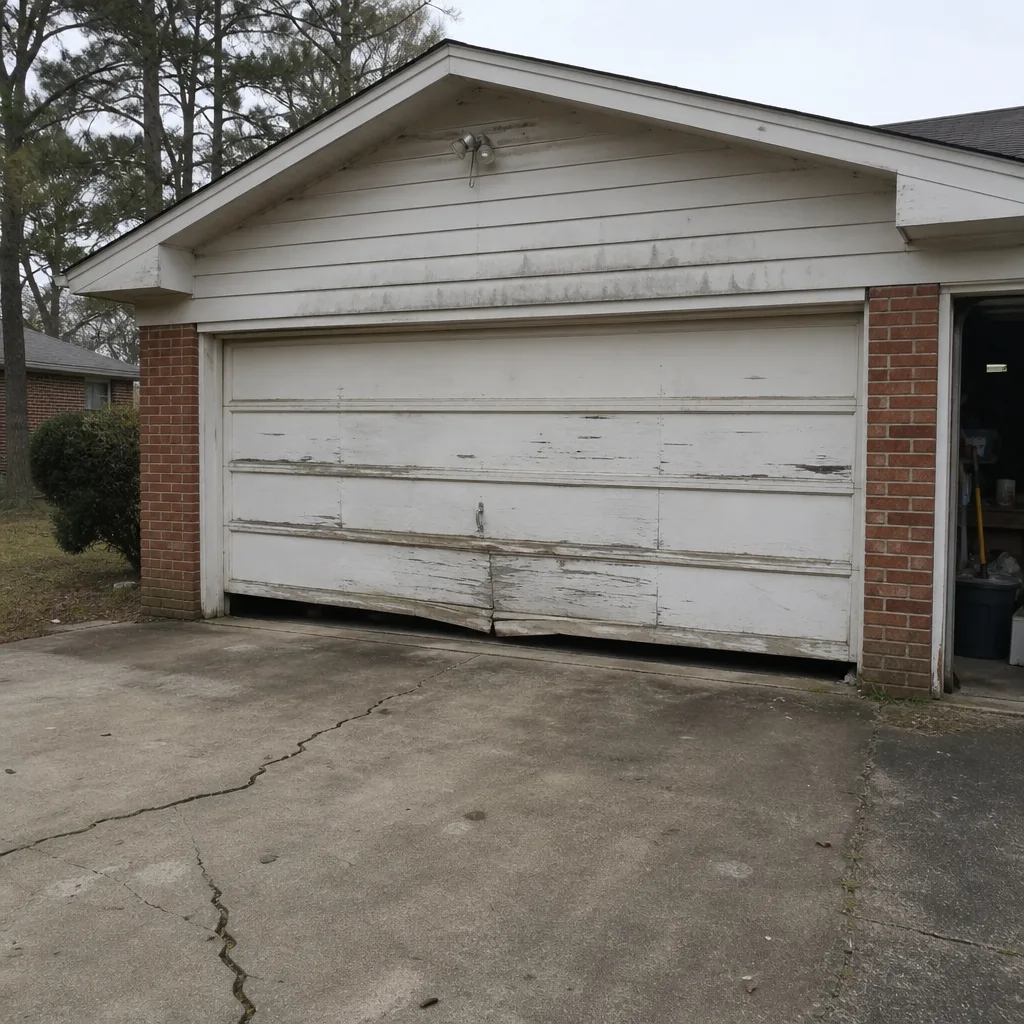 Before
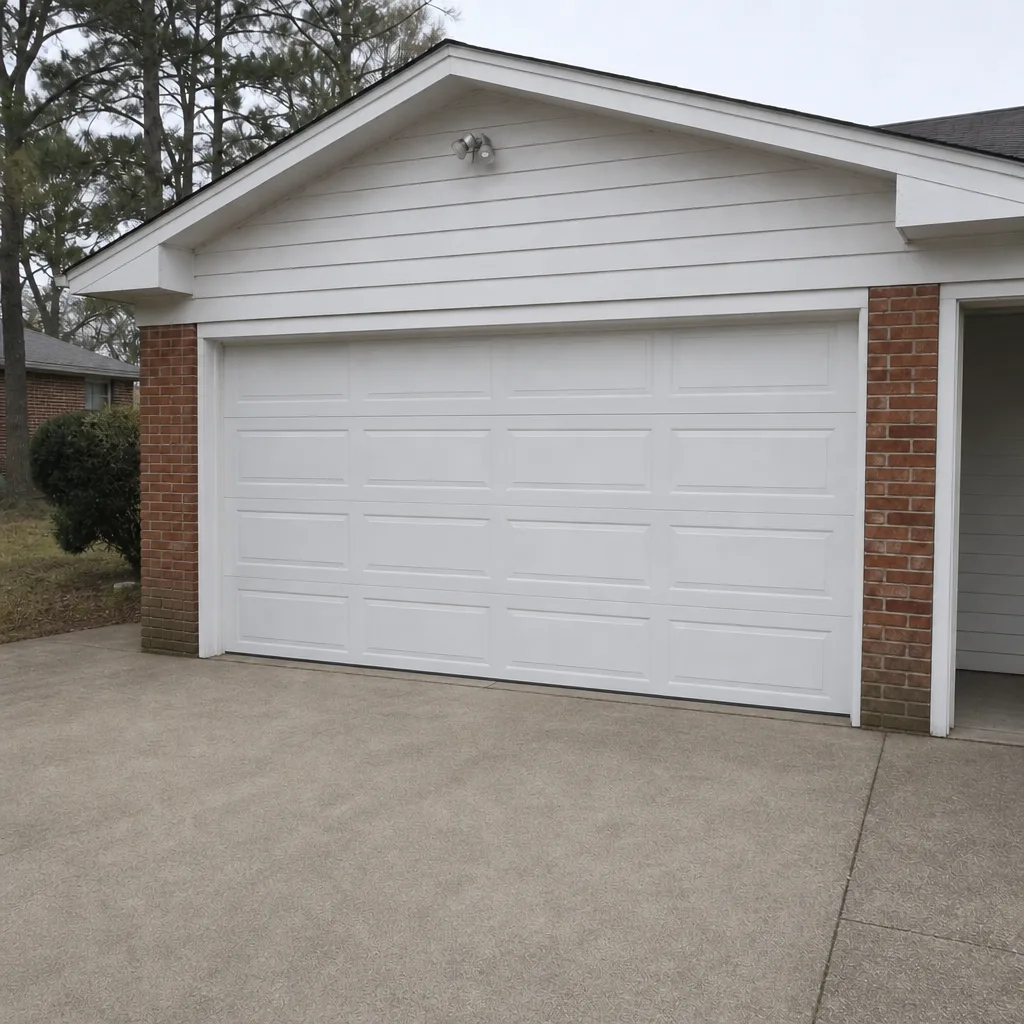 After
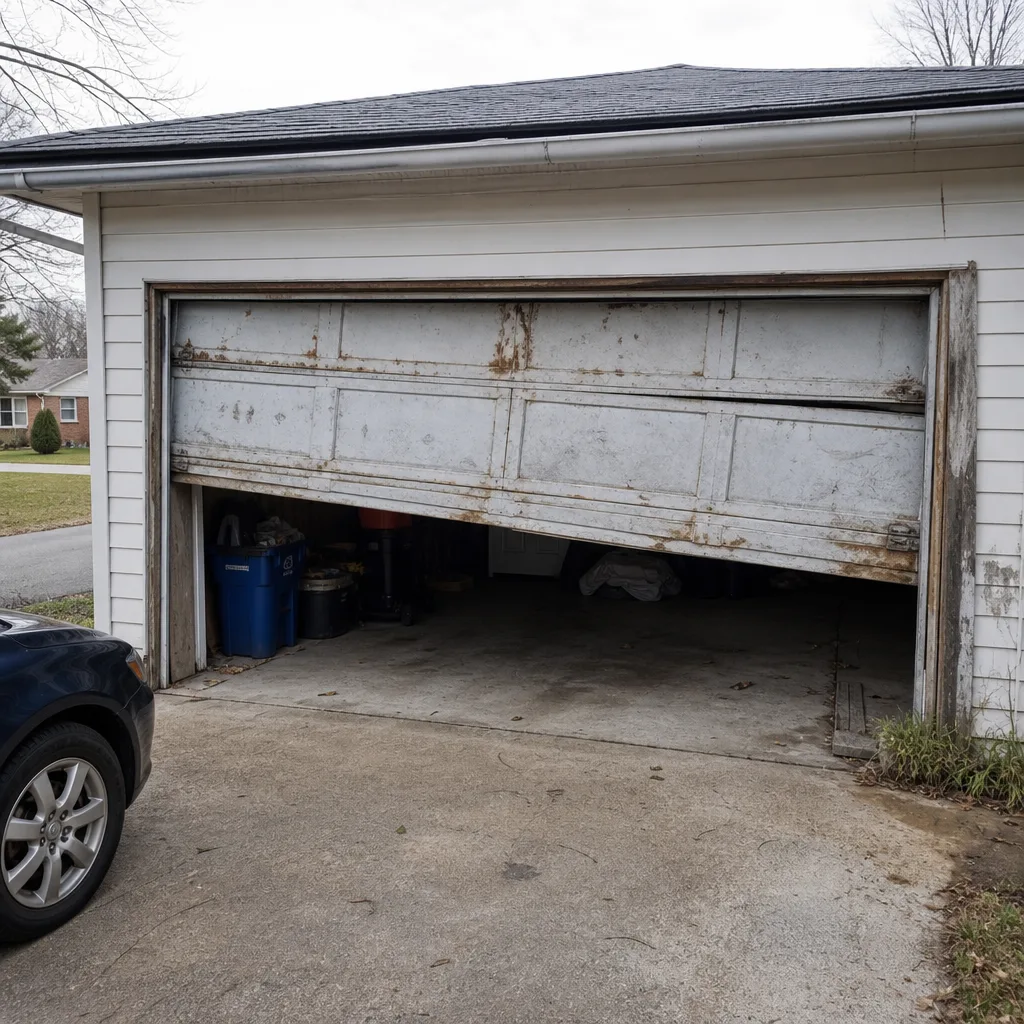 Before
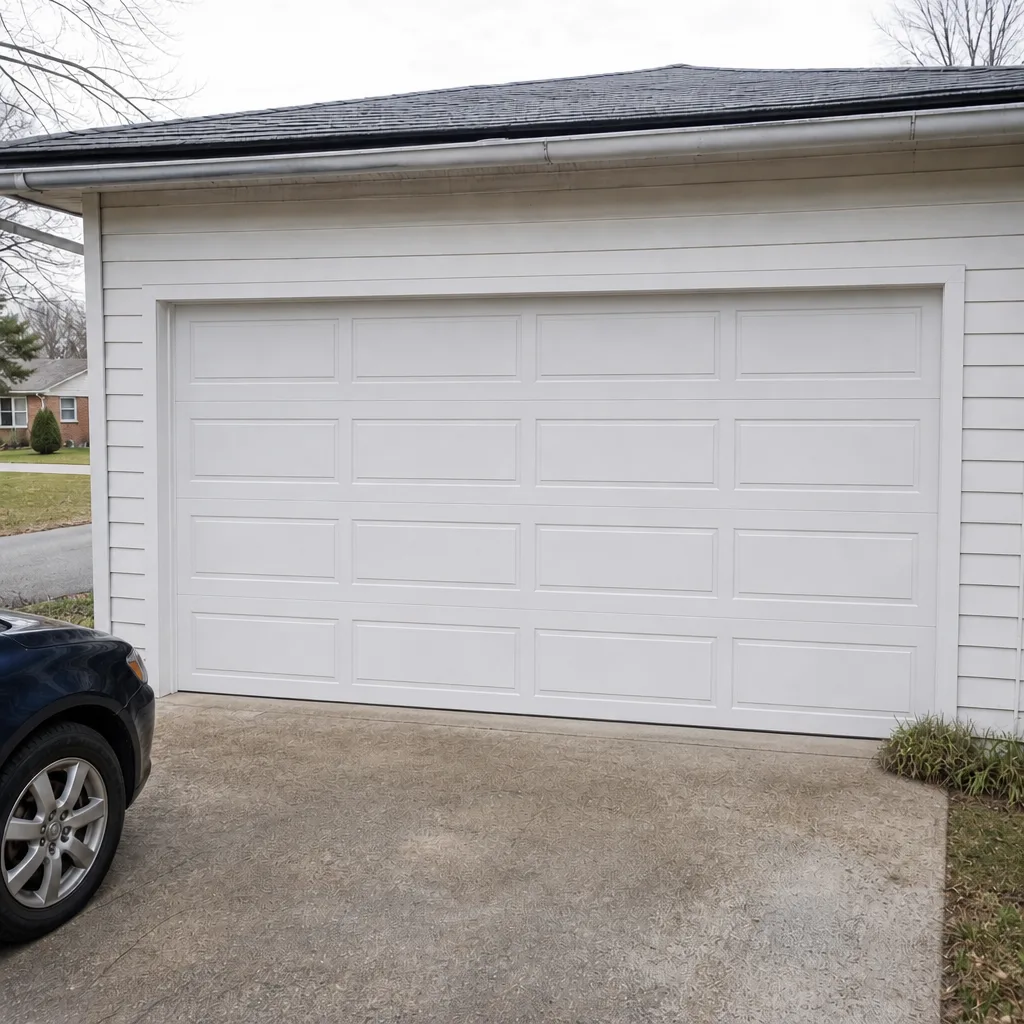 After
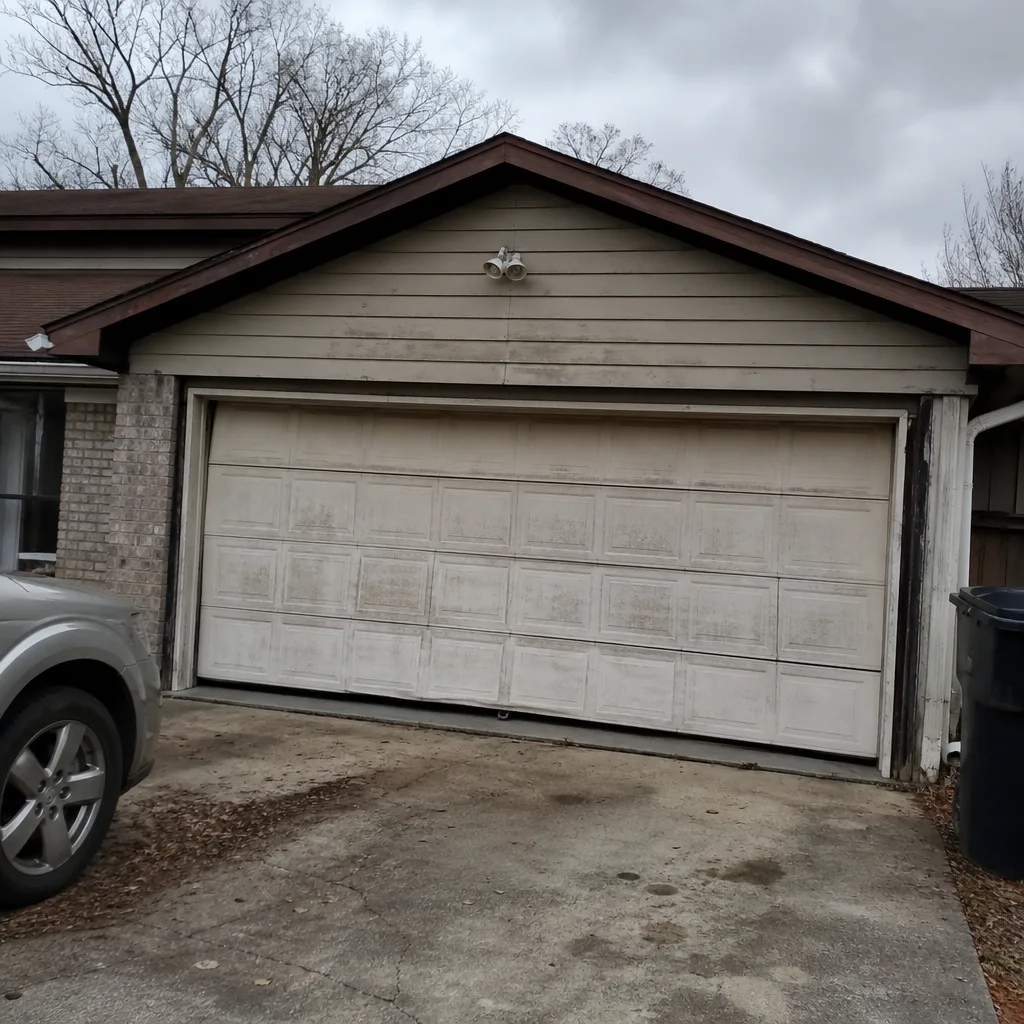 Before
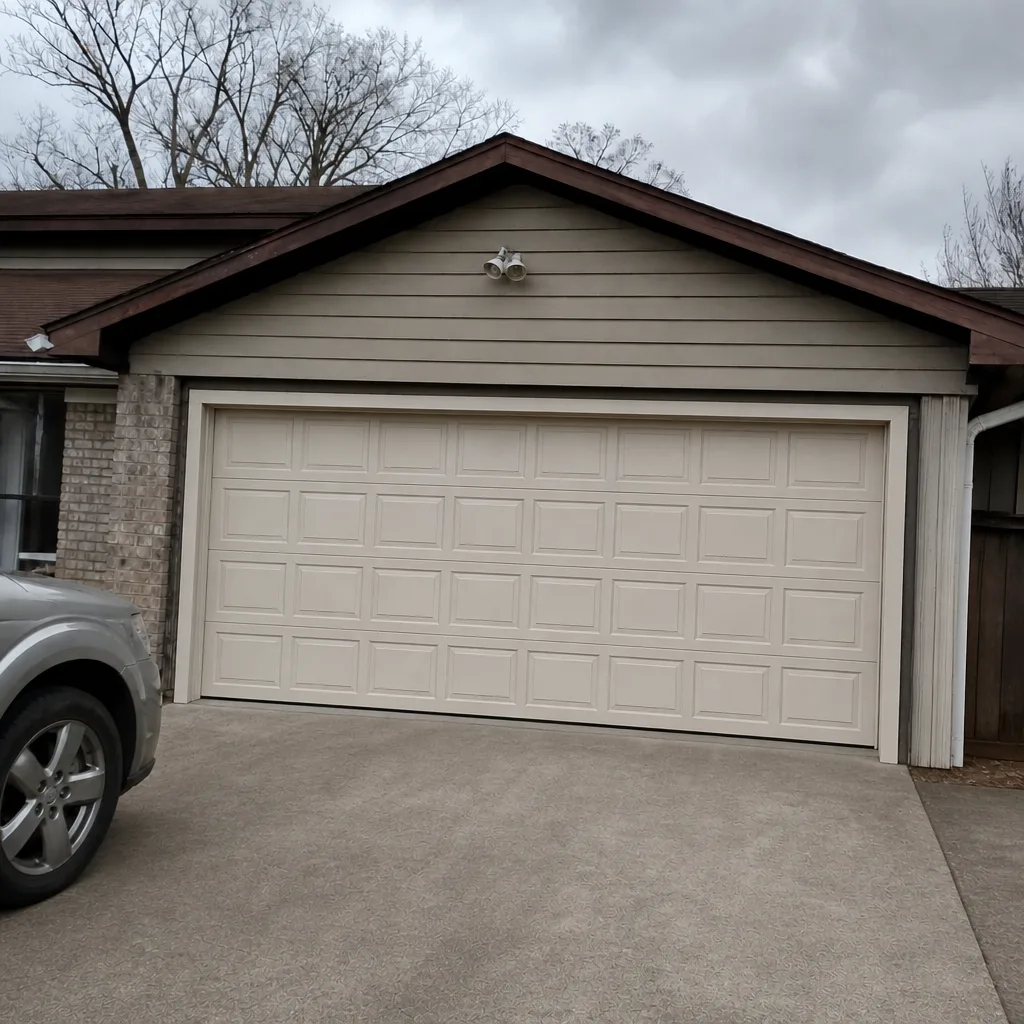 After
When to Call a Professional
Some problems aren’t maintenance tasks, they’re repair problems, and the right move is to stop handling them. Call a professional if a spring is broken, gapped, or visibly out of position; if a cable is loose, frayed, or off its drum; if the door has jumped the track or won’t open evenly; if the safety reverse test fails and can’t be corrected by cleaning and re-aiming the eyes; or if the opener runs but the door doesn’t move. Any of those means working near stored tension or a failing mechanism, and that’s not a DIY job no matter how handy you are.
Eaton Garage Door Repair offers free estimates in Fayetteville. Our technicians have up to 11 years of experience, and we work on the door and the opener both, across the common brands, so you’re not handed off when the problem turns out to be on the other side of the system. Call (855) 473-7101. We answer 24/7. Fast dispatch from 7am to 7pm, Sunday through Friday.
Frequently Asked Questions
Twice a year: once in late spring before the summer humidity peaks, and once in fall before the first freeze. Fayetteville’s humidity accelerates oxidation on springs and hinges, so timing matters more here than in drier climates. Call (855) 473-7101 if you’re not sure whether your door needs more than lubrication. Estimates are free.
No. Torsion and extension springs store several hundred pounds of force, and releasing it unintentionally can cause serious injury. Spring replacement requires correct sizing to the door’s weight and brand, plus the right tools. Keep the door closed and call a professional. Call (855) 473-7101 and we’ll give you a free estimate.
The monthly safety reverse test. It’s the one item that protects the people in the garage, and it takes less than a minute. Lubrication is the task that prevents the most expensive repairs, but the safety test is the one that matters most.
Disconnect the opener with the emergency release, lift the door to halfway, and let go. A balanced door holds its position or drifts slowly. A door that slams down or springs open is out of balance and points to a spring problem. Don’t adjust it yourself. Call (855) 473-7101 for a free estimate.
Fayetteville’s swings between humid summers and real freeze nights put wider stress on seals, lubricant, and metal hardware than a mild or dry climate. Both ends of the year push the door in opposite directions, so the twice-a-year schedule matters more, not less.
Bottom seal material, side weather stripping, cold-rated silicone or lithium lubricant, and spare opener remote batteries. Springs, cables, and opener internals should come from a professional who sources the right part for your specific brand and model. Call (855) 473-7101 if you’re not sure what your door takes. Estimates are free.
The Bottom Line
Garage door failure in Fayetteville is usually a maintenance problem, not an age problem. Lubricate twice a year around the humidity and the freeze, replace your seals before the cold cracks them, test safety reverse monthly, and log every task so the history is there when you sell. Leave springs and cables alone; that’s professional territory every time. Keep the right parts on hand for the small jobs and let a technician source the ones sized to your door. If you’d rather hand the whole checklist to someone who does this every day, that’s exactly what we do. Call (855) 473-7101 for a free estimate. We answer 24/7, and dispatch runs 7am to 7pm, Sunday through Friday.
Written by the team at Eaton Garage Door Repair.