
Last updated November 15, 2026
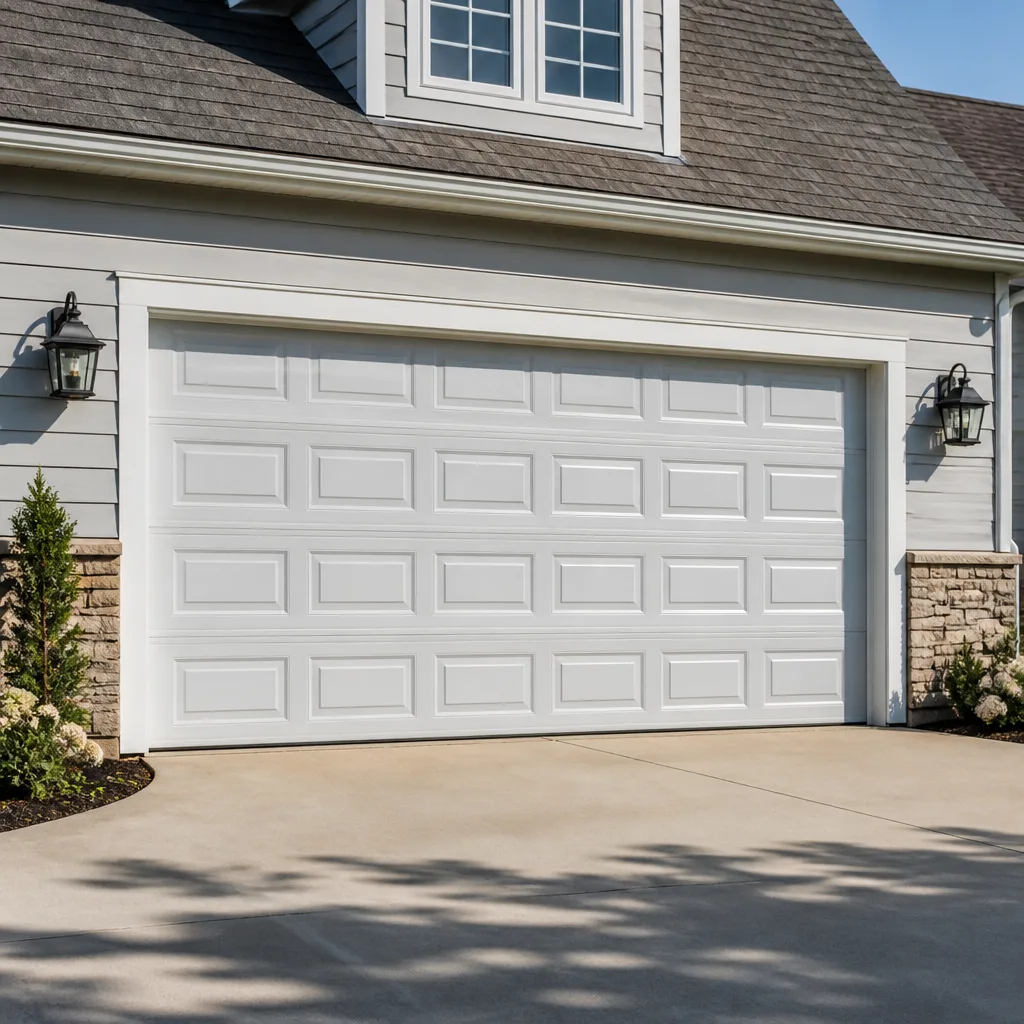 Raised-panel steel
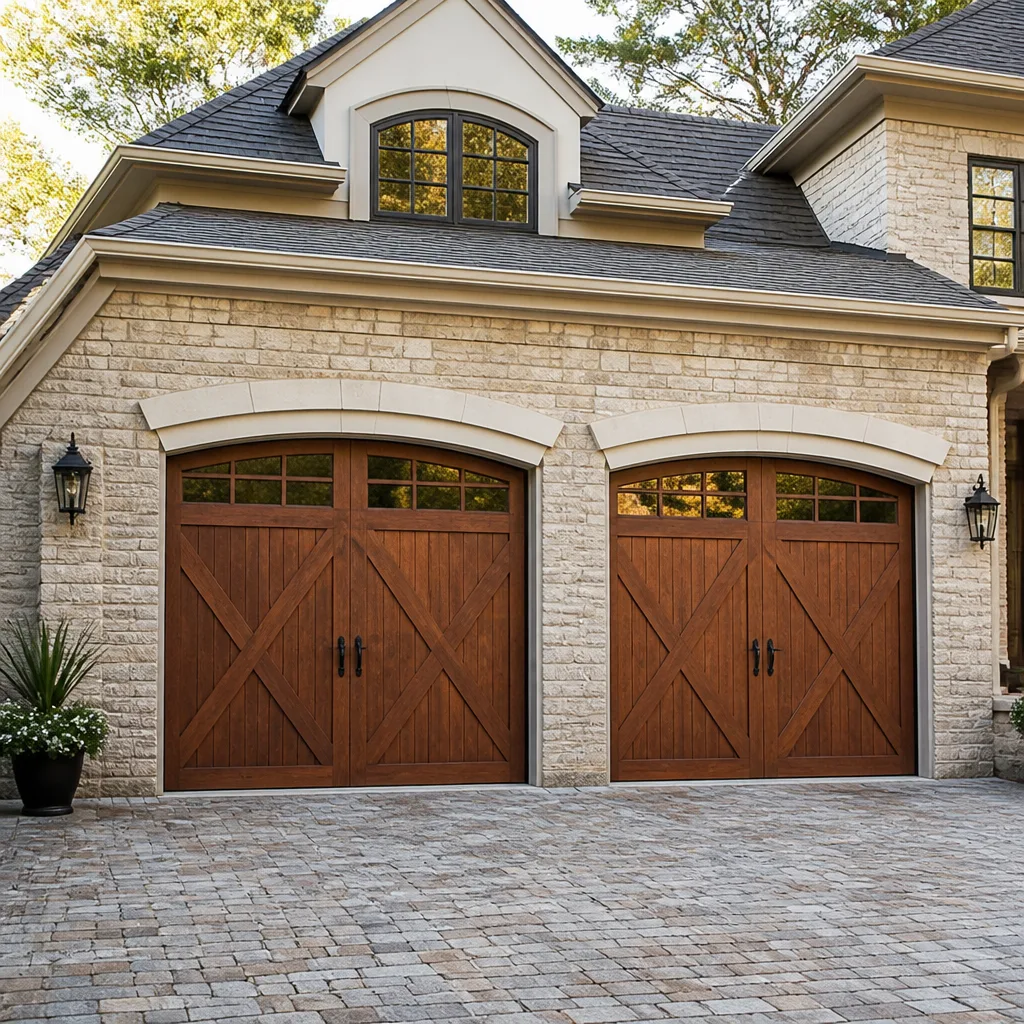 Carriage house
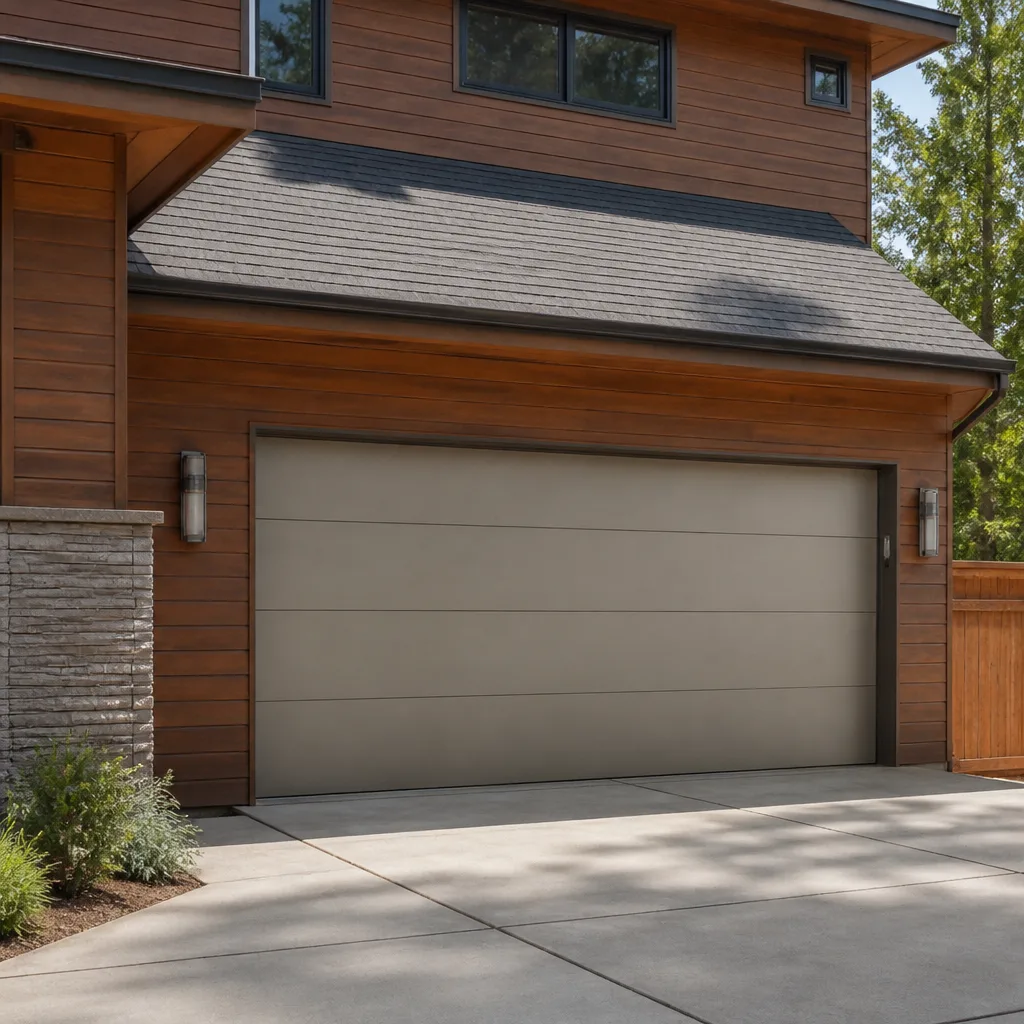 Modern flush
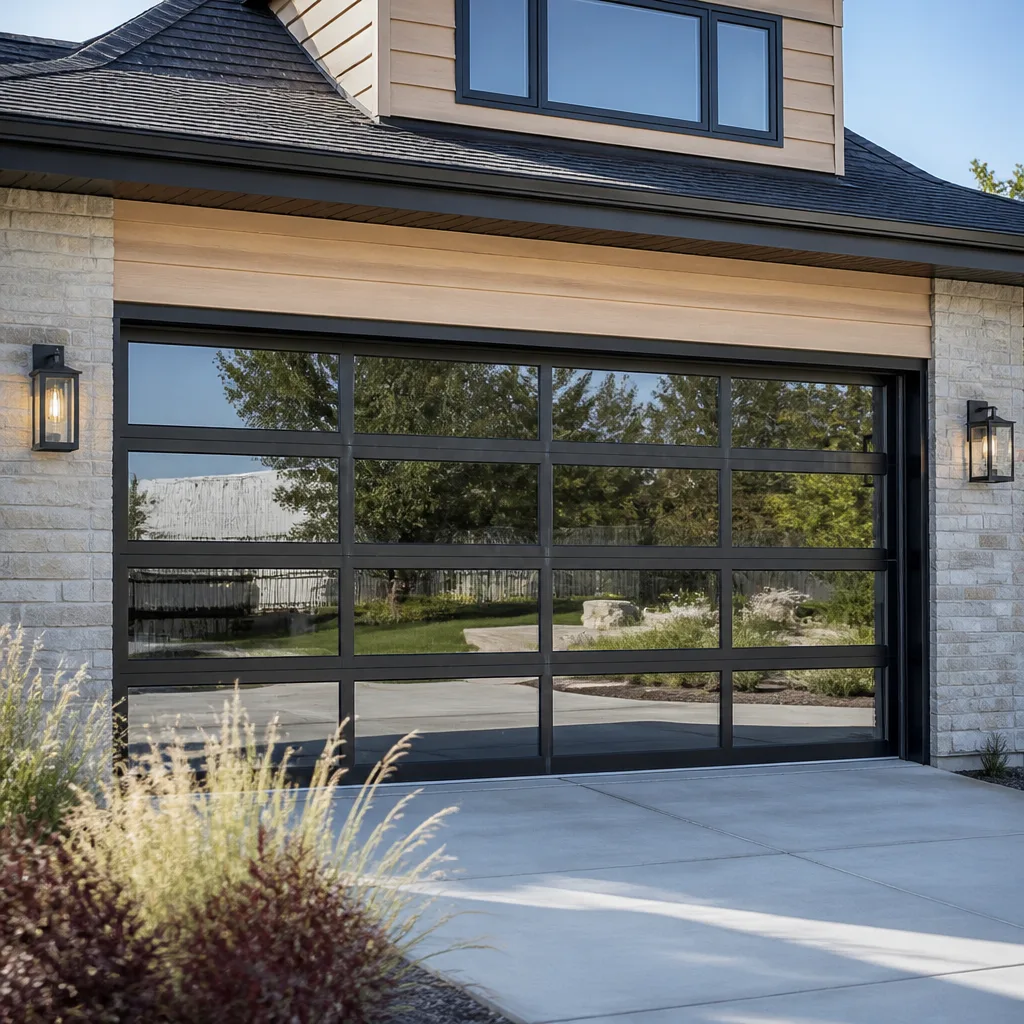 Full-view glass
 LiftMaster openers
 Chamberlain openers
Full 25-point door and opener safety check with every visit - springs, cables, rollers, tracks, and your LiftMaster or Chamberlain opener included
You get a price before we start. It does not change when the pro arrives.
Get your free estimateGarage Door Emergency Preparedness Guide for Fayetteville Homes
Most garage door “emergencies” aren’t mysteries. They’re patterns we see over and over in Fayetteville: a thunderstorm knocks out power and traps a car inside, a torsion spring snaps on a door that’s been used a few thousand times too many, or a wind event racks a panel and leaves the door crooked in its tracks. The homeowners who come out of these situations fastest aren’t the ones who got lucky. They’re the ones who knew, before anything broke, where their manual release cord was and what their opener model number was. This guide is the walkthrough we wish every Fayetteville homeowner had before the phone call. You’ll learn how to release a stuck door safely, how to check a door after a storm without hurting yourself, what a snapped spring actually looks like, and how to be ready so a technician arrives with the right parts the first time.
Quick Answer
The most common garage door emergencies in Fayetteville are power outages during summer thunderstorms, snapped torsion springs, and wind damage to panels and tracks. To prepare, test your manual release cord now, confirm whether your opener has battery backup, keep a note of your door and opener brand and model, and never try to lift a door whose spring has broken. A trained professional can make it safe quickly, and the cost of waiting is far higher than the cost of the repair.
Styles & brands we work with
- Raised-panel steel
- Carriage house
- Modern flush
- Full-view glass
- LiftMaster openers
- Chamberlain openers
Table of Contents
- Why Fayetteville Garage Door Emergencies Follow Predictable Patterns
- How to Use the Manual Release Cord on the Most Common Openers
- What to Do When a Spring Snaps
- Post-Storm Damage Assessment: Is Your Door Safe to Open?
- Battery Backup for Fayetteville’s Frequent Summer Outages
- Emergency Contact Preparation: What to Have Ready Before You Call
- Which Brands Are Most Common in Fayetteville Homes
- What to Do While You Wait for Help
Why Fayetteville Garage Door Emergencies Follow Predictable Patterns
Garage doors are mechanical systems that fail in repeatable ways, and Fayetteville’s weather settles into a couple of habits that push those failures along. Summer thunderstorms roll through with power surges and outages. The heat and humidity of a North Carolina summer work on metal and springs. And the sheer number of cycles a door goes through in a busy household adds up. When you understand the pattern, you stop being surprised.
The failure modes we deal with most in Fayetteville break down into a few buckets:
- Power loss. A storm trips the breaker or the whole block goes dark, and the door won’t move because the opener has no power. This is the single most common call we get during storm season, and the fix is usually the manual release.
- Spring failure. Torsion springs are under heavy constant tension and eventually give way, usually with a loud bang. The door then becomes dangerously heavy.
- Track and panel damage. A wind gust, a bumped car, or a damaged panel racks the track and stops the door partway.
- Opener faults. The door itself is fine, but the motor, logic board, or safety sensor on a LiftMaster or Chamberlain unit has an issue.
- Obstructions and off-track rollers. Small debris in the track or a popped roller throws the door out of alignment.
The point of naming these patterns is preparation, not fear. If you’ve thought through the storm-outage scenario and the spring scenario in advance, you already know what your first move is. That’s the whole game. Our technicians have up to 11 years of experience across these exact situations, and the calmest homeowners on the phone are almost always the ones who’d read a guide like this first. When you do need help, Eaton Garage Door Repair is the specialist to call.
How to Use the Manual Release Cord on the Most Common Openers
Every garage door opener has a manual release, and knowing where yours is matters more in Fayetteville than most people realize because of how often summer storms cut power. The release lets you disengage the door from the opener so you can lift it by hand. On nearly all openers, the cord hangs down from the trolley carriage that rides the rail above the door, usually a short rope with a red or T-shaped handle at the end. Locate it while the power is on, not in the dark.
The safe way to use it, when the door is fully closed and the spring is intact:
- Make sure the door is fully closed and the area around it is clear.
- Pull the release cord straight down with a firm, steady motion until you feel the trolley disengage from the door.
- Lift the door slowly by hand. A healthy door should rise with reasonable effort; if it feels extremely heavy, stop and treat it as a spring problem.
- To re-engage, pull the cord again or lift the door until the trolley clicks back onto the carrier, then run the opener once to confirm it reconnected.
When the cord has been pulled incorrectly
This is a scenario we walk Fayetteville customers through regularly: the cord got pulled and now the trolley is disengaged, the door won’t reconnect, or the door was pulled down while the opener still thinks it’s closed. If the door is stuck open with the arm disconnected, don’t force it. Find the trolley carriage and manually slide it back toward the opener until it re-engages, then operate the door from the wall button. On LiftMaster and Chamberlain units, the disconnected trolley often just needs to click back onto the carriage by hand. If a Genie or Craftsman opener won’t re-latch, the issue is usually the trolley alignment, and that’s a call worth making rather than fighting with the mechanism.
One warning: modern openers with battery backup and smart features sometimes behave differently with the release than older units. If your opener is a myQ-connected LiftMaster or Chamberlain model, consult the manual for the specific re-engage procedure before pulling anything. When a stuck door needs a trained hand, garage door opener repair gets the opener and the door working together again.
What to Do When a Spring Snaps
A snapped garage door spring is loud, unmistakable, and genuinely dangerous. You’ll usually hear a sharp bang from the garage, and the door suddenly won’t lift or will lift only a foot before sagging. On a torsion system, look above the door at the shaft and you’ll often see a visible gap where the wound spring has split. On an extension system, the spring runs above the horizontal tracks along the door’s travel. If you spot the break, you’ve confirmed it. Don’t test the door repeatedly to be sure.
Here’s the part that matters most, and it’s the part we push hardest on:
- Never operate a door with a broken spring, by hand or with the opener. A torsion spring carries enough stored energy to cause serious injury, and without it the door’s full weight is on you or on the opener mechanism.
- Don’t try to replace the spring yourself. Winding a torsion spring requires special bars and the training to use them safely. This is not a homeowner repair, and we’d rather you call than risk your hands.
- Don’t leave the door half open. If the door is stuck partway up and the spring is broken, do not pull it down by hand. Call us and describe the situation so a technician can advise you on securing it.
The interim step for a broken spring is to secure the door and keep everyone clear of it until help arrives. If the door is fully closed, leave it closed. If it’s stuck open, keep children and pets away and don’t force it. A spring repair is routine for a trained technician and usually completed in a single visit. If your home needs broader garage door repair, the same visit can address it.
Post-Storm Damage Assessment: Is Your Door Safe to Open?
After a strong storm passes through Fayetteville, a garage door can look fine and still be structurally compromised. The door is a large, mostly unsupported panel spanning the full width of the opening, and wind loads stress exactly the parts you can’t see from the driveway. Before you press the button, run a slow visual check.
Look for these warning signs:
- Bent or twisted tracks. Run your eye along the vertical and horizontal tracks. Any kink, bend, or gap where they used to sit flush is a red flag.
- Panels out of line. Stand back and check whether the door’s horizontal lines are parallel. A panel that’s shifted or bowed has taken an impact.
- Loose or missing hinges and rollers. Storm vibration can work fasteners loose.
- Debris in the tracks. Branches, leaves, and grit jam the rollers.
- A door that looks slightly raised on one side. This is often a cable or track issue and means the door isn’t safe to cycle.
If any of these are present, don’t run the opener. Forcing a misaligned door can turn a small repair into a large one, and in the worst case the door can come off its tracks. If the door looks undamaged, operate it once slowly and watch and listen. Grinding, popping, or hesitation means stop and call. Post-storm assessment is one of the areas where a Fayetteville homeowner’s caution pays off directly: a door that’s checked before it’s cycled is far less likely to cause a bigger problem.
Battery Backup for Fayetteville’s Frequent Summer Outages
If your garage door depends on grid power and you live in a Fayetteville neighborhood where summer storms regularly knock out electricity, a battery backup is one of the most useful upgrades you can make. It keeps the door operating for a limited number of cycles during an outage, so you’re not trapped or doing a manual release in the dark every time the power flickers.
Several opener lines support battery backup directly:
- LiftMaster offers battery backup on many of its current models, and the backup typically keeps the door working for a handful of open-and-close cycles during an outage.
- Chamberlain sells battery backup units that pair with its openers, including smart models that connect through the myQ app so you can check door status from your phone.
- Genie offers battery backup options on select models as well.
Not every home in Fayetteville is set up for battery backup, and retrofitting it depends on the opener’s model and age. If you have an older unit without the feature, the realistic options are to add a compatible backup kit if one exists for your model or to plan an opener upgrade. The right answer depends on your specific opener, so it’s worth having a technician check what your current unit supports rather than ordering a kit that won’t fit. Older units and legacy openers that were never designed for backup are a case where knowing your model number up front saves time.
Emergency Contact Preparation: What to Have Ready Before You Call
The difference between a quick repair and a two-visit repair often comes down to what the homeowner knows when they call. When you can tell us the door brand, the opener model, and roughly how old the system is, a technician can show up ready to work. When the caller says “it’s just a garage door,” we have to diagnose blind. A five-minute note on your phone now can save you a wasted visit later.
Gather and keep this information somewhere easy to find, ideally a note in your phone or a card taped inside the garage door frame:
- Garage door brand and model. Check the decals on the door’s bottom section or the frame around the opening.
- Opener brand and model number. The label is usually on the motor housing under the ceiling unit.
- Approximate age of the door and opener. A rough year is enough to guide which parts are likely needed.
- Type of spring system. Torsion spring above the door versus extension springs along the sides.
- What happened and what you’ve already tried. Did you pull the manual release? Did the door move at all? Any odd noises?
Knowing your brand also tells us what’s most likely to fail on your specific system. Clopay doors, for example, have distinct panel and hardware patterns compared with Amarr or Wayne Dalton, and an opener’s brand guides which logic board, sensor, or trolley replacement we bring along. When you’re ready to call, ring (855) 473-7101 and tell us what you’ve written down.
Which Brands Are Most Common in Fayetteville Homes
Garage doors and openers in Fayetteville homes tend to cluster among a handful of manufacturers, and knowing which one you have helps you get the right help faster. We service eight of the most widely installed brands in North America: LiftMaster, Chamberlain, Genie, Clopay, Amarr, Wayne Dalton, Craftsman, and Raynor. On the door side, Clopay, Amarr, and Wayne Dalton are the names you’ll see on many homes. On the opener side, LiftMaster, Chamberlain, and Genie cover the majority of units we work on.
Two of those matter especially for Fayetteville’s storm season. LiftMaster and Chamberlain both offer smart-home connectivity through the myQ app, which lets you check whether your door is open or closed from your phone and monitor battery backup status during an outage. If your opener is a myQ model, you can check the door’s state remotely after a storm without walking out to the garage. Craftsman and Raynor units show up too, and they’re a good example of why a brand-agnostic approach matters: the right fix depends on the system, not on a preferred brand.
Because garage doors are all we do, brand familiarity is deeper than a general handyman’s. We don’t push a particular manufacturer for the sake of a sale. We diagnose what your door has and repair or replace what fits it. If you’re near Spout Springs or anywhere in the greater Fayetteville area and aren’t sure what brand you have, a quick look at the door and opener labels usually tells us.
What to Do While You Wait for Help
Once you’ve called, there are a few things that make the wait safer and the repair smoother. The overarching rule is simple: don’t make the problem worse. A door that’s stuck, heavy, or off its tracks should be left alone.
- Keep the area clear. Move cars, bikes, and anything stored near the door out of the path of travel.
- Unplug the opener if the door is stuck in motion. This prevents anyone from accidentally cycling a damaged door.
- Don’t pull on a stuck door. If it won’t move by hand when the spring seems intact, the cable may be off and forcing it is dangerous.
- Don’t prop a stuck-open door up with a broomstick or ladder. That’s not a safe substitute for a proper repair.
- Note any sounds or new symptoms so you can describe them when the technician arrives.
If children are in the home, keep them away from the garage and make sure the wall button isn’t reachable. A door in a compromised state is not a toy. The fast path to a fix is a short wait with a clear head, not a heroic attempt to move heavy panels.
Common Mistakes to Avoid
- Not testing the manual release before you need it. Homeowners who’ve never found their release cord struggle in the dark during an outage. Find it now and confirm it works while the power is on.
- Running the opener after a storm without checking the tracks. Forcing a misaligned door turns a small repair into a major one. Do the visual check first.
- Lifting a door with a broken spring. The energy in a torsion spring is serious, and a door without one is heavier than it looks. Keep everyone clear and call.
- Trying to replace a torsion spring yourself. Winding one requires special tools and training. This is a hard stop for DIY.
- Assuming every opener supports battery backup. Not all units do, and a backup kit has to be compatible with your model. Check before you buy.
- Calling without your brand and model. A two-minute note on your phone saves a wasted trip. Know your door and opener before an emergency.
- Assuming a storm-damaged door is fine because it looks straight. Wind can stress hardware you can’t see. Operate it once slowly and watch and listen before trusting it.
See the difference
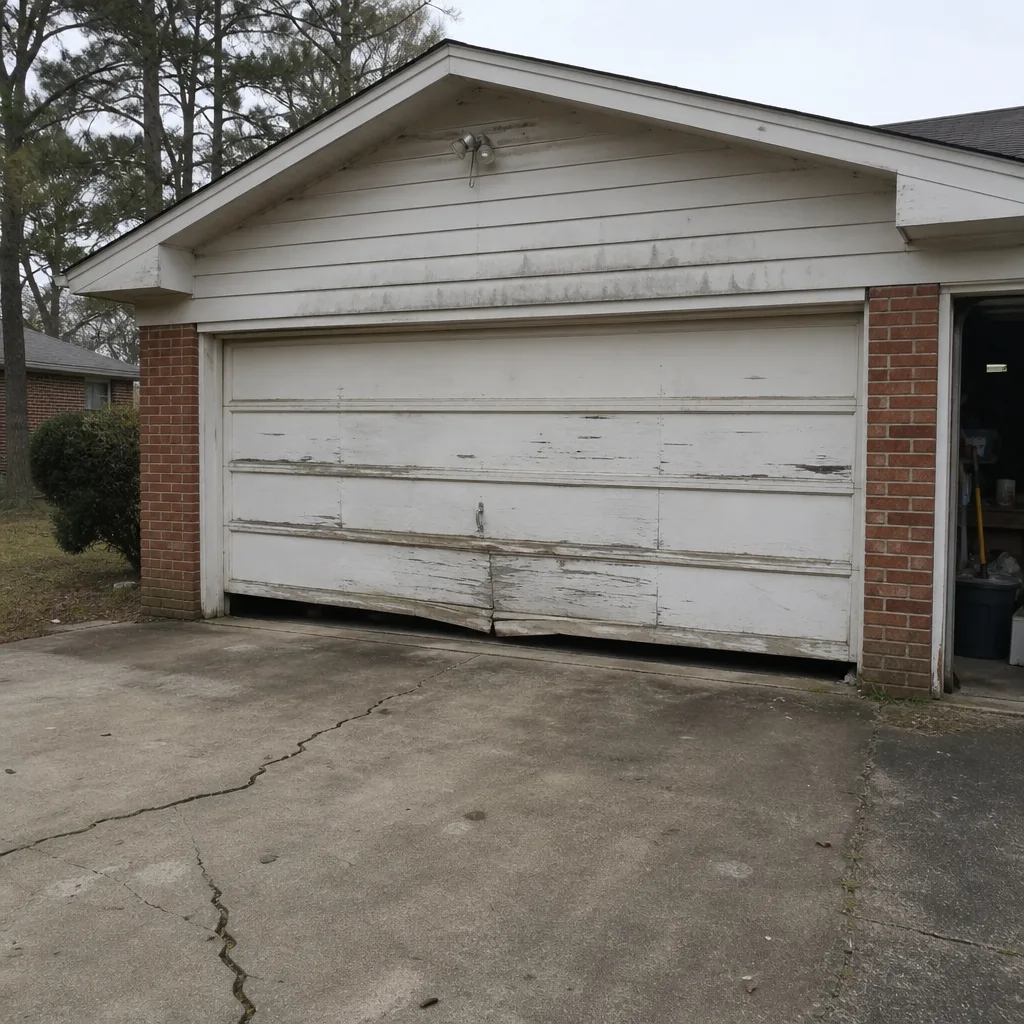 Before
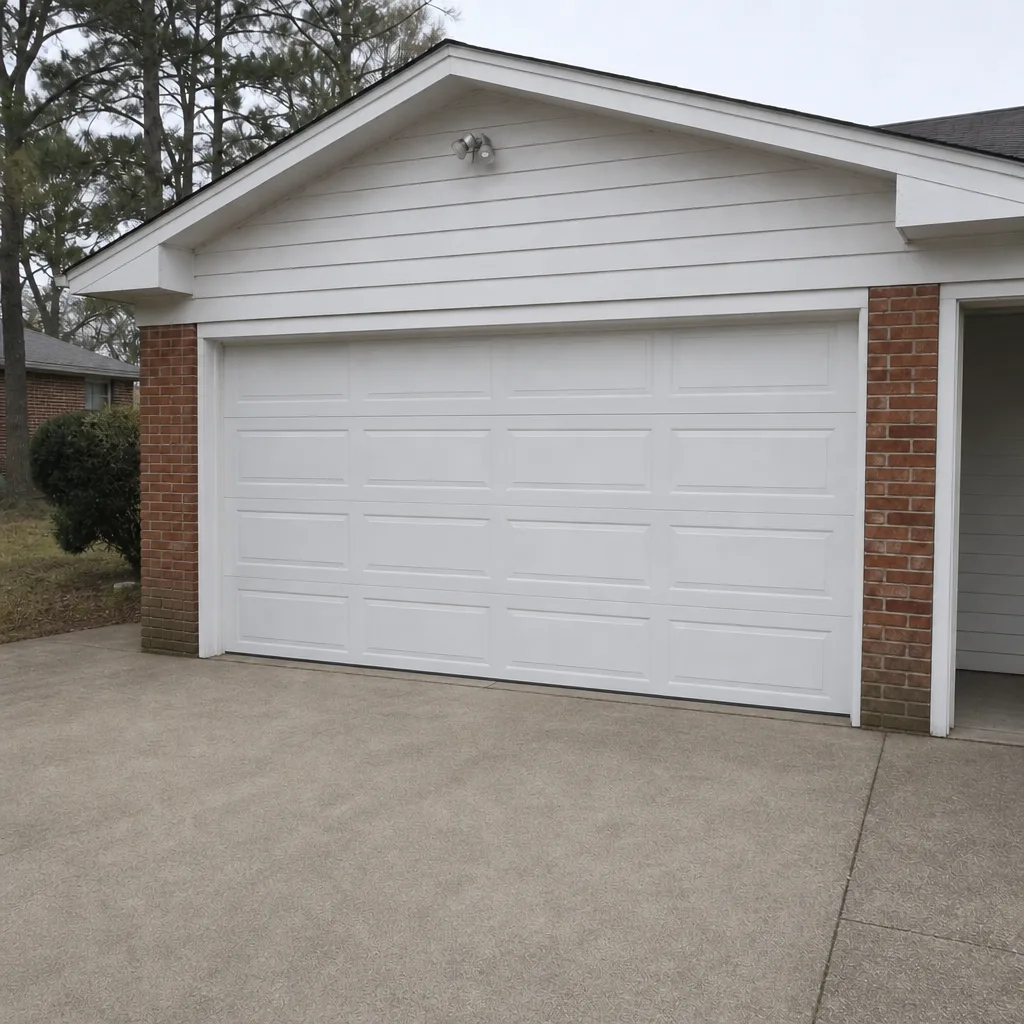 After
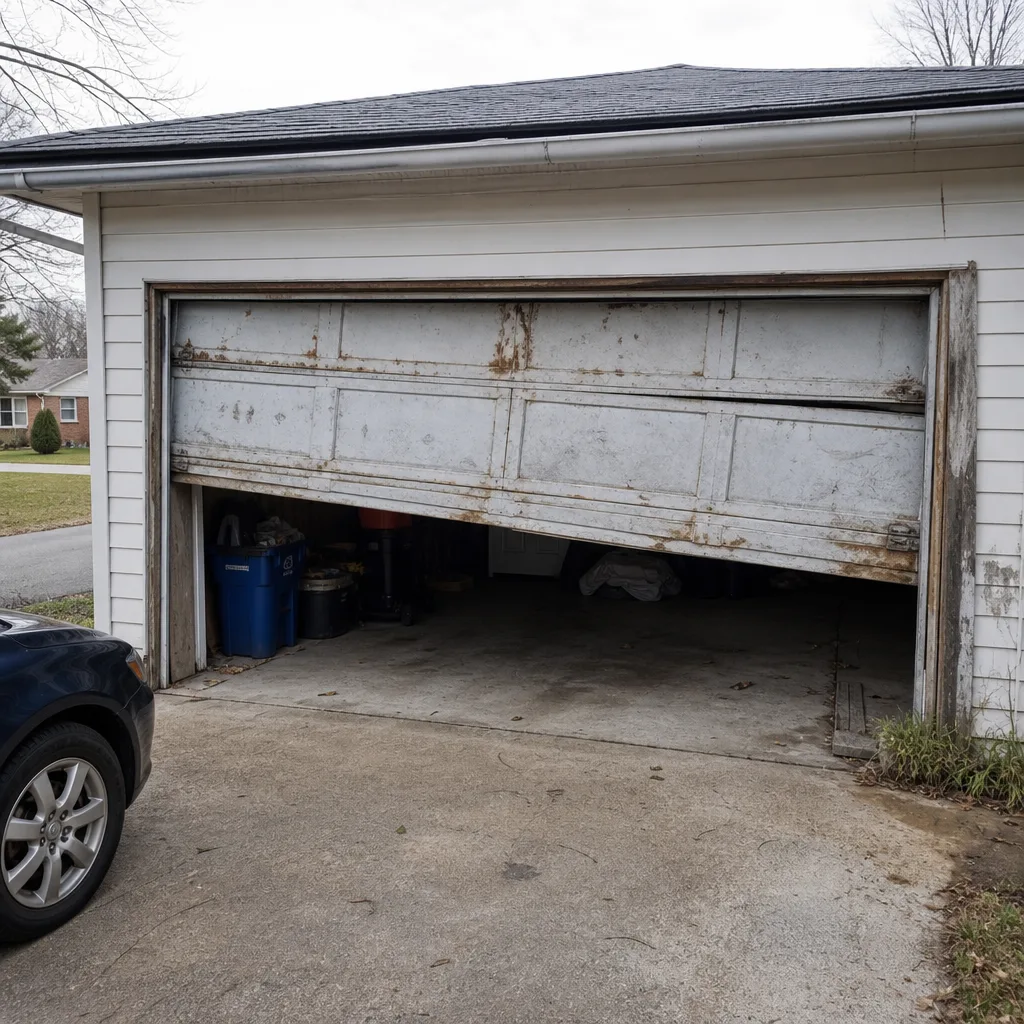 Before
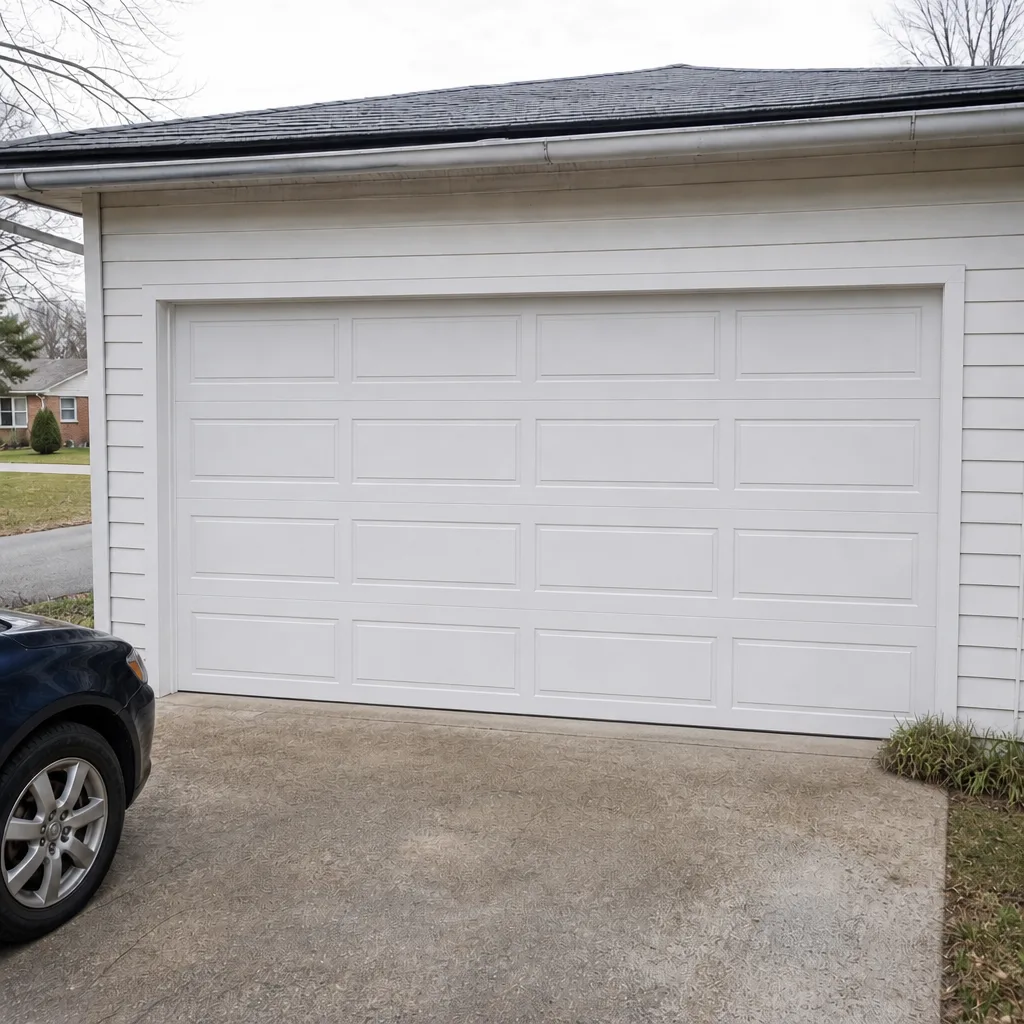 After
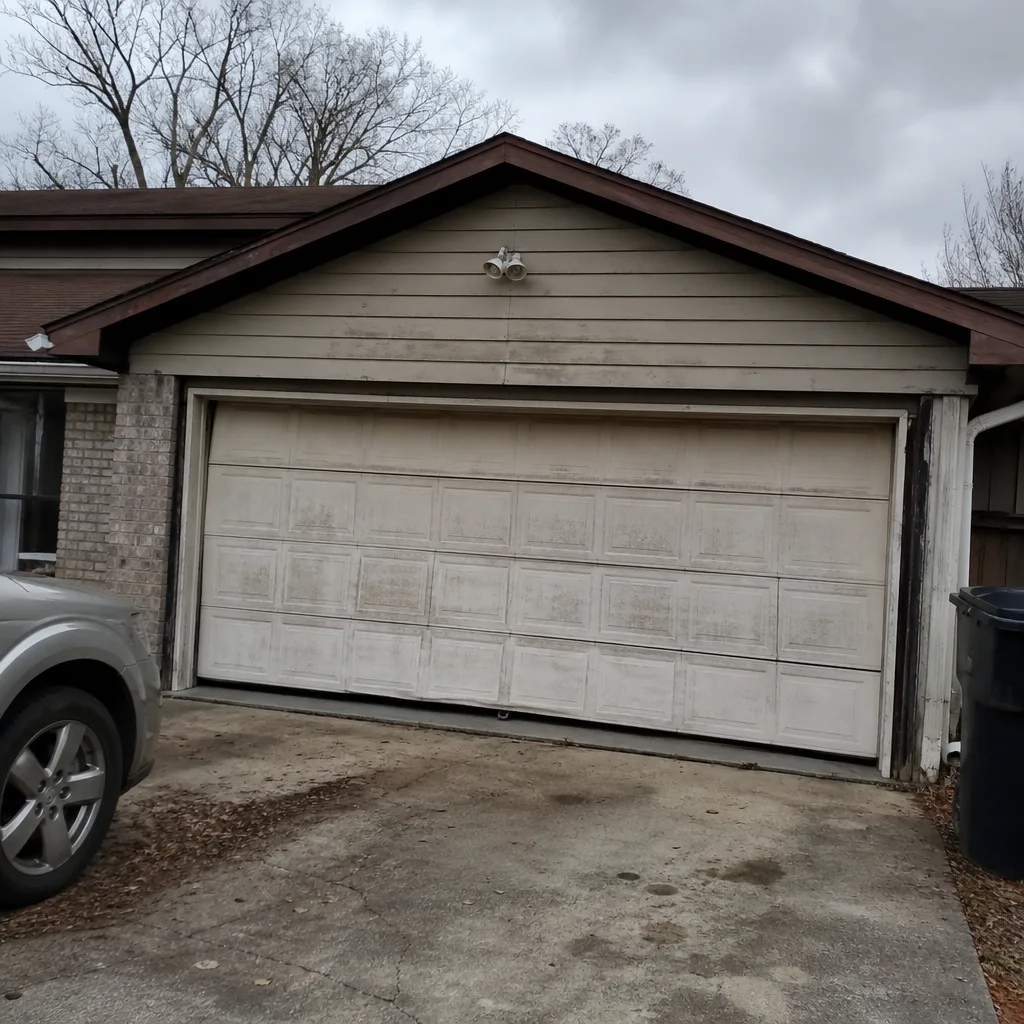 Before
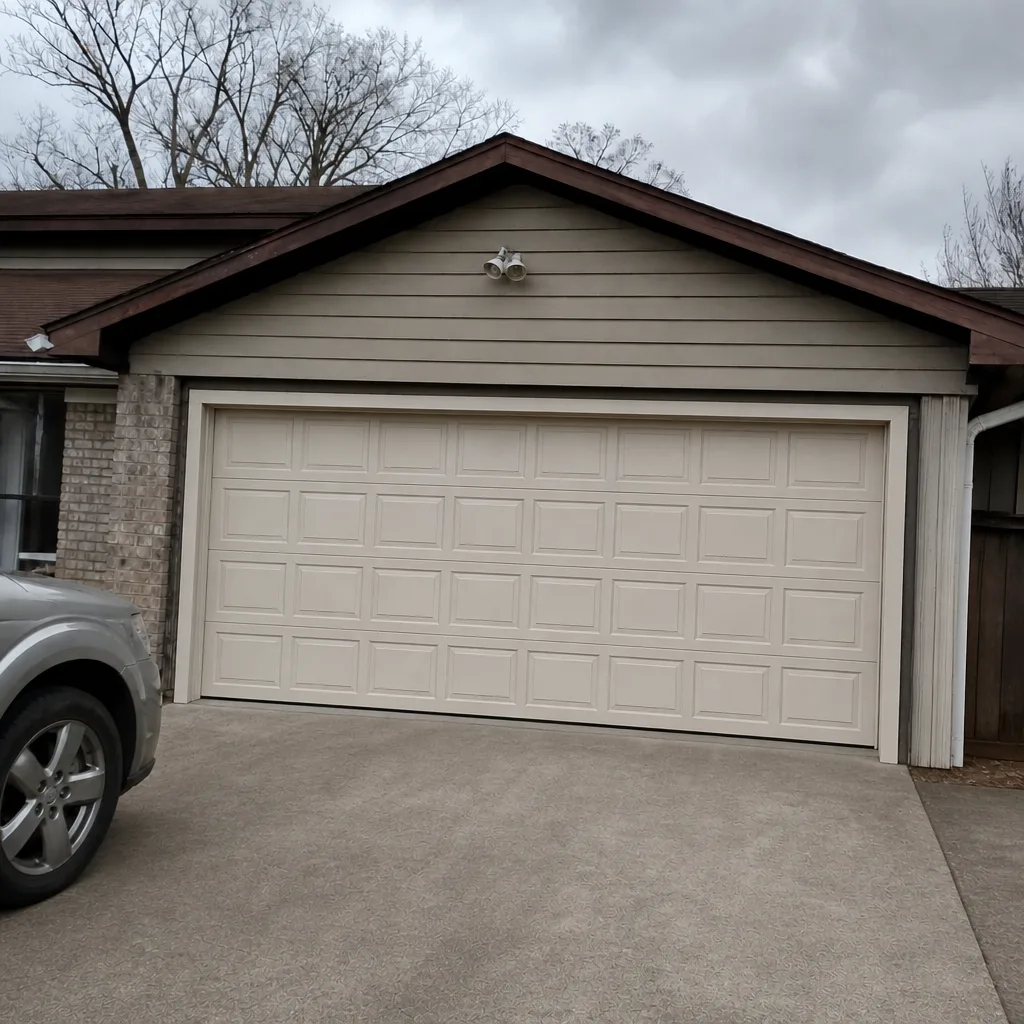 After
When to Call a Professional
Some jobs in a Fayetteville garage call for a pro without debate: a broken torsion spring, a door off its tracks, a cable that’s snapped or slack, a door that’s heavy in the middle, or panels that are visibly bent. Those involve stored energy or the door’s full weight, and a trained technician is the only safe way through. Call a specialist, too, if your opener is a LiftMaster or Chamberlain myQ unit that won’t reconnect after a manual release, if battery backup is something you want but aren’t sure your model supports, or if you’ve done the post-storm check and found anything off. Eaton Garage Door Repair offers free estimates in Fayetteville. Call (855) 473-7101 and tell us what you’ve seen. Our technicians have up to 11 years of experience working on the door and the opener, so you’re getting one specialist, not a handoff.
Frequently Asked Questions
Use the manual release cord to disengage the door from the opener, then lift it by hand. Locate the cord above the door on the trolley; the handle is usually red. Keep the door fully closed before you pull. If the door feels extremely heavy once released, stop and treat it as a spring problem.
You’ll usually hear a loud bang, and the door won’t lift or will lift only slightly before sagging. Look above the door at the torsion shaft and you’ll often see a visible gap in the spring. Never try to operate or lift the door once you’ve confirmed a break; call for help and keep clear. Call (855) 473-7101 for a free estimate.
Only after a slow visual check of the tracks, panels, hinges, and rollers. If anything looks bent, shifted, or out of line, don’t run the opener. If it all looks good, operate the door once and watch and listen; grinding or hesitation means stop and call. Call (855) 473-7101. We answer 24/7.
It depends on the model. Many current LiftMaster, Chamberlain, and select Genie openers support battery backup, but older units may not, and compatibility matters. Check your opener’s model number before buying a kit, or have a technician confirm what your unit supports. Call (855) 473-7101 for an exact answer.
Have your door brand and model, your opener brand and model number, the approximate age of the system, whether it uses torsion or extension springs, and a short description of what happened and what you’ve tried. That lets a technician arrive with the right parts instead of a diagnosis trip. Call (855) 473-7101 when you’re ready.
For most repair situations, yes. Same-day service is common for spring failures, opener issues, and doors stuck off track. When you call, describe the problem and have your brand and model handy. Call (855) 473-7101. We answer 24/7. Fast dispatch from 7am to 7pm, Sunday through Friday.
The Bottom Line
Garage door emergencies in Fayetteville follow patterns, and the biggest advantage a homeowner has is preparation made before the storm or the snap. Find your manual release cord and test it while the power is on. Know your door and opener brand and model and keep that note in your phone. Understand that a snapped spring is a hands-off call, and that a post-storm door needs a slow visual check before you cycle it. Consider battery backup for summer outages if your opener supports it. None of this is complicated, and all of it makes the bad day shorter and safer. Do the small work now, and you’ll handle the next outage with a clear head.
When you need a specialist, Eaton Garage Door Repair works on your brand, from LiftMaster and Chamberlain openers to the door itself. Call (855) 473-7101 for a free estimate. We answer 24/7. Fast dispatch from 7am to 7pm, Sunday through Friday. Need opener help specifically? Our garage door opener repair covers every system, and our guide to garage door repair and Spout Springs shows how we work across the Fayetteville area.
Written by the team at Eaton Garage Door Repair.