
Last updated November 15, 2026
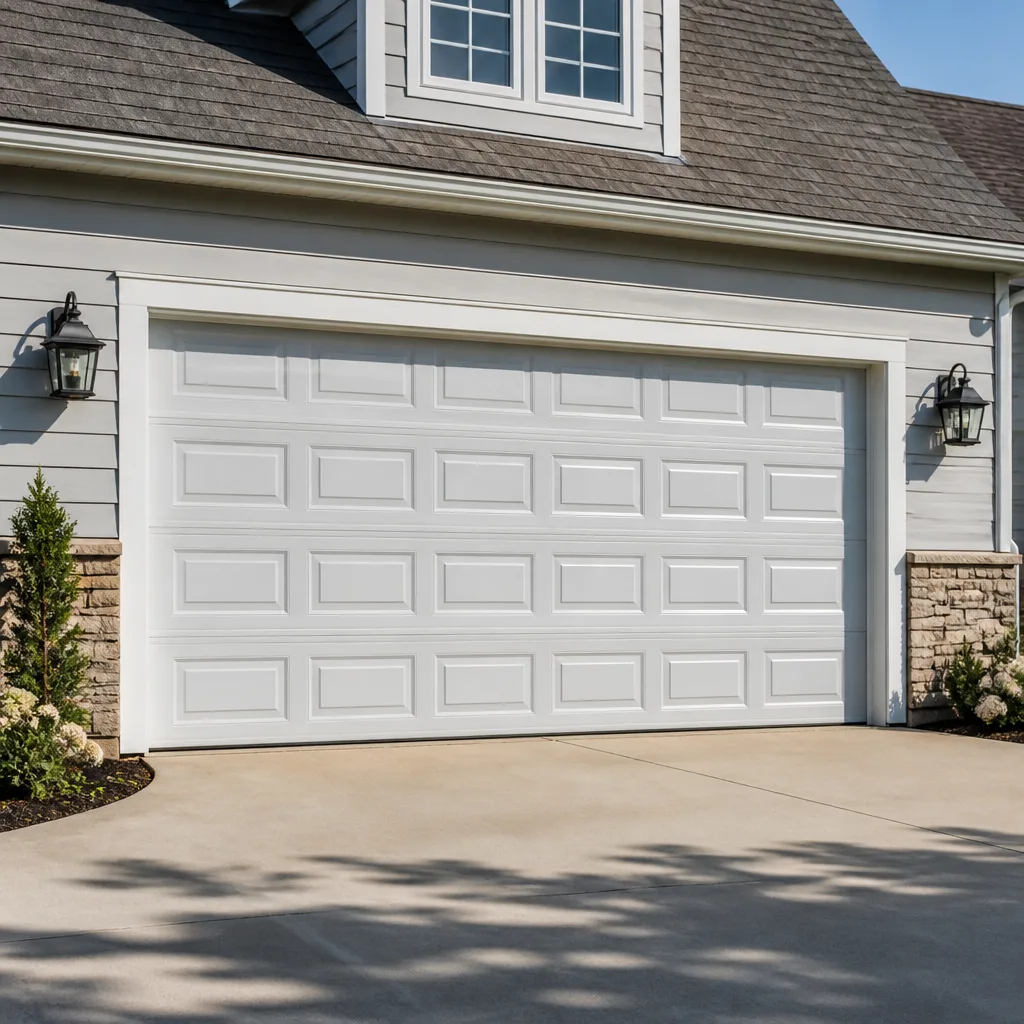 Raised-panel steel
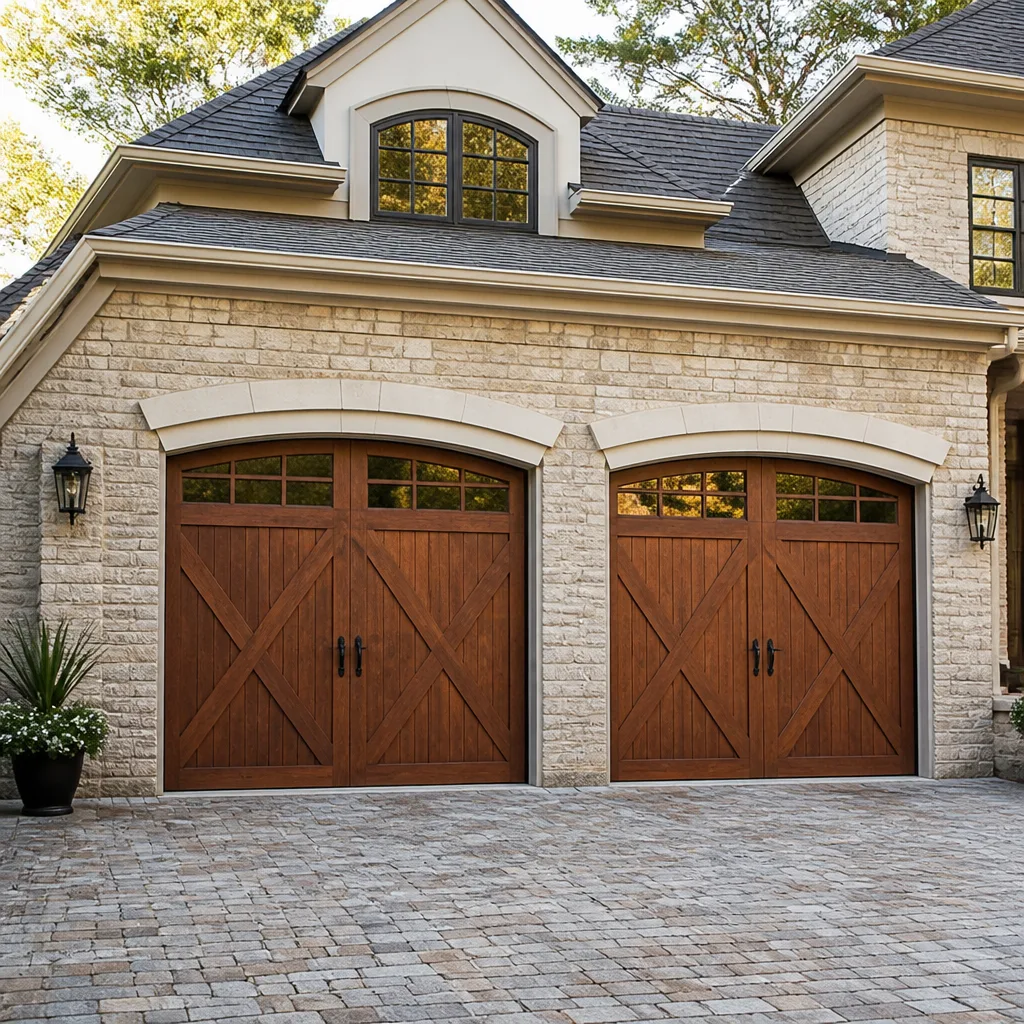 Carriage house
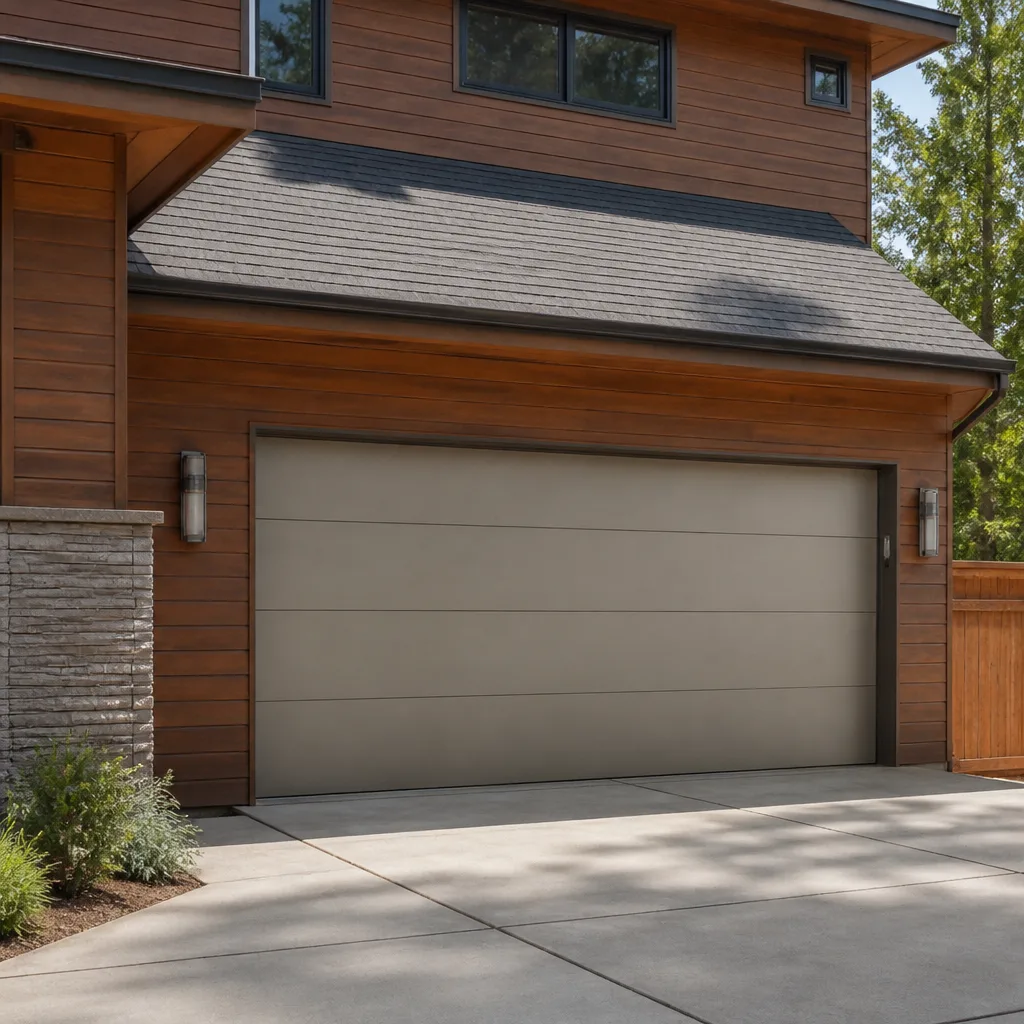 Modern flush
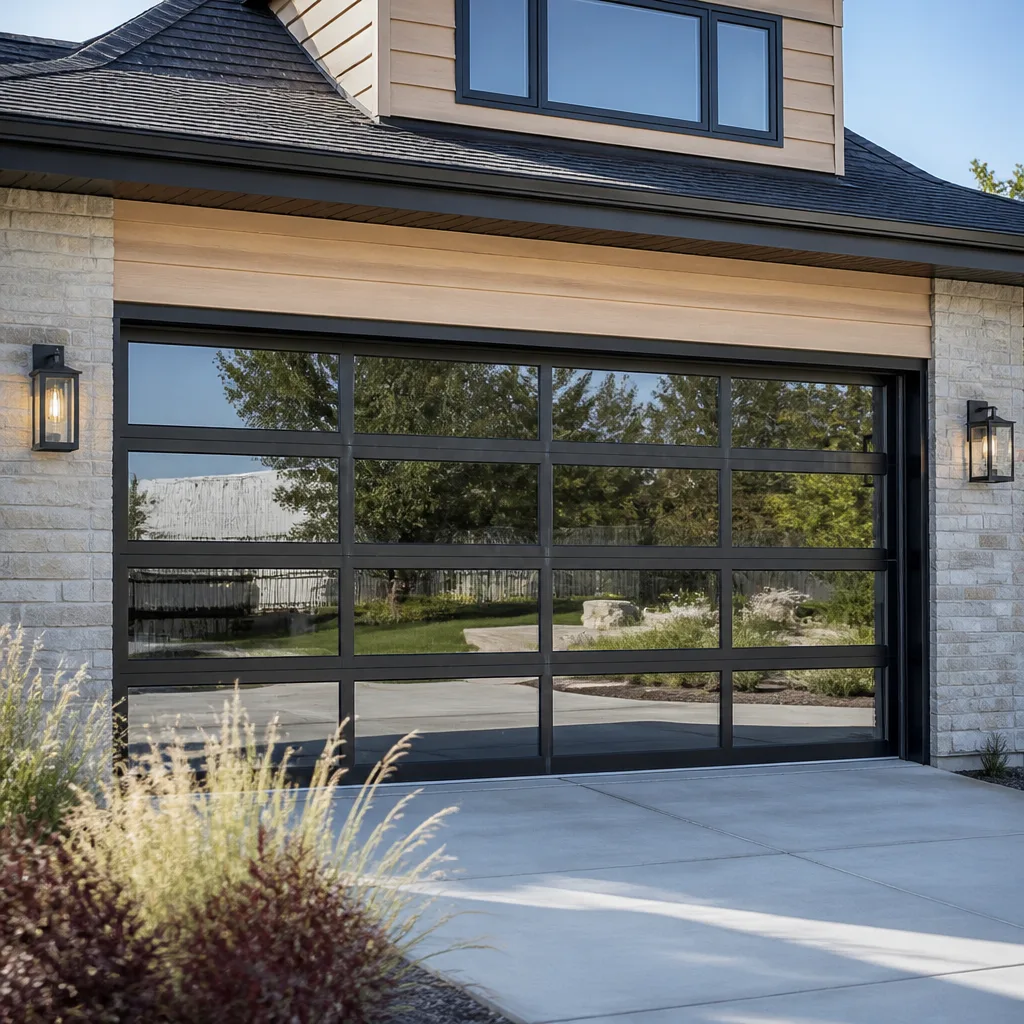 Full-view glass
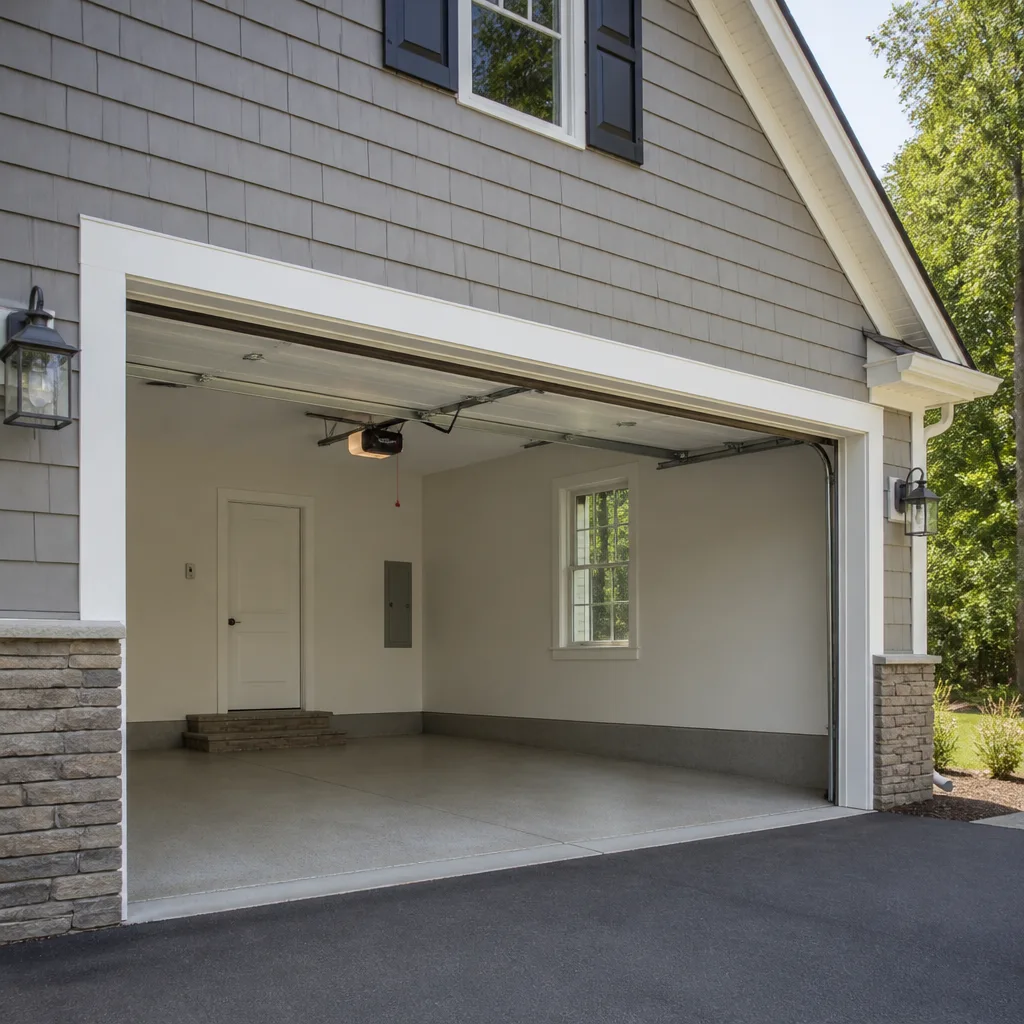 LiftMaster openers
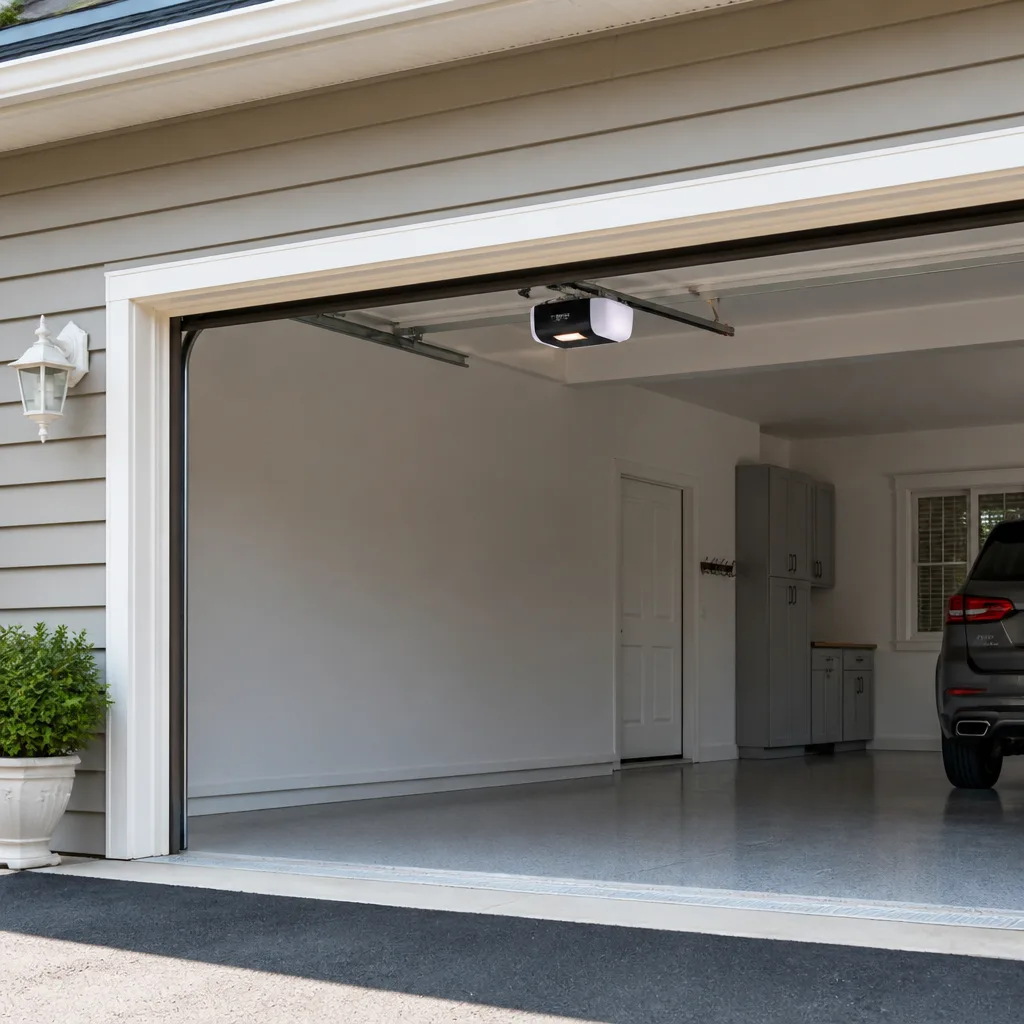 Chamberlain openers
Full 25-point door and opener safety check with every visit - springs, cables, rollers, tracks, and your LiftMaster or Chamberlain opener included
You get a price before we start. It does not change when the pro arrives.
Get your free estimateGarage Door Permits, Codes & Inspections in Fayetteville, NC: What You Need to Know
Here’s the part most homeowners get backwards: the garage door project that feels like a big deal, replacing a broken spring or a bent track, almost never needs a permit in Fayetteville. The project that feels routine, swapping out the whole door or adding a new opener circuit, often does. That gap between what feels regulated and what actually is catches people off guard, and it usually surfaces at the worst possible time, during a home inspection years after the door is up. This guide walks through what Cumberland County requires, what it exempts, how the inspections department works, the fire-rated door rule most people miss, and how your insurer and HOA each fit into the picture. You’ll finish knowing which Fayetteville garage door projects need paperwork and which don’t.
Quick Answer
In Fayetteville and the rest of Cumberland County, most garage door repairs (springs, cables, rollers, panels, tracks, opener motors) don’t require a permit. Replacing the entire door, changing its size or opening, or doing structural work around the opening generally does, and it’s inspected for safety and code compliance. Fire-rated door requirements apply where the garage shares a wall with living space. Always confirm the current rule with the Cumberland County Inspections Department before work starts, because local adoption of the state code can shift.
Styles & brands we work with
- Raised-panel steel
- Carriage house
- Modern flush
- Full-view glass
- LiftMaster openers
- Chamberlain openers
Table of Contents
- Which Fayetteville garage door projects need a permit, and which don’t
- How the permit process actually works at Cumberland County Inspections
- Fire-rated door rules for attached garages
- What unpermitted work does to a homeowner’s insurance claim
- HOA approval runs parallel to your county permit
- What an inspector actually looks at on a garage door
- Common mistakes to avoid
- Frequently asked questions
Which Fayetteville Garage Door Projects Need a Permit, and Which Don’t
The dividing line is structural change versus component replacement. A repair restores the door or opener to what it already was. A permit-triggering project changes the door itself, its size, or the framing around the opening. That’s the principle behind most local permit rules, and it’s why a technician can replace a snapped torsion spring on a Tuesday without filing anything, while a full door swap usually needs a green light first.
Here’s how it generally breaks down in Cumberland County:
Typically no permit required:
- Replacing torsion or extension springs, cables, rollers, hinges, or drums
- Replacing or adjusting the opener motor, remotes, keypads, or safety sensors
- Swapping damaged panels for same-size panels
- Realigning or replacing a track section
- Weatherstripping, bottom seal, and threshold replacement
Typically requires a permit:
- Replacing the entire door with a new door, especially a different model or material
- Changing the width or height of the opening
- Removing or altering a header or structural framing
- Converting the garage, or walling off the opening
- New construction of a garage or an added bay
The exact triggers are set by the North Carolina State Building Code, specifically the NC Residential Code as adopted and amended locally. Because adoption cycles change, and because a county can add local amendments, the safe move is a quick call to the inspections department with the address and a one-line description of the job. They’ll tell you plainly whether you need a permit. We’ve watched homeowners assume the opposite in both directions, and the correction is always cheaper before the work than after. If your job is a repair rather than a replacement, that’s squarely in our wheelhouse through garage door repair, and we can tell you on the phone whether your project is likely to trigger a permit.
How the Permit Process Actually Works at Cumberland County Inspections
A garage door permit in Fayetteville is a straightforward administrative process, not a bureaucratic maze. You (or your contractor) apply, pay a fee, do the work, and get it inspected. The friction comes from doing the steps out of order, like installing a new door before the permit is issued, which can turn a clean project into a correction. Here’s the general flow:
- Confirm the requirement. Call the Cumberland County Inspections Department with your address and a description of the work. Ask directly whether a permit is needed and whether a plan or drawing is required.
- Submit the application. For a simple door replacement, this is usually a short form and a description of the door and opening. Structural changes need more, often a drawing showing framing and header details.
- Pay the permit fee. Fees are set by the county and based on the scope and value of the work. The department quotes the number when the application is filed.
- Do the work. For most residential door replacements, work can proceed once the permit is issued.
- Request the inspection. Once the door is installed and operating correctly, schedule the inspection. The inspector checks installation, attachment, and safety features.
- Close out the permit. When the inspection passes, the permit is closed and the record is filed with the address. That record is the piece that matters at resale.
Timelines depend on the county’s schedule and how complete your application is; there’s no reliable way to promise a specific turnaround, so plan around it. What we can say is that garage door replacements are among the simpler residential permits, and the door itself is usually the longer lead time. If you’re ordering a made-to-measure door from a manufacturer like Clopay, Amarr, or Wayne Dalton, the permit and the door can be lined up to land at the same time. If you’re replacing an opener only, most systems from LiftMaster or Chamberlain fall under the repair category and skip permitting entirely; see garage door opener repair for what that covers.
Fire-Rated Door Rules for Attached Garages: The Code Point Most People Miss
This is where a lot of Fayetteville homeowners, and a surprising number of contractors, get it wrong. In a home with an attached garage, the wall and door between the garage and the living space are treated as a fire separation. Under the NC Residential Code, that separation has to resist fire for a set period so occupants have time to get out. In practice, that means if there’s a door between the garage and the house, it needs to be a fire-rated door, and the wall between the two needs the right assembly behind it. The code doesn’t care how the garage looks. It cares how long the barrier holds.
Why does this land on a garage door page? Because two things happen in a garage door project that can quietly breach the fire separation:
- Altering the wall above the opening. Removing or cutting into a header or the framing around the top of the door can compromise the assembly. If the plan involves structural change, the permit review is where the fire separation gets checked.
- Installing a non-rated door where a rated one is required. A regular interior door between the garage and house isn’t a substitute for a properly rated one. Swapping a rated door for a plain one when you’re doing other work can create a code issue that shows up on inspection.
We see this misunderstanding most often in Fayetteville’s newer planned communities, where garages are tight to the living space and homeowners assume the door between them is ordinary. It’s not, and the county treats it accordingly. The right move before any structural work near the garage is to ask the inspections department whether a fire separation applies and what it requires. That’s a phone call, not a guess.
What Unpermitted Work Does to a Homeowner’s Insurance Claim
Your homeowner’s policy isn’t a permit enforcement agency, but it does care about the condition of the home at the time of a loss. If a door-related incident, like a door failing and damaging a vehicle or the structure, happens and the insurer finds that the work that caused or contributed to the failure was done without a permit or outside code, the claim can get complicated. The policy language differs by carrier, but the general pattern is this: unpermitted work can become grounds for the claim being reduced, disputed, or denied.
The bigger risk is often downstream, not at the moment of the incident. Insurance companies increasingly ask for permit records when insuring or renewing coverage on a home, because a permit with a passing inspection is their best evidence that the work was done correctly. A replacement garage door with no permit on file is a question mark on a property record. Here’s what a homeowner should do to keep it clean:
- Keep the permit number, inspection card, and closing paperwork with your home records.
- Photograph the installation and the finished door for your own file.
- If you bought a Fayetteville home with an unpermitted garage door replacement, ask the county whether it can be inspected and brought into compliance after the fact. It’s often possible.
- Before any claim, confirm your door was installed as the permit requires. If it wasn’t, the insurer can push back.
Permits are the cheapest protection you’ll ever buy on this part of the house.
HOA Approval Runs Parallel to Your County Permit
The county permit is only half the approval story in a lot of Fayetteville neighborhoods. Newer planned communities, common across the city’s expanding residential areas, typically have a homeowner’s association with its own architectural review process. Those rules and the county’s rules are separate, and both apply. Passing one doesn’t clear the other. Here’s the practical difference:
- The county cares about life safety and code compliance: the door meets code, the opening is structurally sound, the installation is safe. It issues a permit and inspects the work.
- The HOA cares about appearance and conformity: the door style, color, material, visibility from the street, and whether it matches the current look of the street. It runs its own approval process, usually with a submission form and a design guideline.
We’ve seen homeowners order a new door, permit it with the county, and then get a letter from the HOA because the panel style or color wasn’t approved. The door can be perfectly safe and still fail the HOA’s design check. The fix is to run both processes in parallel: contact the HOA’s architectural committee before ordering, get written approval for the specific door and color, and confirm the county permit at the same time. If you’re choosing among manufacturers like Raynor or Craftsman, the HOA guidelines usually point you toward certain approved lines or finishes, and that narrows the choice quickly.
What an Inspector Actually Looks at on a Garage Door
Curious what happens during the inspection? It’s usually quick and focused, not a deep structural audit. The inspector is checking that the door is what the permit described and that it operates safely. Here’s the general checklist:
- Attachment to the structure. Are the tracks, brackets, and opener securely fastened to sound framing? Is anything loose or missing fasteners?
- Operation and balance. Does the door open and close smoothly, and does it stay put when you let go? An unbalanced door is a safety issue.
- Safety features. The reverse mechanism and the safety sensors at the bottom of the door need to work. A door that won’t reverse on contact or that ignores an obstruction fails.
- Fire separation. Where a rated assembly is required, is it intact?
- Clearance and framing. Is the opening structurally sound, and does the door fit the opening as planned?
If something fails, the inspector writes it up and you correct it and request a re-inspection. Simple corrections, like a loose bracket or a misaligned sensor, are usually quick to resolve. The important thing is that the door has to be fully installed and working before the inspection, not halfway. If you’re not sure how to get there, and something in your current door or opener is off, the team can take a look; openers on LiftMaster, Chamberlain, Genie, and Craftsman systems are all within the scope of what our technicians handle, and they’ve seen the inspection points they need to hit. If you’re outside Fayetteville’s city limits toward Spout Springs, the same county inspection rules generally apply, so the process looks the same.
Common Mistakes to Avoid
- Assuming a full replacement is exempt because a repair would be. Repairs don’t trigger a permit. Replacing the whole door often does. Treat them as different projects.
- Doing the work, then asking about the permit. Calling the inspections department after the door is installed can turn a simple job into a correction. Check first.
- Ignoring the fire separation. Cutting into the wall around an attached garage without accounting for the fire-rated assembly is a code breach the inspector will catch and an insurance company will care about.
- Skipping the HOA review because the county permit passed. They’re separate approvals. A safe door can still fail the neighborhood’s design guidelines.
- Letting the permit expire or never closing it out. A permit without a final inspection on the record is a loose end that shows up at resale.
- Assuming your out-of-town contractor handled it. Not every installer pulls permits, especially for simple-looking replacements. Confirm the permit number is on file, in writing.
- Choosing a door purely on price. The door has to fit the opening, work with your existing opener, and pass the inspection and the HOA. Those constraints set the real cost.
See the difference
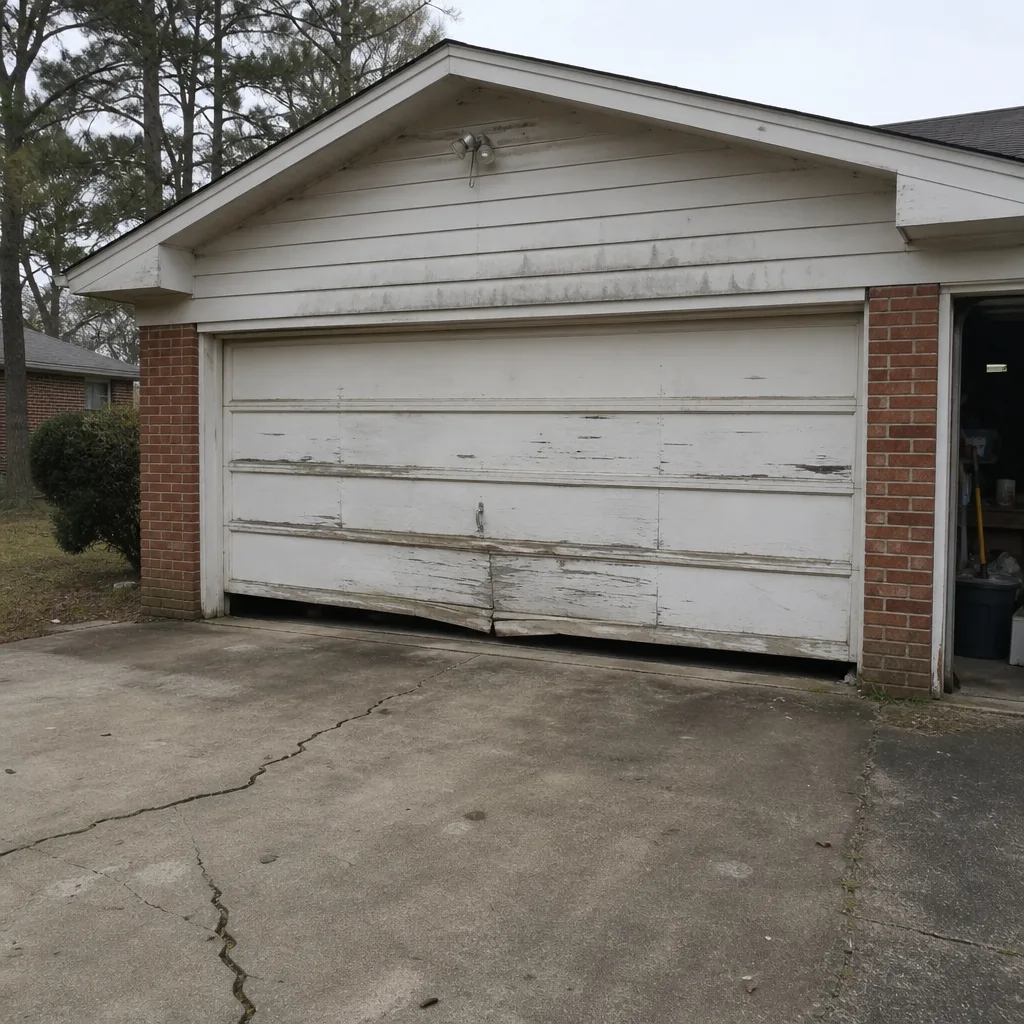 Before
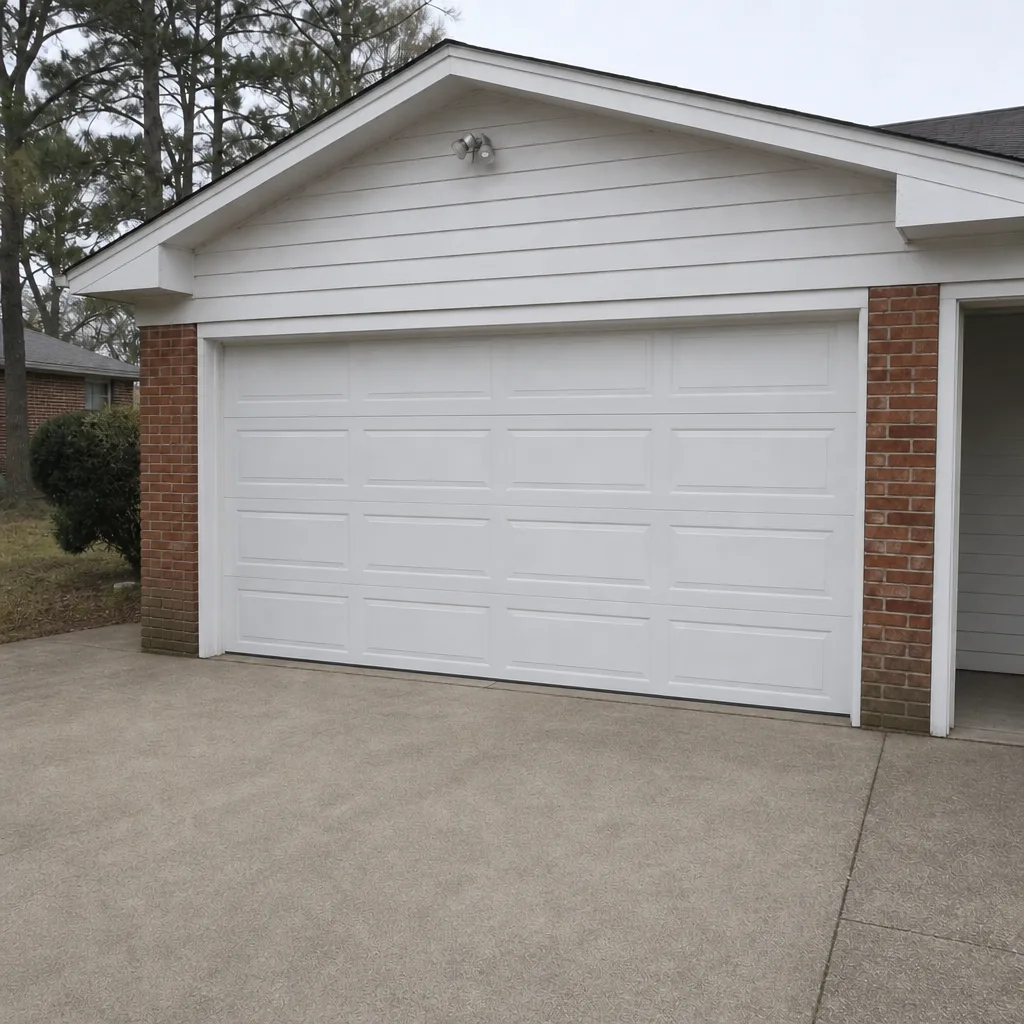 After
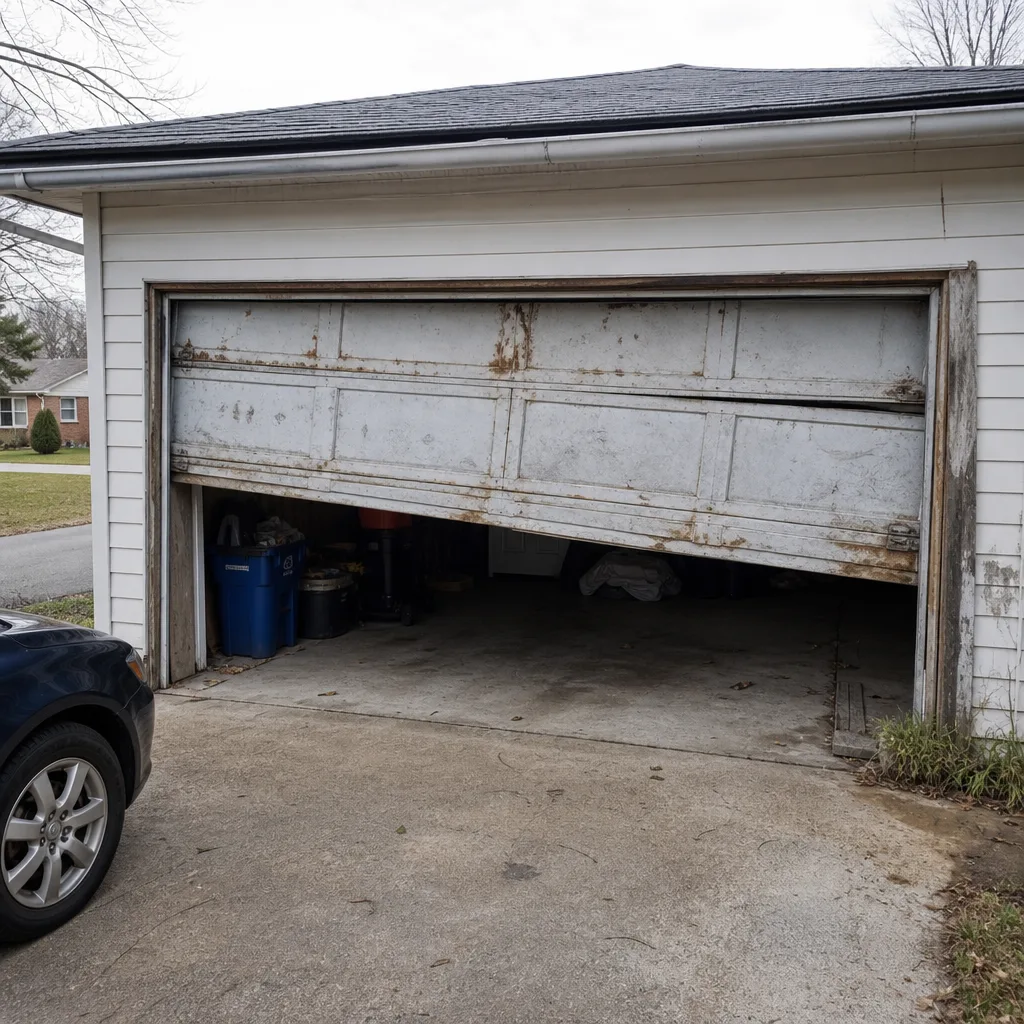 Before
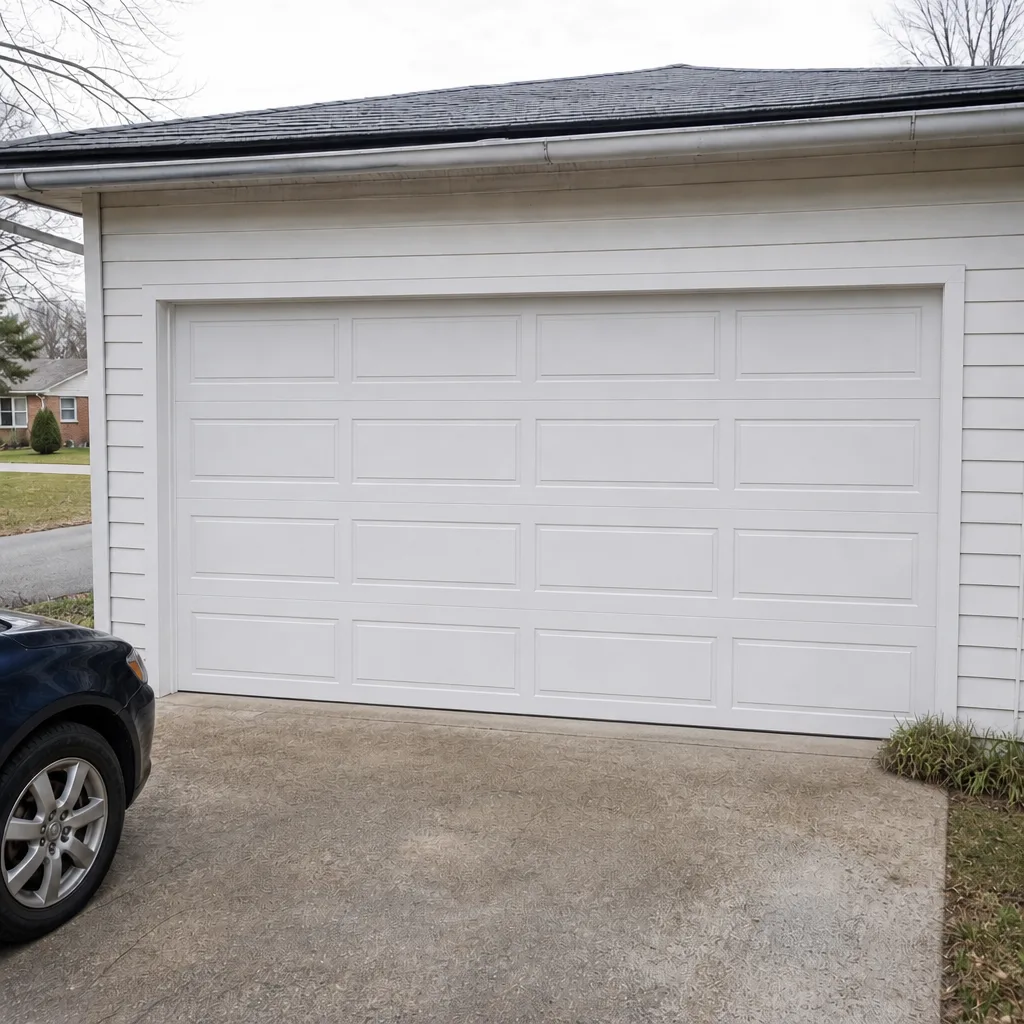 After
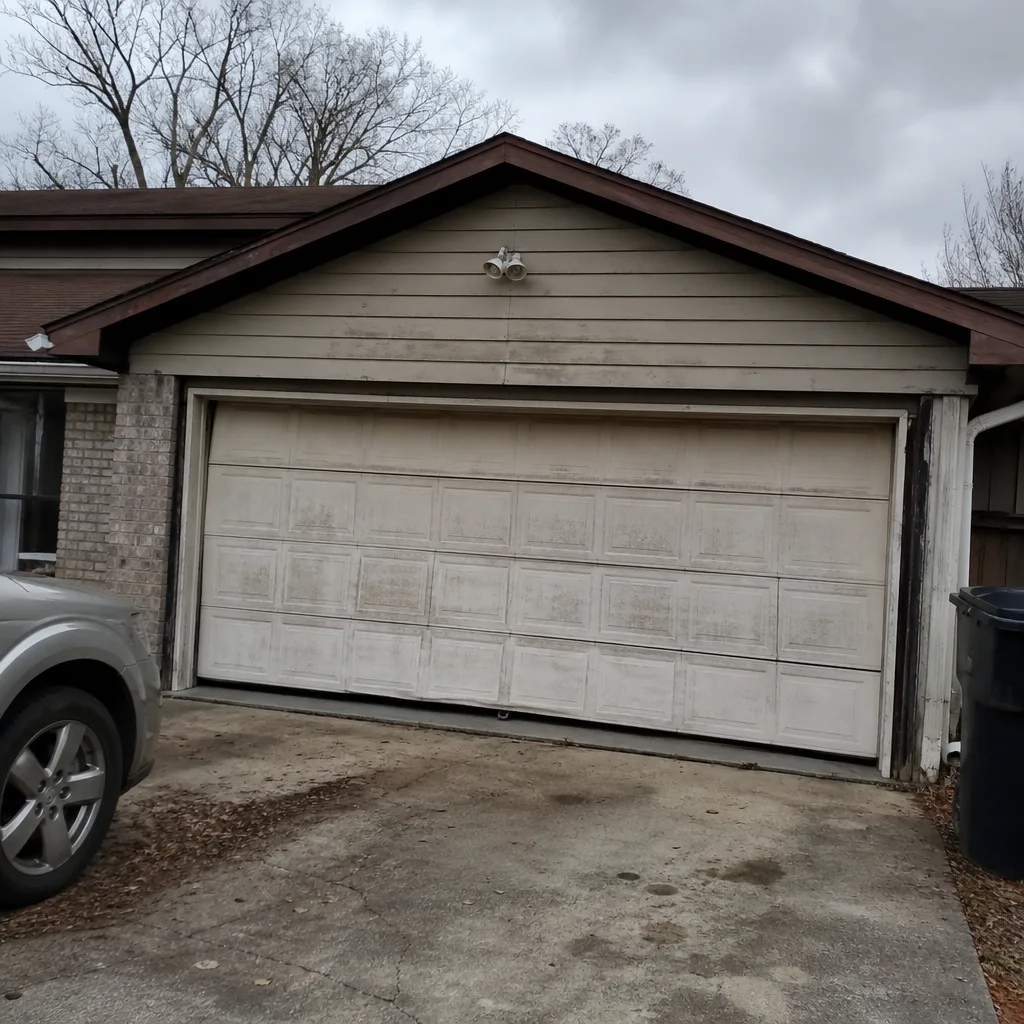 Before
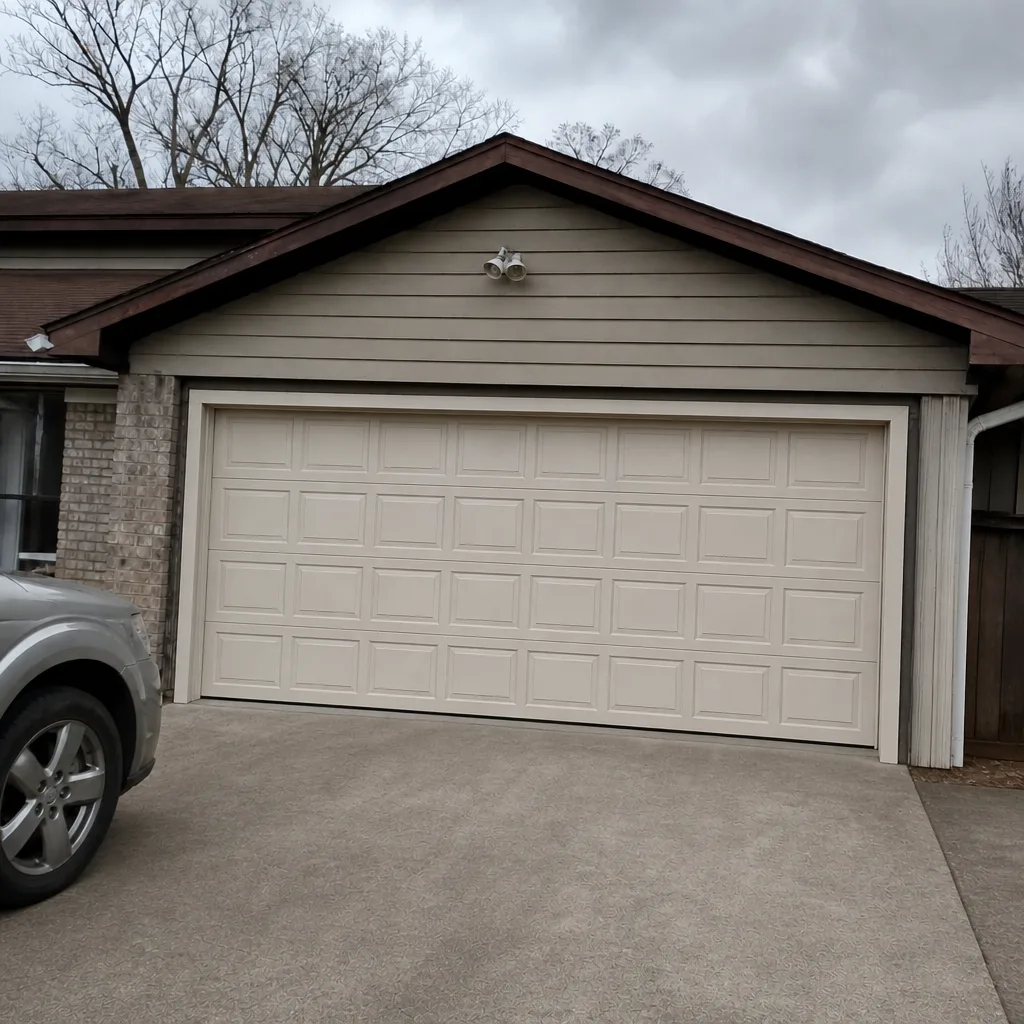 After
When to Call a Professional
A snapped torsion spring, a door that’s off its track, an opener that runs but won’t lift, or a remote that’s gone dead are all jobs a trained technician should handle. High-tension springs and cables store massive energy and can cause serious injury if you try to work on them yourself, and a door that’s out of balance can come down on a person or a vehicle. We recommend leaving both to a professional. If you’re weighing a repair against a replacement, our technicians can tell you which makes sense for the door you have and whether the job will need a permit. Eaton Garage Door Repair offers free estimates in Fayetteville, and we can work through the permit question with you. Call (855) 473-7101 for a free estimate.
Frequently Asked Questions
In most cases, replacing the entire garage door requires a permit in Cumberland County, while repairing components does not. The distinction is structural change versus restoring what’s there. Call the Cumberland County Inspections Department with your address to confirm the requirement for your specific project before ordering a door. Call (855) 473-7101 and we’ll walk through it with you; estimates are free.
Replacing an opener motor, remotes, keypads, or sensors is generally considered repair and doesn’t require a permit in Cumberland County. If the opener work involves new wiring or a change to the electrical circuit, the electrical code may come into play. When in doubt, ask the inspections department. Call (855) 473-7101 for a free estimate on opener work.
The county sets the fee based on the scope and value of the work, so there’s no single number. The department quotes it when you file the application. Budget for the permit alongside the door and installation as part of the project. Call (855) 473-7101 for a free estimate on the door and install; the permit fee is separate and set by the county.
The buyer’s inspection can surface a permit gap, and the sale can slow down or require a correction before closing. In many cases the county will let you pull a permit after the fact and have the work inspected, but it depends on the project. The clean path is to get the permit up front. If you’re buying or selling and need a door inspected or brought up to standard, call (855) 473-7101; estimates are free.
Under the NC Residential Code, an attached garage is generally treated as a fire separation, and a door between the garage and living space usually needs to be fire-rated. The wall assembly behind it matters too. Confirm the specifics with the Cumberland County Inspections Department before you alter the wall or swap the door. Call (855) 473-7101 and we can look at the setup with you; estimates are free.
Your HOA can reject a door on design grounds, including style, color, panel pattern, or material, even if the county permit passes. Get written architectural approval from the HOA before ordering the door, and run it alongside the county permit. Call (855) 473-7101 if you want help choosing a door that meets both sets of rules; estimates are free.
The Bottom Line
Garage door permits in Fayetteville come down to one question: are you changing the door, or fixing it? Repairs skip the permit and the inspection. Replacements and structural changes usually need both, and skipping them creates problems at resale, at the insurer, and with the HOA. Confirm the rule with Cumberland County Inspections before you order, run the HOA approval in parallel, keep the paperwork, and make sure the fire separation stays intact. Eaton Garage Door Repair handles repair, opener service, and full installation across the major brands, including LiftMaster, Chamberlain, and Clopay, so you can get the work done right and the permit question answered. Call (855) 473-7101 for a free estimate. We answer 24/7. Fast dispatch from 7am to 7pm, Sunday through Friday.
For everything else, start with Eaton Garage Door Repair, and we’ll take it from there.
Written by the team at Eaton Garage Door Repair.